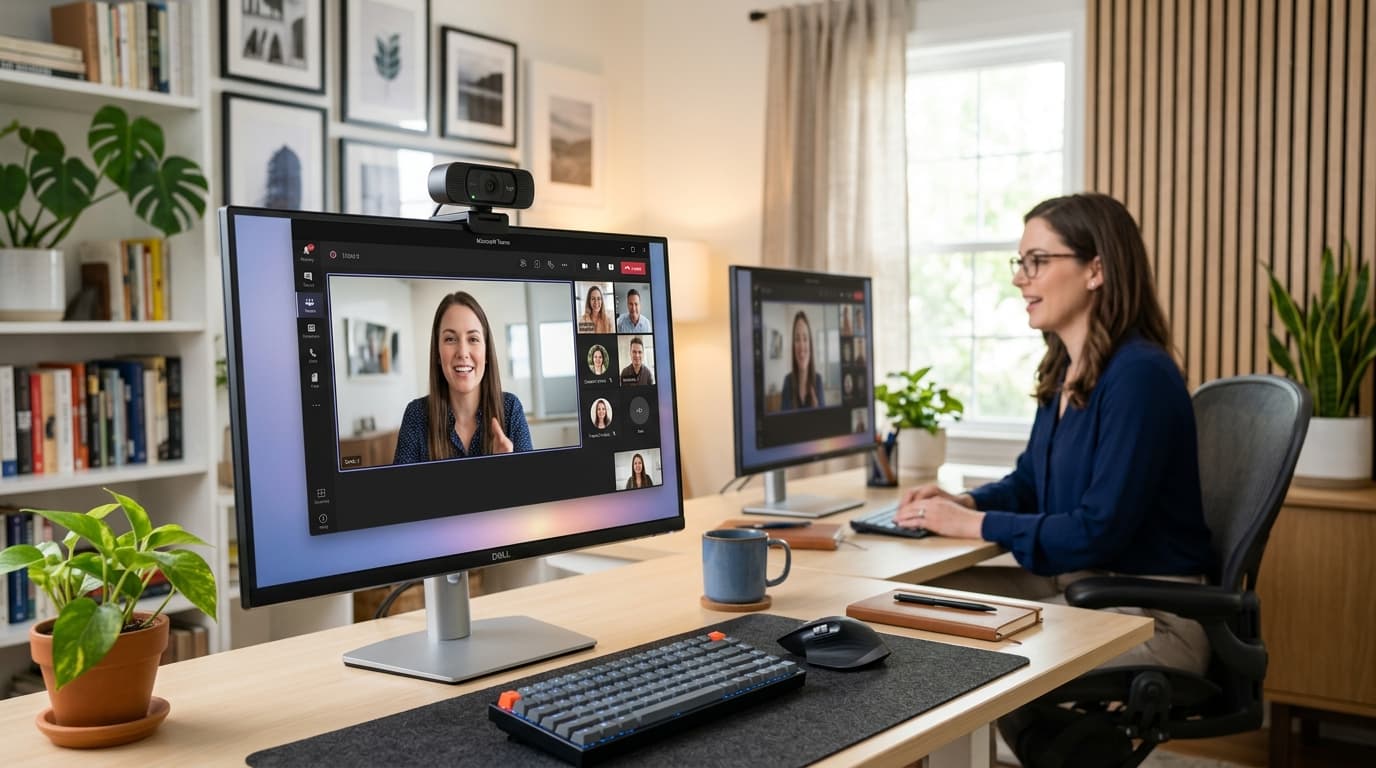
WFH Video Call Setup 2026: Camera, Audio & Lighting
Our #1 Pick
Logitech Brio 4K + Elgato Key Light Mini
4K webcam with HDR + a professional key light eliminates the two biggest video call problems simultaneously: soft/grainy footage and harsh backlighting from windows. You'll look better than anyone else on the call.
Verify the live price on Amazon.
Also Great
Budget setup: Logitech C920s + ring light ($120) — 1080p webcam + $30 ring light — huge upgrade over built-in camera for under $130
AI tracking: Insta360 Link 2 ($149.99) — Auto-tracks your face as you move — best for standing desk users who move during calls
Buy on Amazon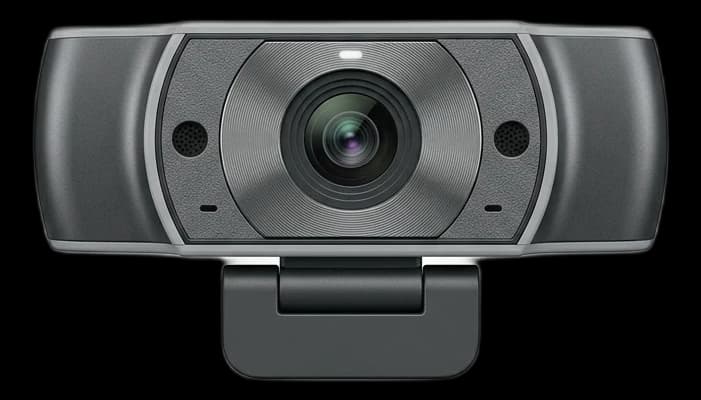 #1 Owner rating | 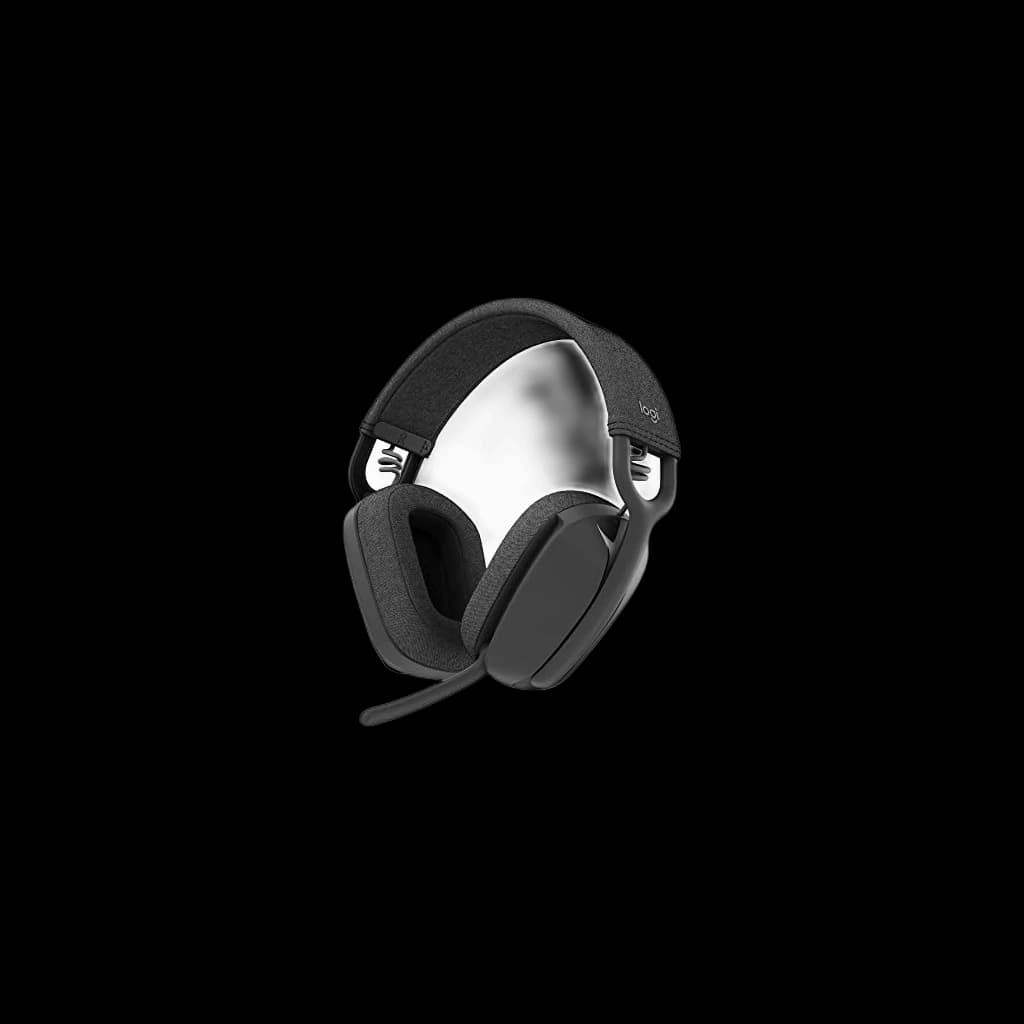 #2 Owner rating |  #3 Owner rating | 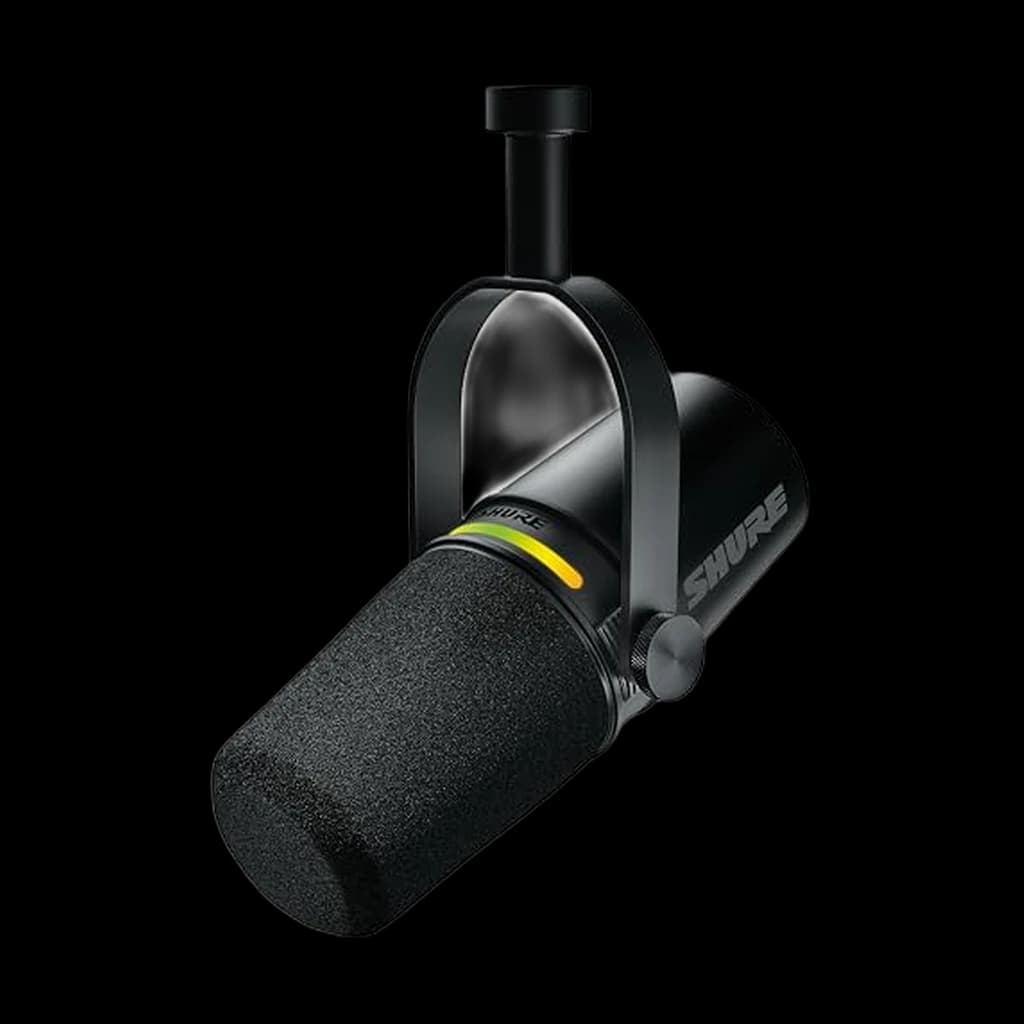 #4 Owner rating | 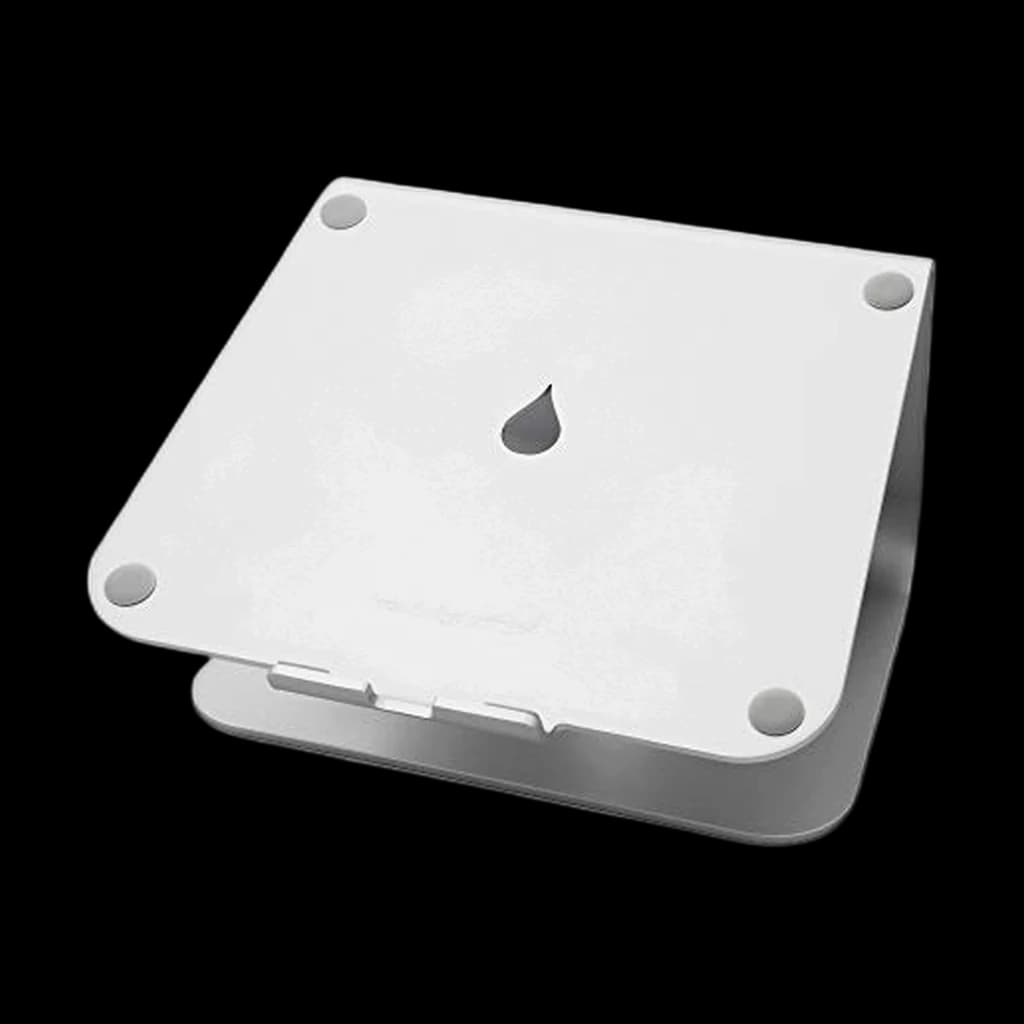 #5 Owner rating | |
|---|---|---|---|---|---|
| Price | $199.99Buy on Amazon | $99.99Buy on Amazon | $58.60Buy on Amazon | $299Buy on Amazon | $39.90Buy on Amazon |
| Verdict | Cleanest out-of-box 4K image of any consumer webcam in 2026. | Value pick at well under $100. Flip-down boom mic, multipoint Bluetooth, and Zoom/Teams/Meet certification — covers the basics without the Jabra premium. | The plug-and-play USB key light that just works - no app, no Wi-Fi, just clip it on your monitor and turn it up | The hybrid USB/XLR dynamic mic that does meetings and podcasting equally well - the buy-once answer for serious remote work voice | Single sculpted aluminum block - zero moving parts, zero wobble, zero failure modes for fixed-desk Mac users |
| Buyer sentiment | Sony Starvis Sensor Show Mode USB-C Aluminum Build G Hub Software 4K at 30fps Only Buyers praise the Sony sensor image quality and unique Show Mode angle. Some flag Logitech G Hub software. | Comfort Lightweight Noise Cancellation Buyers praise comfort and lightweight. Mixed feedback on sound quality and connectivity. Some flag noise cancellation. Based on 1,112 user mentions | Effectiveness Buyers praise effectiveness. Mixed feedback on adjustability. Based on 11 user mentions | Quality Sound Quality Ease Of Use USB Connectivity Buyers praise quality, sound quality, ease of use and usb connectivity. Mixed feedback on functionality and value for money. Based on 316 user mentions | Quality Design Sturdiness Ergonomics Buyers praise quality, design, sturdiness and ergonomics. Mixed feedback on value for money. Based on 5,918 user mentions |
| Specs |
|
|
|
|
|
| Pros |
|
|
|
|
|
| Cons |
|
|
|
|
|
* Prices checked Oct 10, 2026 and may vary. Check the latest price on Amazon.
We research — never hands-on. How we research →
Key Takeaways
The full WFH video call setup for 2026: camera, mic, and lighting picks ranked by call-quality gain per dollar. Plus the one upgrade everyone skips.
As an Amazon Associate I earn from qualifying purchases. Product prices and availability are subject to change.
You have 3 seconds to make an impression on a video call. Poor lighting + built-in laptop mic signals you're not set up to work remotely — regardless of what you're actually saying.
The 3 Pillars of a Good Video Call Setup
| Pillar | Problem it solves | Min investment |
|---|---|---|
| Lighting | Shadow, silhouette, flat face | $30–$100 |
| Camera | Blurry, low-res, wide-angle distortion | $70–$180 |
| Audio | Echo, laptop mic noise pickup, reverb | $35–$350 |
Camera Recommendations
| Logitech C920s | Logitech Brio 4K | Insta360 Link 2 | |
|---|---|---|---|
| Resolution | 1080p | 4K | 4K |
| HDR | ✗ | ✓ | ✓ |
| AI tracking | ✗ | ✗ | ✓ (face follow) |
| Privacy shutter | ✓ | ✗ | ✗ |
| Price | ~$70 | ~$180 | ~$200 |
| Best for | Internal calls | Client calls | Standing desk users |
Positioning matters more than resolution: Camera at eye level, 60–90cm away. Never below the screen pointing up — unflattering angle, distracting ceiling background.
Lighting Recommendations
The problem with ring lights: They produce a circular catchlight in your eyes and illuminate your face evenly in a way that reads as "doing a beauty tutorial," not "professional video call."
Better: A key light positioned at 45° to one side, slightly above eye level. This creates natural-looking shadows and a professional catchlight shape.
| Option | Type | Best for | Price |
|---|---|---|---|
| Elgato Key Light Mini | Key light | Monitor-mounted, pro look | ~$100 |
| BenQ ScreenBar Plus | Monitor bar | Desk lighting + screen bar | ~$170 |
| Neewer 18″ Ring Light | Ring light | Content creation aesthetic | ~$50 |
| Ring clip-on (basic) | Fill light | Quick fix, laptop screen clip | ~$15 |
Free fix first: Before buying anything, turn off overhead lights and position your desk to face a window. Natural side-lighting from a window is better than most artificial setups.
Audio Recommendations
| Option | Quality | Best for | Price |
|---|---|---|---|
| Jabra Evolve2 20 | ⭐⭐⭐⭐ | All-day call-heavy work | ~$70 |
| Logitech H390 USB | ⭐⭐⭐ | Budget wired headset | ~$35 |
| Sony WH-1000XM5 | ⭐⭐⭐⭐ | ANC + calls combo | ~$280 |
| Blue Yeti USB Mic | ⭐⭐⭐⭐⭐ | Content creation + calls | ~$100 |
| Laptop built-in mic | ⭐⭐ | Backup only | $0 |
The quick test: Record a 30-second voice note on Zoom and play it back. If you can hear your keyboard, HVAC, or room echo — those are what your colleagues hear too.
Budget Tier Setups
$100 setup: Logitech C920s (~$70) + clamp ring light (~$15) + Logitech H390 headset (~$35) — total ~$120, looks dramatically better than default.
$300 setup: Logitech Brio 4K (~$190) + Elgato Key Light Mini (~$100) + Sony WH-1000XM5 (~$280) — total ~$560, or swap Sony for Jabra Evolve2 20 (~$70) to hit $350.
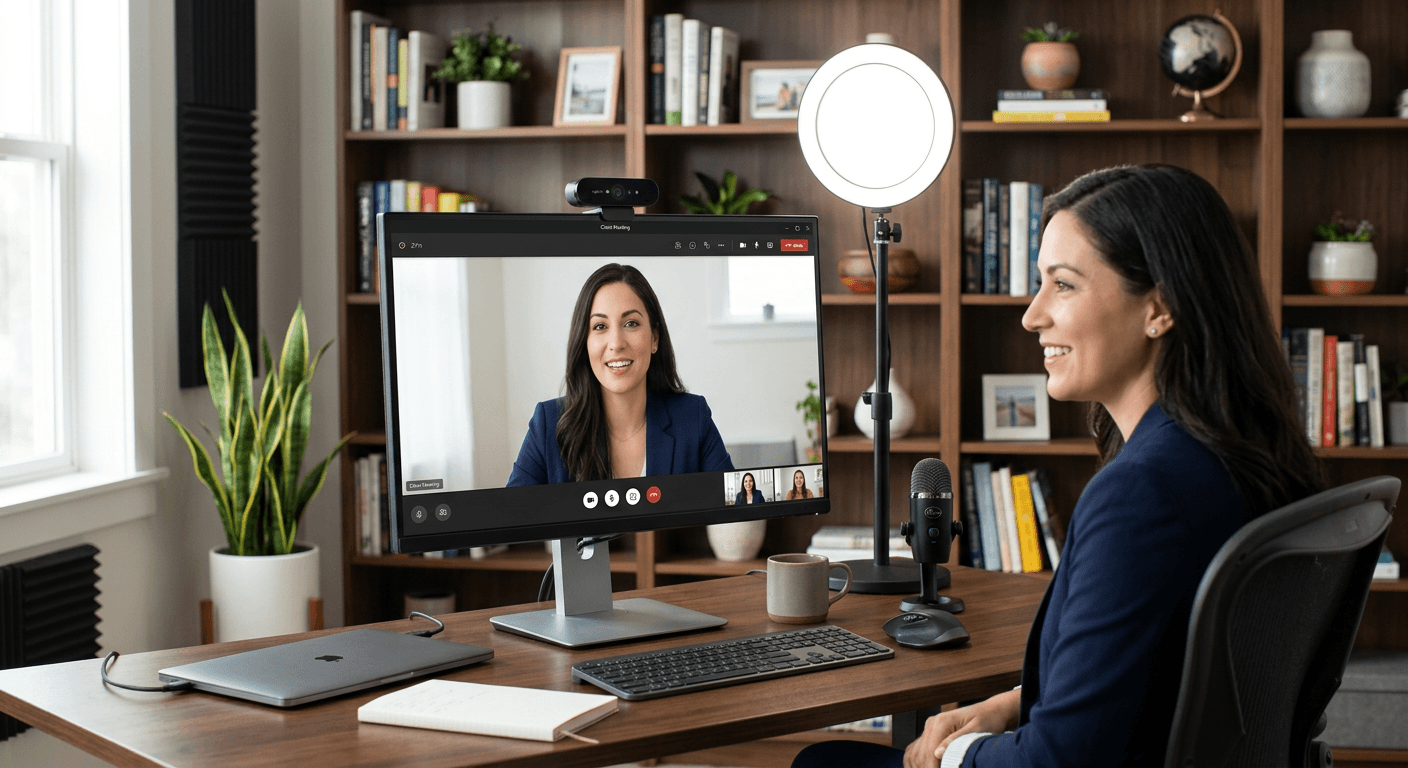
$500+ setup: Brio 4K + dual Elgato Key Lights + Blue Yeti mic + acoustic panel behind you. The "I have a proper studio" setup.
The Quick-Fix Checklist
Before spending anything, run through this:
- Camera at eye level (not below screen)
- Light source in front of you, not behind
- No window directly behind you (creates silhouette)
- Headphones or earbuds instead of laptop speakers (eliminates echo)
- Background: plain wall or bookshelf — not a messy room
Four out of five of those are free.
Products referenced in this guide
For quick reference, the products tied to this guide are the Logitech MX Brio 705 for Business ($199.99), the Logitech Zone Vibe 100 Wireless Headset ($99.99), the Logitech Litra Glow ($58.60), and the Shure MV7+ ($299).
Other products referenced here include the Rain Design mStand ($39.90).
Camera is the one piece worth buying rather than improvising — see the best webcams under $100 for the picks that clear that bar.
Frequently Asked Questions
Does the virtual background on Zoom/Teams remove the need for good lighting?
No — virtual backgrounds work poorly in bad lighting. The edge detection breaks down with low contrast between you and the background. Good lighting is what makes virtual backgrounds actually look clean.
Is a USB microphone better than a headset mic for calls?
For pure call quality, a cardioid USB mic (Blue Yeti, Rode NT-USB Mini) is the best available. The downside: it picks up keyboard and room sounds more than a close-mic boom headset. In a quiet room, the USB mic wins. In a noisy environment, a headset mic wins.
My colleagues say I sound echoey. What's wrong?
Room reflections. Hard walls, floors, and ceilings bounce your voice back into the microphone. Fix: add a soft rug, bookshelves, curtains, or a foam panel behind your monitor. Soft surfaces absorb echo.
Do I need a green screen for video calls?
No — a plain, tidy background is more professional than a blurry virtual background with artifacts. Green screens help in controlled setups; they cause problems with glasses, flyaway hair, and any green in your outfit.
Your next step
Shop each piece of the call kit.
Hilly Shore Labs
Editorial TeamWFH Lounge is published by Hilly Shore Labs. Every recommendation is built by synthesizing ergonomic research, manufacturer specs, expert reviews from outlets like Wirecutter, RTINGS, and The Verge, and aggregated long-term owner sentiment from thousands of verified buyers.
All product reviews are independently researched. Our recommendations are based on ergonomic guidelines, manufacturer specifications, and verified buyer sentiment. See our methodology.