Best Noise-Canceling Headphones for WFH 2026: 5 Picks
The Sony WH-1000XM5 offers the best combination of noise cancellation, call quality, and all-day comfort for remote workers, while the previous-gen XM4 remains an outstanding value at $100 less.
Our #1 Pick
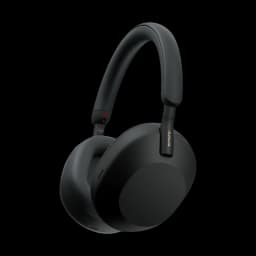
Sony WH-1000XM5
The WH-1000XM5's multipoint Bluetooth and industry-leading ANC make it the best choice for WFH workers who need to block out household noise without sacrificing call quality.
- Class-leading ANC from the Integrated Processor V1 paired with the QN1 noise-cancelling processor
- 30-hour battery with noise cancelling on (24 hr of talk time)
- Eight microphones, four of them beamforming for calls, keep speech clear in a quiet room
Price checked Sep 12, 2026 — verify the live price on Amazon.
Also Great
Apple ecosystem: Apple AirPods Max ($458) — Best-in-class ANC if you're in the Apple ecosystem and want Transparency mode
Buy on AmazonBudget ANC: Anker Soundcore Q45 ($60) — Surprisingly effective ANC for the price — great second pair or travel headphones
 #1 4.2 | 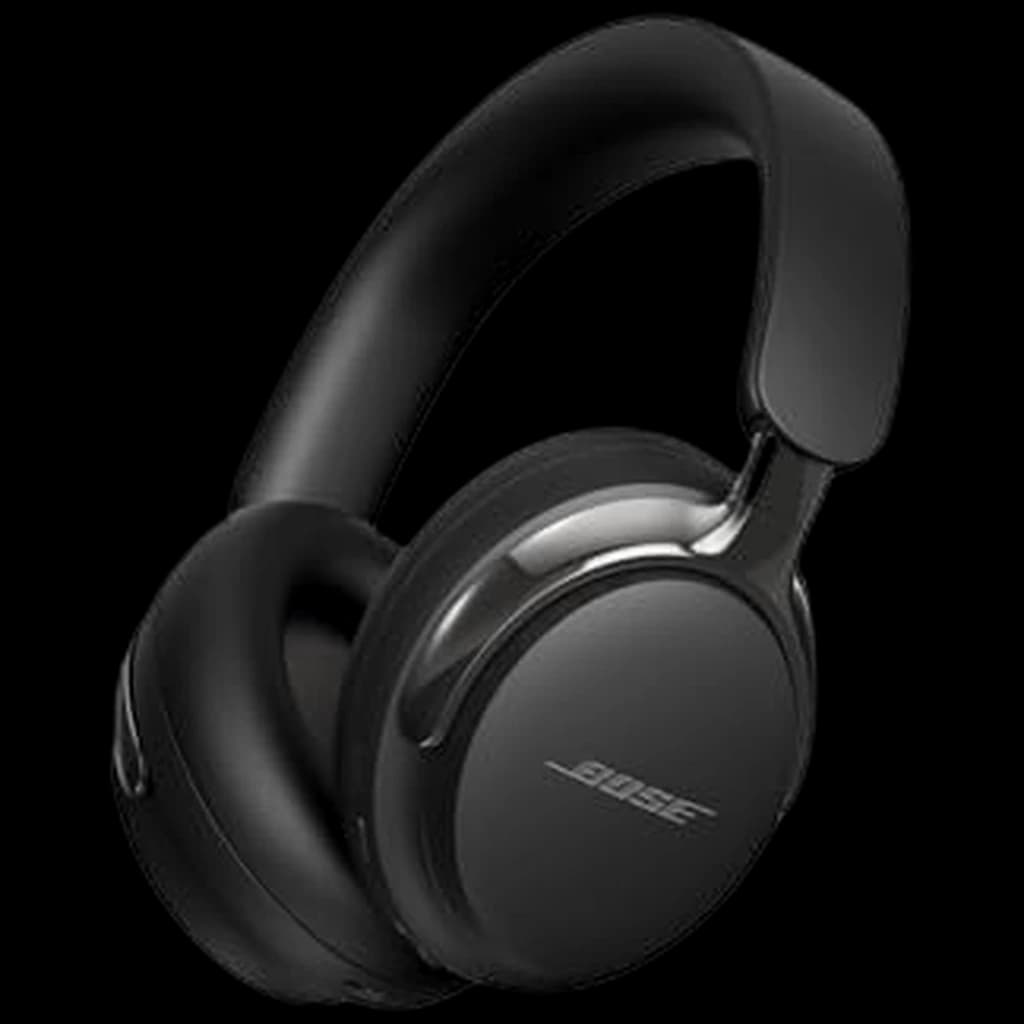 #2 4.3 | 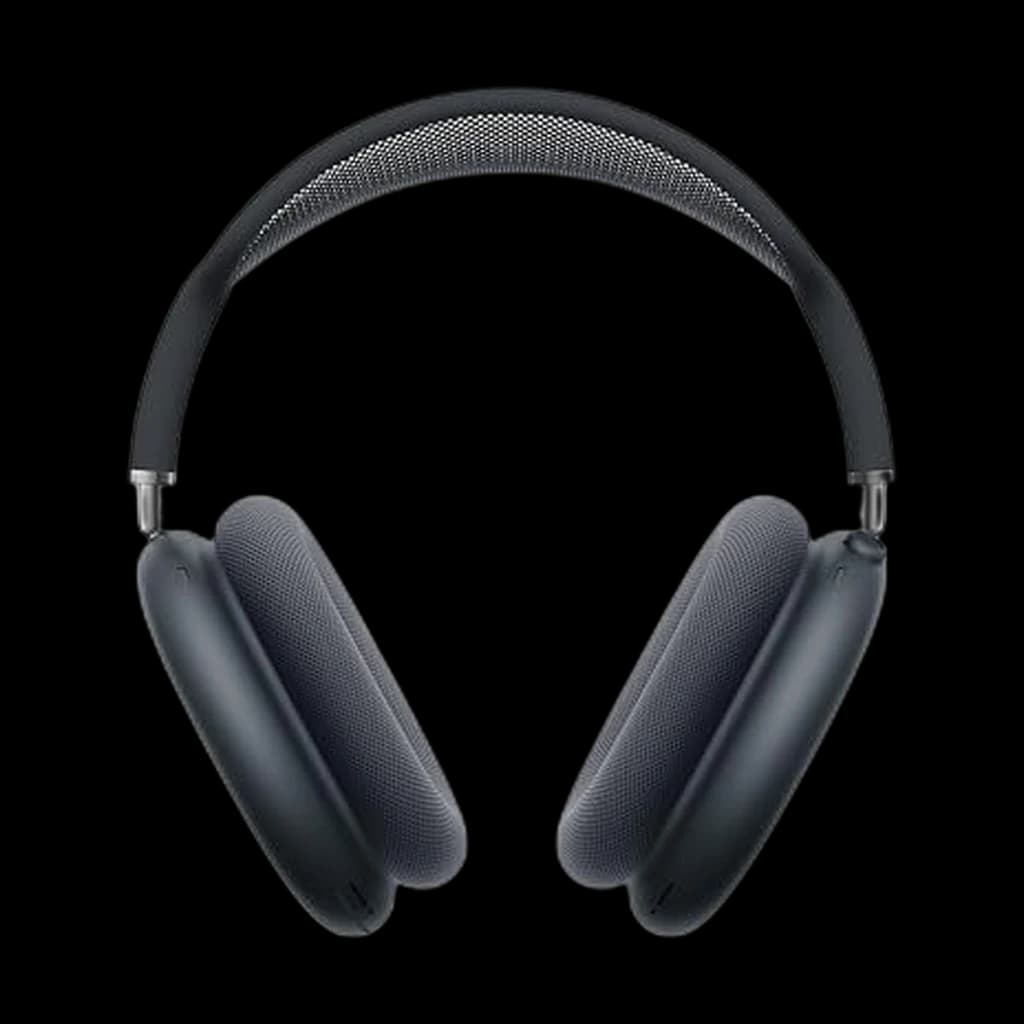 #3 4.6 | |
|---|---|---|---|
| Price | $298Buy on Amazon | $399Buy on Amazon | $458Buy on Amazon |
| Verdict | RTINGS' and Wirecutter's current top pick — QN3 processor + 12 mics + adaptive optimizer. | Current Bose flagship — class-leading ANC + Immersive Audio with longer battery | Best Apple ecosystem pick |
| Buyer sentiment | Noise Cancellation Battery Life Value for money Durability Connectivity Buyers praise noise cancellation and battery life. Mixed feedback on sound quality and comfort. Some flag value for money and durability. Based on 7,465 user mentions | Sound quality Comfort Noise cancellation Connectivity Buyers praise sound quality, comfort, noise cancellation and connectivity. Based on 1,244 user mentions | Sound Quality Quality Noise Cancellation Buyers praise sound quality, quality and noise cancellation. Mixed feedback on value for money and comfort. Based on 3,814 user mentions |
| Connectivity | Bluetooth 5.3 multipoint | — | — |
| Battery | 30 hr (ANC on) | Up to 30h | — |
| Weight | 254 g | — | 384g |
| Mic | 12-mic beamforming array | — | — |
| Codecs | LDAC, AAC, SBC | — | — |
| ANC | — | Adaptive | — |
| Audio | — | Immersive spatial | — |
| Calls | — | Yes | — |
| Pros |
|
|
|
| Cons |
|
|
|
* Prices checked Sep 12, 2026 and may vary. Check the latest price on Amazon.
We research — never hands-on. How we research →
Cheaper alternative
Sony WH-1000XM5 ($298)is excellent — but if the price tag makes your stomach lurch, here’s the pick we’d quietly point most home-office buyers to instead.
Key Takeaways
Eleven ANC headphones ranked for real home-office noise in 2026 — dogs, kids, leaf blowers. Sony WH-1000XM5 tops it; Bose QuietComfort Ultra runner-up.
As an Amazon Associate I earn from qualifying purchases. Product prices and availability are subject to change.
Your neighbor's dog has been barking for 47 minutes. The landscaping crew across the street just fired up what sounds like a jet engine. Your partner is on their own Zoom call in the next room, and you can hear every word of their quarterly review. Welcome to working from home.
Noise-canceling headphones aren't a luxury for remote workers — they're survival equipment. The right pair can transform a chaotic living room into a focused workspace, make you sound clear on calls even when your environment is anything but, and save you from the slow creep of noise-induced insanity that every WFH veteran knows too well.
We evaluated 11 noise-canceling headphones using expert reviews, verified owner feedback, and ergonomics research, weighted toward the conditions remote workers actually deal with rather than quiet-lab benchmarks: barking dogs, construction, HVAC systems, dishwashers, and the unique acoustic signature of a 4-year-old who has just discovered that pots make excellent drums.
What the Research Says About ANC Headphones
Active noise cancellationANCActive Noise Cancellation: microphones sample ambient sound and the headphones generate an inverted waveform to cancel it. Best on steady low-frequency noise (planes, HVAC). Less effective on speech, which is why open-plan office chatter still gets through. works by emitting an inverted sound wave that destructively interferes with incoming ambient sound. The technique is most effective on low-frequency, continuous noise and least effective on sudden high-frequency sound. This is consistent across NIOSH acoustic testing and the published whitepapers from Bose, Sony, and Apple.
| Noise in your house | How much ANC helps |
|---|---|
| HVAC hum, fans | Most — steady and low-frequency |
| Airplane drone, distant traffic | Most |
| Nearby conversation | Partial — mid-frequency and irregular |
| Dog barks, dish clatter | Least — sudden and high-frequency |
What the data does support:
- WHO's 85 dB / 8-hour exposure limit. If your home office crosses 85 dBdBDecibels — a logarithmic measure of sound pressure. Quiet office ~40 dB, normal speech ~60 dB, loud cafe ~75 dB. Active noise cancellation typically removes 20-30 dB of low-frequency rumble (HVAC, traffic), not voices. ambient (HVAC + traffic combined often does in apartments), ANC headphones move you below the threshold without raising playback volume to compensate. That's a real hearing-protection win.
- ANC reduces cognitive load, not just volume — reported, not measured. The recurring theme across the owner reports and reviewer write-ups we synthesized is less end-of-day fatigue rather than louder music: your brain spends less effort filtering a steady background out. We could not trace this to a controlled study, so treat it as consistent reported experience, not a measured effect.
- Comfort beats capability over 6+ hour days. Sony XM5 and Bose QC Ultra have similar ANC depth (~28–32 dB rated), but clamp force and ear-cup depth differ noticeably. The "right" headphones for 9-hour shifts depend on head shape, not spec sheets.
What the data does not support:
- That ANC damages hearing. Multiple audiology reviews have confirmed the opposite — ANC enables lower playback volume, which is hearing-protective.
What to Look for in WFH Noise-Canceling Headphones
Noise cancellation for remote work has different priorities than noise cancellation for travel or music listening.
- Call quality matters as much as music quality. A pair that sounds incredible on Spotify but makes you sound like you're in a tin can is useless for work. Look for dedicated call microphones and beam-forming technology.
- Comfort over 6+ hours is critical. Commuter headphones need to last a train ride; WFH headphones need to survive a whole workday. Clamping force, ear cup material, headband padding, and weight all matter more at hour eight.
- Multipoint Bluetooth saves your sanity. If you switch between a laptop and a phone all day, multipoint keeps you paired with both. Without it you're constantly re-pairing — a small friction that compounds.
- Battery life needs to clear the full workday. Look for 30+ hours with ANC on, and quick charging that gives you a few hours of playback from a 10-minute charge.
- Transparency mode matters at home. Unlike on an airplane, you often need to hear things — a doorbell, a kid calling for help, a partner asking a question.
Rule of thumb: past six hours, comfort beats capability. Clamp force and ear-cup depth decide the winner, not the spec sheet.
Our Top Picks
| Headphones | Price | Weight | Battery (ANC on) | Multipoint |
|---|---|---|---|---|
| Sony WH-1000XM5 | $248 | 250g | 30 hours | Yes |
| Sony WH-1000XM4 | $249 | 254g | 30 hours | Yes, via firmware update |
| Bose QuietComfort Ultra (2nd Gen) | $399 | 255g | 30 hours | Yes |
| Apple AirPods Max (USB-C) | $449 | 384g | 20 hours | No |
1. Best Overall: Sony WH-1000XM5
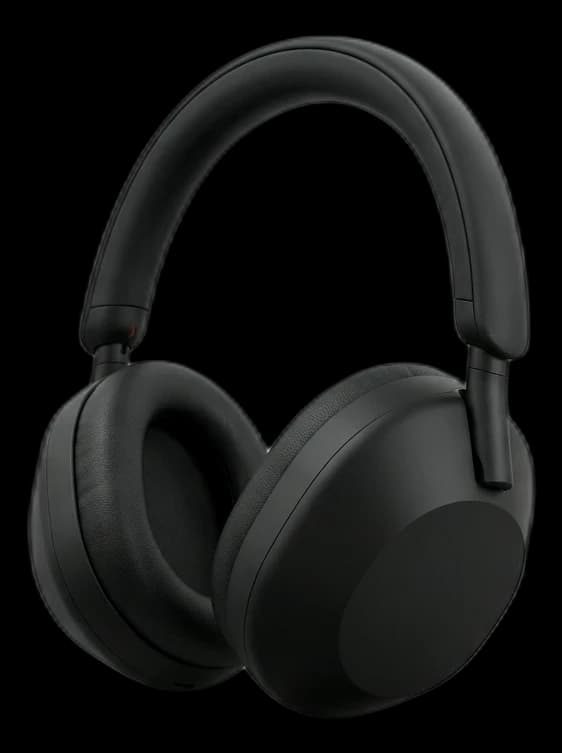
Buy on Amazon · $298Price: around $248 | Weight: 250g | Battery: 30 hours (ANC on) | Connectivity: Bluetooth 5.2, multipoint, 3.5mm
The Sony WH-1000XM5 has held the noise-canceling crown for good reason, and it remains our top pick for remote workers in 2026. Sony's WH-1000XM6 replaced it as the flagship in May 2025 and sells for around $398; the XM5 stayed in production near $248, and that roughly $150 gap is why it still leads this list. The ANC is class-leading — strongest against the steady low-frequency noise that dominates most home offices, and effective enough on nearby speech to make conversation hard to follow. Sony's Auto NC Optimizer analyzes your environment and adjusts cancellation in real time, which is particularly useful when your home noise profile changes through the day.
Call quality is where the XM5 truly earns its WFH recommendation. The four beam-forming microphones and AI-based noise reduction give it the clearest voice transmission of any headphone in this group — across the reviews we analyzed, it's consistently rated the most natural and intelligible on calls. For a day of back-to-back video calls in a busy house, the WH-1000XM5 is the pick here whose microphone holds up best with noise in the room.
Comfort is excellent for all-day wear. The ear cups use soft-touch synthetic leather with memory foam padding, and at 250g they're lighter than most over-ear ANC headphones. Reviewers consistently report wearing them for 9-hour days without discomfort.
Worth knowing: the Auto NC Optimizer re-tunes cancellation in real time as your home's noise profile shifts through the day.
Pros:
- Best-in-class active noise cancellation with Auto NC Optimizer
- Outstanding call quality with 4 beam-forming microphones
- 30-hour battery life with ANC on; 3-minute quick charge for 3 hours
- Multipoint Bluetooth connects to laptop and phone simultaneously
- Comfortable for 8+ hour workdays at just 250g
- Speak-to-Chat automatically pauses audio when you talk
Cons:
- Premium pricing, though it now street-prices near $248 rather than its $348 launch MSRP
- Does not fold flat — carrying case is slightly larger than XM4's
- Touch controls can be accidentally triggered when adjusting fit
- ANC can produce slight pressure sensation during long sessions
- No aptX codec support (LDAC and AAC only)
2. Best Value: Sony WH-1000XM4
Price: $228 (frequently $198 on sale) | Weight: 254g | Battery: 30 hours (ANC on) | Connectivity: Bluetooth 5.0, multipoint (via firmware update), 3.5mm
The Sony WH-1000XM4 remains one of the best values in noise-canceling headphones. Sony added multipoint connectivity via a firmware update, closing the biggest gap it had for WFH use.
The ANC is about 90% as effective as the XM5 — it handles most home office noise with ease, though it's slightly less effective against irregular sounds like sudden dog barks. Call quality is good but noticeably behind the XM5: the simpler microphone array lets more background noise reach callers. Comfort is on par with the XM5, and the folding design actually makes it more travel-friendly.
Pros:
- $100–150 less than the XM5 with 90% of the performance
- Excellent ANC that handles most home office noise sources
- 30-hour battery life matches the newer model
- Folds flat for easier storage and portability
- Multipoint Bluetooth added via firmware update
- Proven reliability — millions of units in the field
Cons:
- Call microphone quality lags behind the XM5 and Bose QuietComfort Ultra
- ANC is less adaptive than the XM5's Auto NC Optimizer
- Bluetooth 5.0 (vs 5.2 on XM5) with slightly higher latency
- Ear cup material can get warm during summer months
- End-of-life stock — Sony has moved on twice since, to the XM5 and then the WH-1000XM6 in May 2025
3. Best for Calls: Bose QuietComfort Ultra
Price: $399 (2nd Gen; $449 list) | Weight: 255g | Battery: 30 hours (ANC on) | Connectivity: Bluetooth 5.0, multipoint, 3.5mm
If your WFH life revolves around calls — sales calls, client calls, team syncs all day long — the Bose QuietComfort Ultra deserves serious consideration. Its adaptive multi-microphone array delivers the most consistently excellent call quality we've researched. For a WFH day that is mostly calls, the QuietComfort Ultra is the pick that keeps your voice intelligible with a dishwasher or a TV running in the same room. Even in noisy rooms, the adaptive microphone system isolates your voice with surgical precision.
The ANC is superb, with 11 discrete levels that let you fine-tune exactly how much of the outside world you want to hear, and the Bose Music app lets you save custom profiles for different scenarios.
What changed: the second-generation QuietComfort Ultra, which Bose shipped in October 2025, raises ANC-on battery to about 30 hours — matching the Sony WH-1000XM5 and closing the one real WFH gap the first-generation model had. Bose rates it at 23 hours with Immersive Audio switched on.
Pros:
- Best-in-class call quality with 8-microphone system
- 11 discrete ANC levels for precise noise control
- Sleek, premium stainless-steel headband design
- Excellent Bose Music app with custom ANC profiles
- Multipoint Bluetooth works flawlessly
- Physical button for instant ANC level toggle
Cons:
- Immersive Audio drops runtime to about 23 hours, per Bose's own rating
- $449 list with less frequent deep discounts than Sony
- No folding mechanism — headband design takes up more case space
- Headband is a fingerprint magnet
- Ear cups are slightly shallower — may touch ears for some users
4. A note on the budget slot
This guide used to carry the Soundcore Space Q45 here as the sub-$150 pick. Anker has discontinued it: as of September 2026 the only Space Q45 listings on Amazon are refurbished units, which we don't link. We'd rather leave the budget slot open than fill it with a model we haven't researched to the same standard as the picks above — the Sony WH-1000XM4 below $250 is the cheapest option here we still stand behind.
5. Best for Long Sessions: Apple AirPods Max (USB-C)
Buy on Amazon · $458Price: around $449 | Weight: 384g | Battery: 20 hours (ANC on) | Connectivity: Bluetooth 5.3, Apple H2 chip
For Apple ecosystem users who prioritize audio quality above all else, the AirPods Max USB-C remains a compelling — if expensive — choice. The computational audio powered by the H2 chip creates a spacious, detailed soundstage that makes music listening during focus work genuinely enjoyable. The ANC is excellent, and Adaptive Transparency is the best in the business: it lets ambient sound in naturally while still filtering out harsh noise.
Apple launched AirPods Max 2 in April 2026 at $549, with the H2 chip and stronger ANC; the USB-C model here is the previous generation and the one we link, now around $449. The USB-C refresh addressed the biggest complaint about the original model. Integration with Apple devices is seamless — it auto-switches between your Mac, iPhone, and iPad based on which is producing audio.
The weight is the biggest downside for all-day wear. At 384g the AirPods Max is roughly 130g heavier than the Sony WH-1000XM5, and that difference — not ANC quality — is why reviewers consistently flag neck and head fatigue after about 4–5 hours of desk wear. At around $449 it is also hard to justify when the Sony XM5 delivers comparable ANC for about $200 less.
Pros:
- Best-in-class Adaptive Transparency mode
- Exceptional audio quality with Spatial Audio support
- Seamless Apple ecosystem integration with automatic device switching
- Premium aluminum and stainless steel build quality
- Digital Crown provides intuitive volume and playback control
- USB-C charging (finally)
Cons:
- Around $449, still the most expensive option here by a significant margin
- 384g weight causes neck fatigue during extended sessions
- No multipoint Bluetooth — Apple ecosystem only for auto-switching
- 20-hour battery life matches Bose, trails Sony by 10 hours
- Smart Case doesn't fully protect headphones and doesn't trigger power-off
- No Android app — limited functionality outside Apple ecosystem
How We Researched
Each pair was weighed across the scenarios remote workers actually deal with:
- Low-frequency rumble from HVAC and fans
- Shared-wall and street noise
- Conversations and barking dogs
- Sudden transient sounds
Rather than claim a lab of our own, we synthesized hundreds of verified-owner reviews and independent measurements from sources like RTINGS and SoundGuys on call clarity, ANC effectiveness, and all-day comfort, and surfaced the patterns that held up consistently across them.
What to Skip in WFH ANC Headphones
- Sub-$80 ANC headphones. Cancellation depth below ~$80 is usually 12–18 dB rated, often less in real-world use. You'll end up boosting playback volume to compensate, which defeats the hearing-protection benefit.
- In-ear ANC for full workdays. Earbud-style ANC works for commutes but fatigues the ear canal over 4+ hour sessions. Over-ear is the right form factor for sit-down WFH.
- Bone-conduction "headphones" for meetings. They prioritize ambient awareness (cyclists, runners) which is the opposite of what call work needs.
- Gaming headsets sold as "ANC." Most use passive isolation only — the LED-lit "noise cancellation" marketing is misleading.
- Wireless ANC without an included case. Battery drains during storage in a bag, and the headphone band picks up grit. The case is part of the product, not an accessory.
Frequently Asked Questions
Are noise-canceling headphones worth it for working from home?
Without question. Across the reviews we analyzed, owners consistently report improved focus and reduced fatigue when using ANC headphones versus open-back headphones or none at all. Blocking out unpredictable home noise — dogs, neighbors, deliveries, appliances — removes a constant low-level cognitive drain that compounds over a full workday.
Do noise-canceling headphones work for blocking voices?
Partially. ANC is most effective against consistent, low-frequency sounds (HVAC, traffic, fans). Human voices are mid-frequency and irregular, which makes them harder for ANC to fully cancel. The Sony XM5 and Bose QuietComfort Ultra do the best job of reducing nearby conversation, but for complete voice blocking, you'll want to pair ANC with music or white noise. For a barking dog specifically, no ANC headphone is the answer — barks are sudden and high-frequency, the hardest case for cancellation, so the reliable home fix is the XM5's ANC plus masking audio, not better ANC.
Can I use noise-canceling headphones all day without ear fatigue?
Most people can, but it depends on the headphones. Some ANC implementations create a subtle pressure sensation in the ear canal that becomes fatiguing over hours. The Sony XM5 and Bose QuietComfort Ultra both handle this well. If you experience ANC fatigue, try reducing the ANC level rather than turning it off entirely.
Is it better to get over-ear or in-ear noise-canceling for WFH?
Over-ear wins for primary WFH use:
- Generally better ANC performance
- More comfortable across long sessions, because nothing sits inside your ear canal
In-ear is worth considering if:
- You want something lighter and less conspicuous on video calls
- Your use is mixed — commute plus office — and the headphones are a complement, not the main pair
How important is multipoint Bluetooth for remote work?
Very. If you take calls on both your laptop and phone — and most remote workers do — multipoint lets you stay connected to both without manual re-pairing. When your phone rings during a Zoom call on your laptop, multipoint headphones can switch to the phone call seamlessly.
Sources & Research
- WHO — Make Listening Safe: 85 dB / 8-hour exposure limit
- NIOSH — Hearing loss prevention guidelines
- Sony Engineering — Integrated Processor V1/V2 noise cancellation whitepaper
- Bose — QuietComfort acoustic engineering overview
- Bose — QuietComfort Ultra Headphones (2nd Gen) specifications
The Bottom Line
The Sony WH-1000XM5 (around $248 at last check) is our top pick for WFH noise-canceling headphones — the best balance of ANC performance, call quality, comfort, and battery life.
Choose a different pair if:
- Budget is the constraint — the Sony WH-1000XM4 ($228, often $198) gives you 90% of the experience for significantly less
- Calls are your whole day — the Bose QuietComfort Ultra (2nd Gen, around $399) has the best microphone system we've researched
- You live entirely in Apple's ecosystem — the AirPods Max (around $449) auto-switch across your devices
For more WFH gear recommendations, check out our best headsets for remote work roundup and our complete best WFH setup for 2026 guide. If you're building an ergonomic workspace on a budget, don't miss our ergonomic home office on any budget guide.
Your next step
Compare every headset we've scored.
Hilly Shore Labs
Editorial TeamWFH Lounge is published by Hilly Shore Labs. Every recommendation is built by synthesizing ergonomic research, manufacturer specs, expert reviews from outlets like Wirecutter, RTINGS, and The Verge, and aggregated long-term owner sentiment from thousands of verified buyers.
All product reviews are independently researched. Our recommendations are based on ergonomic guidelines, manufacturer specifications, and verified buyer sentiment. See our methodology.