Skip This: Blue-Light Glasses Marketed for Sleep
Skip this
Blue-light glasses sold for 'better sleep' or 'less digital eye strain'
The 2023 Cochrane review of 17 trials found filtering lenses probably make little or no difference to short-term eye strain, and rated the sleep evidence very uncertain. The American Academy of Ophthalmology does not recommend them for computer use.
Quick Answer
Skip blue-light glasses marketed as sleep aids. The 2023 Cochrane review of 17 trials rated the sleep evidence very uncertain and found little or no short-term eye-strain benefit, and the AAO does not recommend them for computer use. What works: cutting screen time two to three hours before bed, your device's night mode, and fixing daytime eye strain at its source with screen position, glare control and regular breaks.
Key Takeaways
Cochrane and the AAO don't back blue-light glasses for better sleep or less eye strain. Here's what actually works for WFH eye fatigue.
As an Amazon Associate I earn from qualifying purchases. Product prices and availability are subject to change.
Blue-light glasses are sold with two distinct claims: (1) they reduce digital eye strain, and (2) they improve sleep quality. The research evidence does not support either claim at the level the marketing implies.
What the evidence actually says
- Cochrane Review (2023) of 17 randomized trials (619 participants) concluded that blue-light filtering lenses probably make little or no difference to short-term eye strain compared to clear lenses.
- American Academy of Ophthalmology (AAO) does not recommend blue-light-blocking glasses for computer use, and says there is no scientific evidence that the blue light from screens damages your eyes.
- The sleep claim outruns the evidence: Cochrane rates the sleep results as very uncertain. A bigger filtering percentage on the box is not a sleep score.
What actually works for WFH eye strain
- 20-20-20 rule (AAO and AOA): every 20 minutes, look at something at least 20 feet away for at least 20 seconds.
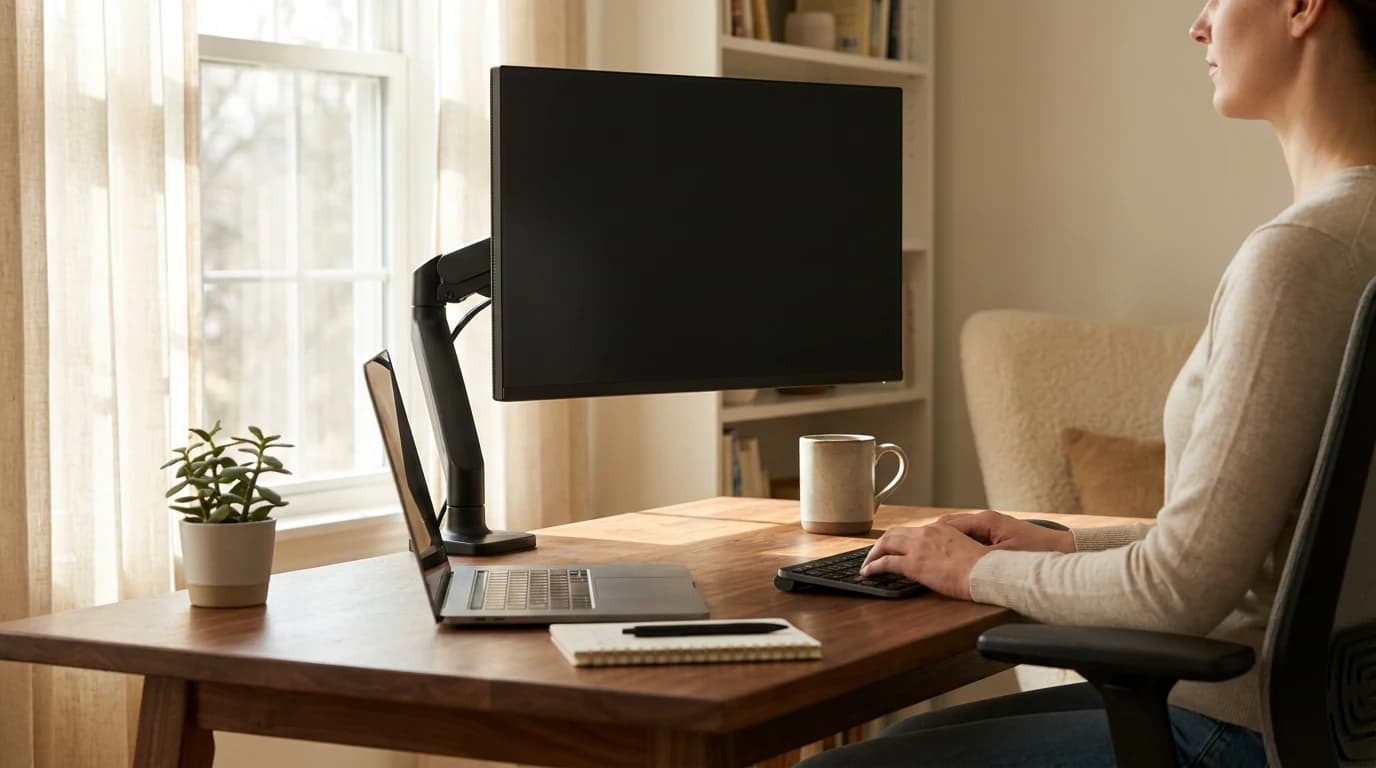
- Monitor distance: 20 to 28 inches (AOA), top of screen slightly below eye level.
- Artificial tears (AAO recommended) for eyes that dry out because you blink less while you concentrate on a screen.
- Night Shift / Night Light at the OS level if you want a warm-tone screen at night: free, and the setting the AAO points to, along with cutting screen time two to three hours before bed.
What's worth knowing
If your eyes feel tired by 3 PM, the cause is usually dry eye, screen distance, glare, or an uncorrected prescription. None of those is something a $40 pair of glasses solves.
Rule of thumb: buy computer glasses for the frame, the fit and the anti-glare coating, not for a promised sleep or health result.
Still want a pair? Our blue light glasses guide ranks five on what they actually deliver. If you wear prescription glasses, ask your eye doctor about a lens for your screen distance, and see one if symptoms persist.
Sources
- Singh et al. Blue-light filtering spectacle lenses for visual performance, sleep, and macular health in adults. Cochrane Database of Systematic Reviews (2023).
- American Academy of Ophthalmology - Should You Be Worried About Blue Light? (consumer guidance)
- American Optometric Association - Computer Vision Syndrome
Your next step
What actually helps your eyes (and sleep).
Hilly Shore Labs
Editorial TeamWFH Lounge is published by Hilly Shore Labs. Every recommendation is built by synthesizing ergonomic research, manufacturer specs, expert reviews from outlets like Wirecutter, RTINGS, and The Verge, and aggregated long-term owner sentiment from thousands of verified buyers.
All product reviews are independently researched. Our recommendations are based on ergonomic guidelines, manufacturer specifications, and verified buyer sentiment. See our methodology.