1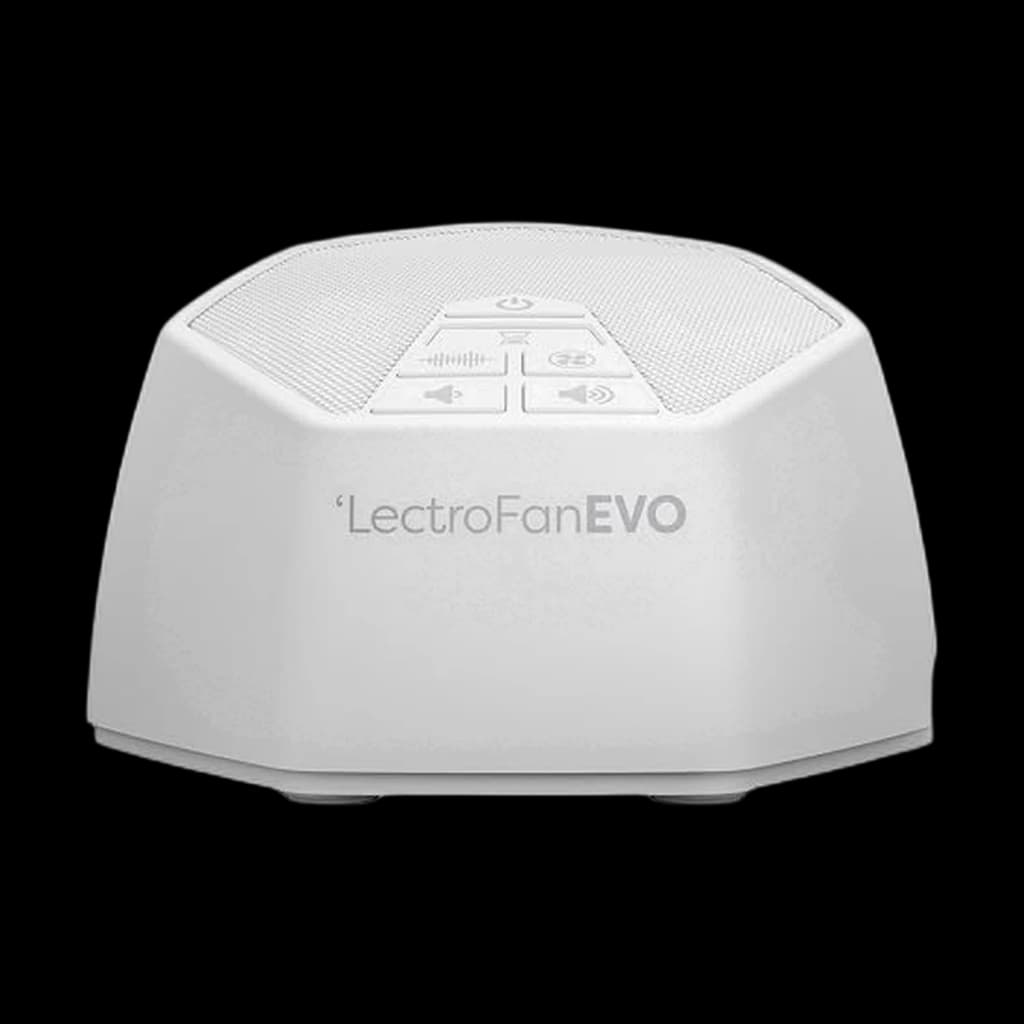 1
1
1LectroFan Evo
⭐ Best ValueThe non-looping electronic machine that actually masks voices - 22 sound profiles, 75 dB output, the WFH default
↑ Sound Quality↑ Sleep Quality↑ Reliability↓ Durability
$64.95 Buy on Amazon
WFH Lounge · Best Picks
Sound machines that mask household noise, muffle voices through walls, and help you focus during deep work or stay asleep through a partner's calls.
Pink and brown noise mask human voices roughly 30-40% better than pure white noise, and non-looping electronic machines like the LectroFan Evo beat cheap.
Top pick
LectroFan Evo
Non-looping fan and white noise generator with 22 distinct sound profiles, 75 dB maximum output, and the precise speech-masking pink noise that r/HomeOffice keeps recommending for open floor plans and shared apartments.
Buy on AmazonValue pick
Magicteam Sound Machine
Best score-to-price ratio in the category at the current Amazon price.
Buy on AmazonSkip this
Sub-$25 looping bedside white noise machines — The cheap mini-machines on Amazon loop their audio file every 30 seconds or less, and within a week your brain locks onto the loop boundary and starts hearing it as a click rather than as background. Once that happens the machine becomes a distraction rather than a mask. They also cap out around 50 dB, which is quieter than normal speech, so they cannot actually mask the voice through your shared wall. The savings of $30 buys you a placebo.
1The non-looping electronic machine that actually masks voices - 22 sound profiles, 75 dB output, the WFH default
 2
2Mechanical fan sound machine that physically moves air - the analog choice with zero electronic loops
 3
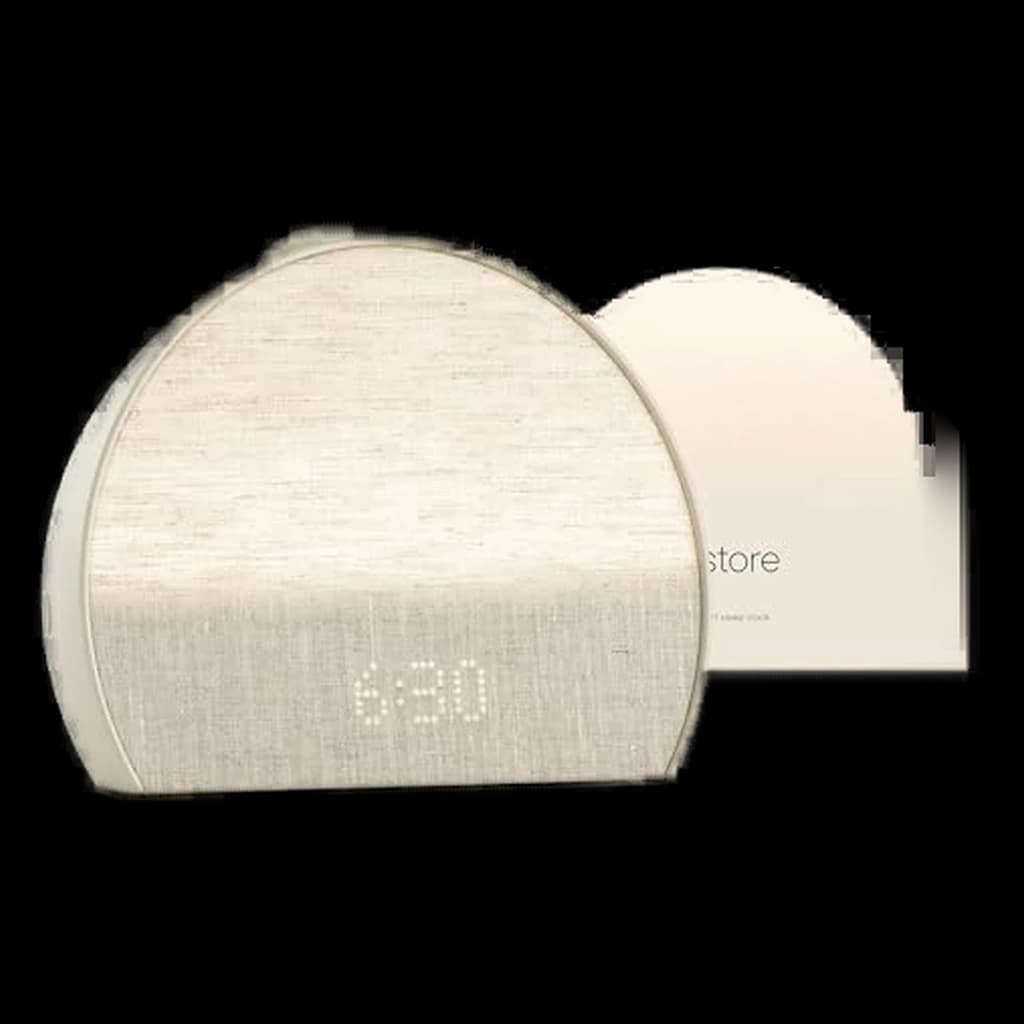
3The premium sleep-tech category leader. Worth it if you'll use the sunrise alarm daily.
 4
4Modern fan-based machine with app control - the quieter design that masks well without the vintage Dohm look
 5
5Dohm Classic with app control - the upgrade path for people who already love the mechanical sound
| Spec | ||||||
|---|---|---|---|---|---|---|
| Buy | ||||||
WFH Scoremethodology → | Sound Quality 70 Features 79 Build & Size 73 Value 73 Owner Satisfaction 71 | Sound Quality 95 Features 74 Build & Size 77 Value 77 Owner Satisfaction 80 | Sound Quality 71 Features 83 Build & Size 74 Value 62 Owner Satisfaction 77 | Sound Quality 85 Features 76 Build & Size 79 Value 63 Owner Satisfaction 79 | Sound Quality 69 Features 78 Build & Size 69 Value 61 Owner Satisfaction 58 | Sound Quality 72 Features 93 Build & Size 81 Value 87 Owner Satisfaction 81 |
| Buyer sentiment | Sound Quality Sleep Quality Reliability Noise Cancellation Durability Buyers praise sound quality, sleep quality, reliability and noise cancellation. Some flag durability. Based on 3,149 user mentions | Sound Quality Sleep Quality Noise Cancellation Effectiveness Volume Durability Buyers praise sound quality, sleep quality, noise cancellation and effectiveness. Mixed feedback on value for money. Some flag volume and durability. Based on 25,451 user mentions | Sleep Quality Appearance Quality Sound Value for money Buyers praise sleep quality, appearance, quality and sound. Mixed feedback on functionality. Some flag value for money. Based on 4,246 user mentions | Sound Quality Sleep Quality Reliability White Noise Buyers praise sound quality, sleep quality, reliability and white noise. Mixed feedback on value for money and noise level. Based on 4,491 user mentions | Sleep Quality Volume Control Noise Cancellation Volume Noise Buyers praise sleep quality, volume control and noise cancellation. Mixed feedback on sound quality and reliability. Some flag volume and noise. Based on 278 user mentions | Sound Quality Compact Size Quality Sound Options Reliability Buyers praise sound quality, compact size, quality and sound options. Some flag reliability. Based on 19,198 user mentions |
| Sound Profiles | 22 non-looping | — | — | — | — | 20 looping |
| Max Output | 75 dB | approx 60 dB | — | approx 70 dB | approx 60 dB | approx 55 dB |
| Power | USB or AC adapter | AC corded only | — | AC corded | AC corded | USB only |
| Timer | 60/90/120 min or continuous | — | — | — | — | 1/2/3/4/5 hours or continuous |
| Weight | 13 oz | 1.5 lbs | — | 1.5 lbs | 1.5 lbs | 8 oz |
| Sound Type | — | Mechanical fan | — | Mechanical fan with tone dial | Mechanical fan | — |
| Speeds | — | 2 plus pitch collar | — | — | — | — |
| Functions | — | — | Sound machine, sunrise alarm, reading light | — | — | — |
| Control | — | — | Touch + app + limited voice | — | — | — |
| Sounds | — | — | Sleep, meditation, wake content | — | — | — |
| Subscription | — | — | Hatch+ optional ($5/mo) | — | — | — |
| Connectivity | — | — | WiFi + Bluetooth | Bluetooth via Snooz app | Wi-Fi via Yogasleep app | — |
* Prices checked Sep 12, 2026 and may not reflect current rates. As an Amazon Associate I earn from qualifying purchases.
As an Amazon Associate I earn from qualifying purchases. Product prices and availability are subject to change.
Northwestern University Feinberg School of Medicine sleep research found that pink noise improved deep-sleep brain wave activity and next-day memory recall in older adults, with effect sizes that pure white noise did not replicate - a finding that translates directly to office focus, where pink noise sits in the same 250 Hz to 4 kHz speech-masking band that disrupts deep work.
r/HomeOffice and r/sleep both default to two recommendations: the LectroFan Evo for anyone working from home in a shared apartment or open office, and the Yogasleep Dohm Classic for sleepers who want a mechanical fan sound with no electronic loops. The Snooz Original appears in nearly every thread asking for a quieter modern alternative. The Hatch Restore 2 dominates parenting and bedroom-office dual-use threads despite the higher price, because the sleep-focus-wake routines justify the cost.
A white noise machine is one of the cheapest WFH upgrades you can make if your problem is noise leakage rather than noise volume. The job of a sound machine is to raise the noise floor in your room enough that distinct sounds (a partner's Zoom call, a neighbor's lawnmower, the dog two doors down) blend into the background instead of standing out. The mechanism is psychoacoustic masking, and the variable that matters most is sound type, not loudness. Pure white noise is bright and harsh; pink noise rolls off the high frequencies (which is why it sounds more like rainfall than static); brown noise rolls off even more, sounding like a distant waterfall or a jet engine from across the runway. For masking human speech specifically, pink and brown profiles outperform white, because human voices sit in the 250 Hz to 4 kHz range and pink noise puts more energy in those bands. The split between fan-based and electronic machines is the next decision. A mechanical fan machine (Yogasleep Dohm) makes a single non-looping sound by physically moving air through a baffled chamber, which is why it sounds organic. Electronic machines (LectroFan Evo, Snooz, Sound+Sleep) generate noise digitally and offer many more sound profiles plus volume range, but the cheapest ones loop audibly every 30 to 60 seconds, which the brain hears once you notice it. Smart machines (Hatch Restore 2) add scheduling, sunrise alarms, and meditation content but cost twice as much for the noise generation alone. For pure focus and speech masking during the workday, a non-looping electronic machine (LectroFan Evo) at 50 to 65 dB is the sweet spot. For a bedroom that doubles as an office, the Hatch Restore 2 earns its premium because it shifts modes for sleep, focus, and wakeup. Skip the $20 Amazon mini-machines that loop every 8 to 10 seconds and skip any machine that maxes out below 60 dB if your room shares a wall with traffic. Capacity matters too; small bedside machines top out at 50 dB which is below typical conversation volume (60 dB), so they cannot mask voice through a wall. Look for machines rated above 75 dB for genuine masking power. Finally, plan for placement: between you and the noise source, not next to your head, with the machine pointed at the wall the sound is coming from.
Lyrics measurably hurt reading and memory, binaural beats failed a controlled test, and instrumental is neutral. What to actually play while you work.
Sound machines ranked for masking voices and deep-work focus in 2026. LectroFan Evo wins for non-looping speech masking; Hatch Restore 2 for dual-use.
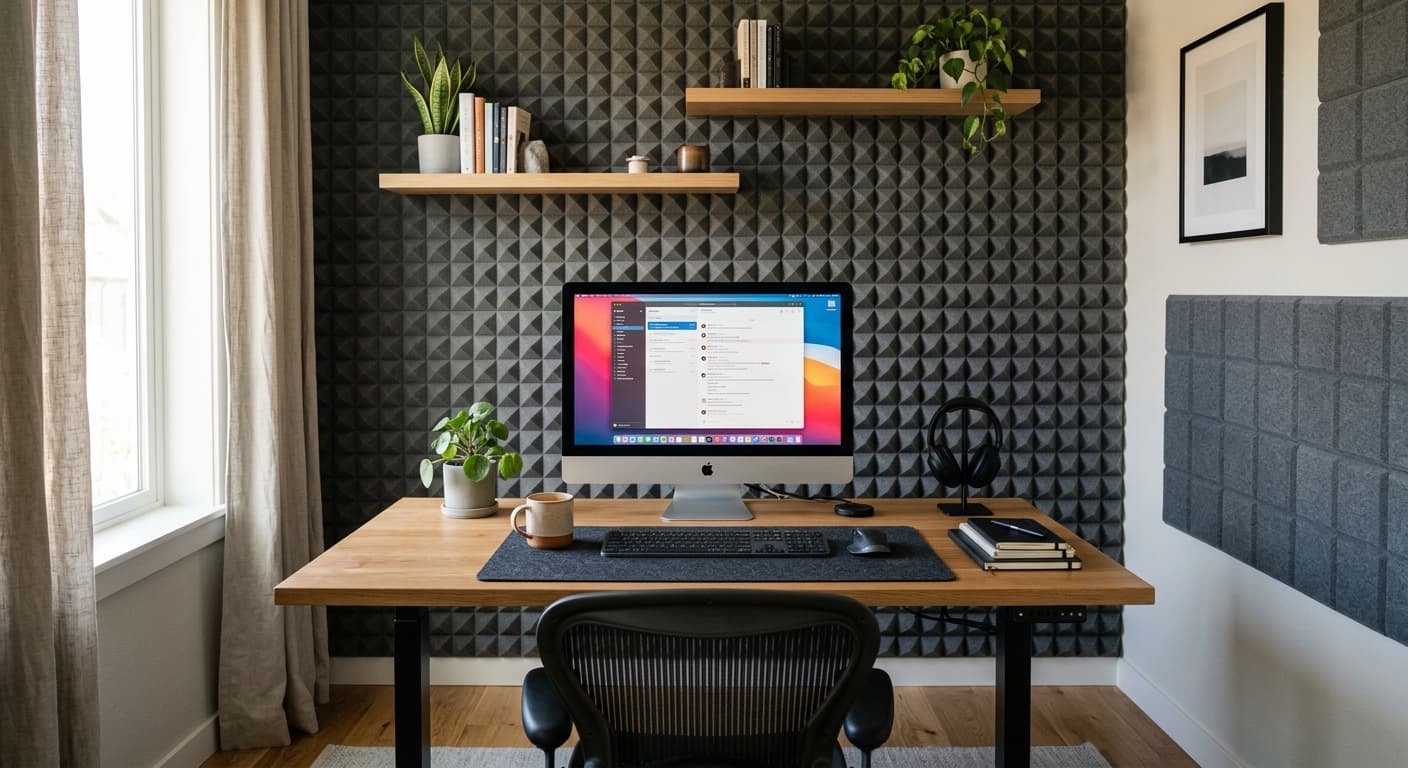
How to soundproof a home office — acoustic panels, door seals, thick rugs, and noise-canceling headphones compared by cost and effectiveness for WFH use.
