1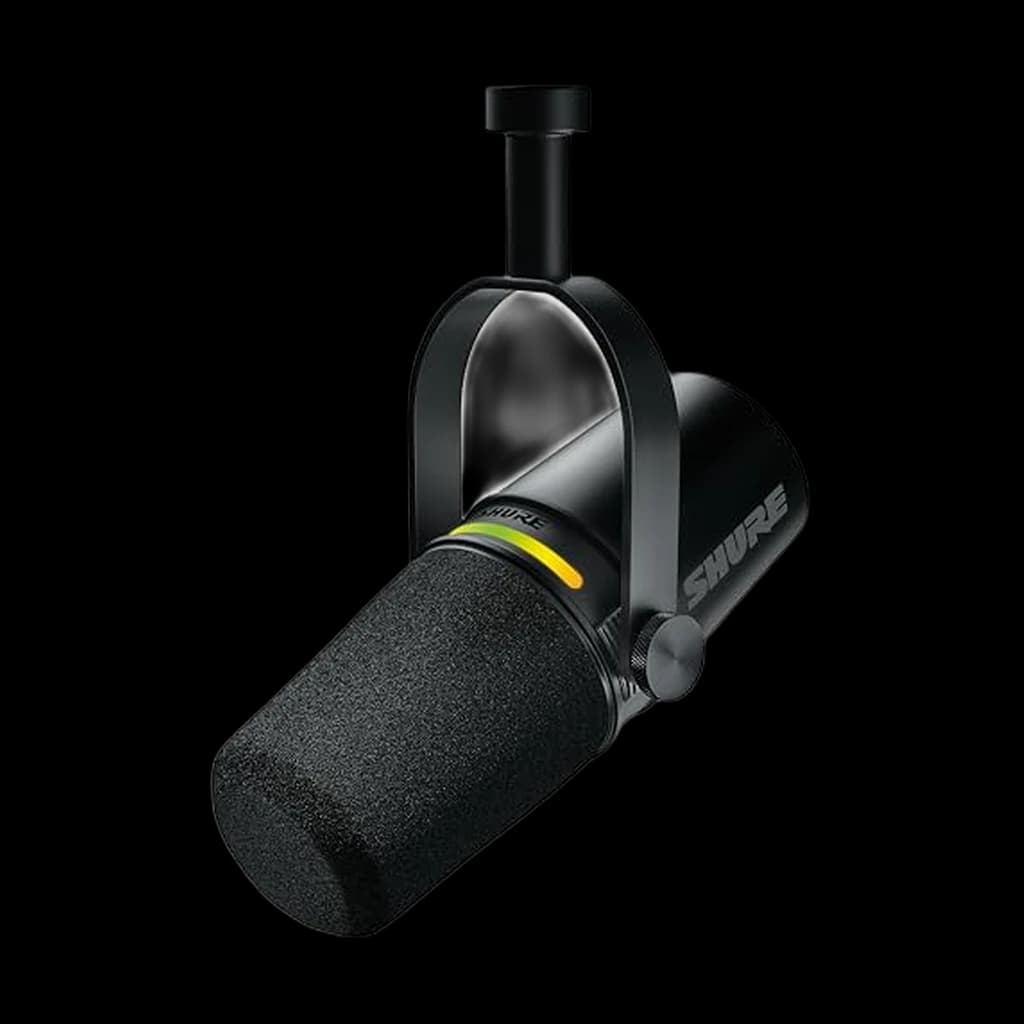 1
1
1Shure MV7+
👑 Premium PickThe hybrid USB/XLR dynamic mic that does meetings and podcasting equally well - the buy-once answer for serious remote work voice
↑ Quality↑ Sound Quality↑ Ease Of Use
$299 Buy on Amazon
WFH Lounge · Best Picks
Plug-and-play USB microphones that turn a laptop or desktop into a meeting-ready, podcast-ready, broadcast-grade voice rig.
For most remote workers in an untreated home office, a dynamic USB mic placed within six inches of the mouth beats a fancier condenser two feet away.
Top pick
Shure MV7+
The hybrid USB/XLR dynamic mic that nails meetings and podcasting in one device - Auto Level Mode keeps your voice consistent on calls, and the broadcast tone matches what radio hosts have used for decades.
Buy on AmazonValue pick
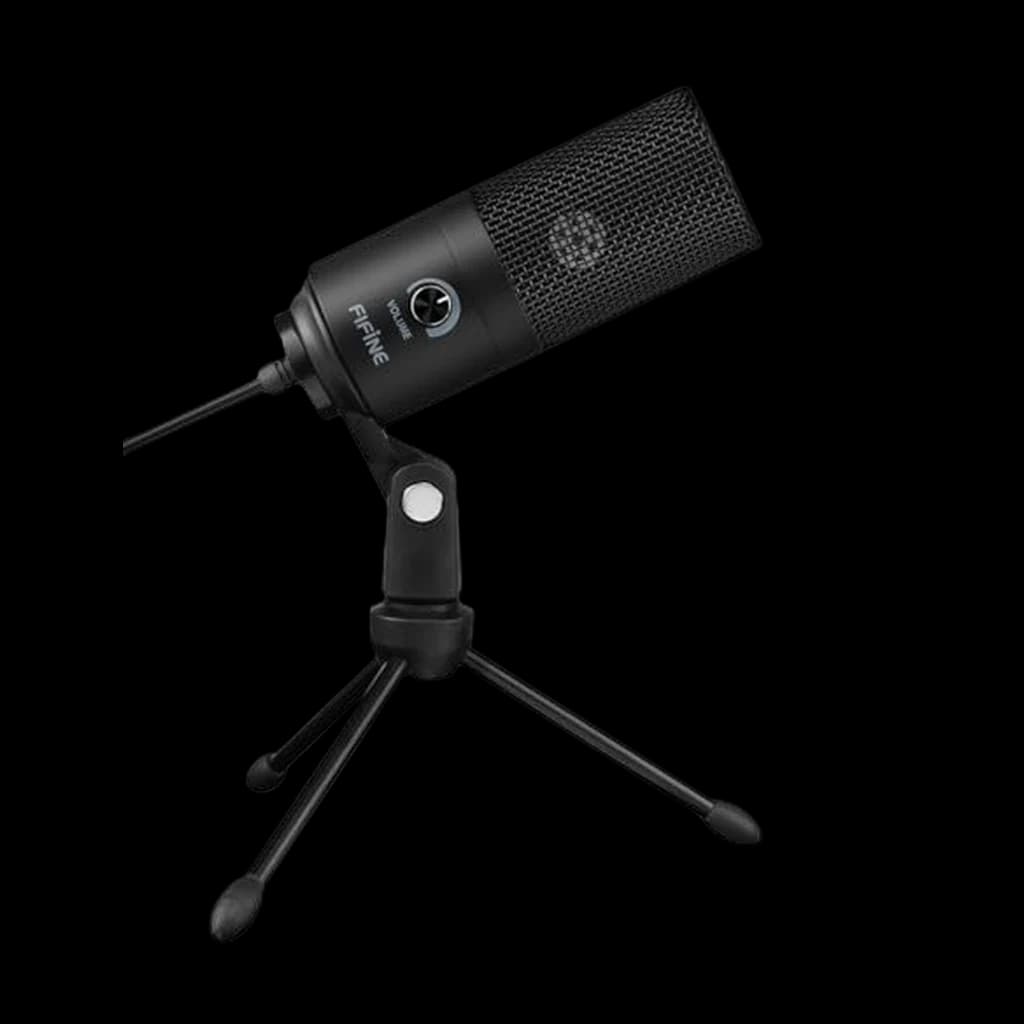
FIFINE K669B
Best score-to-price ratio in the category at the current Amazon price.
Buy on AmazonBudget pick
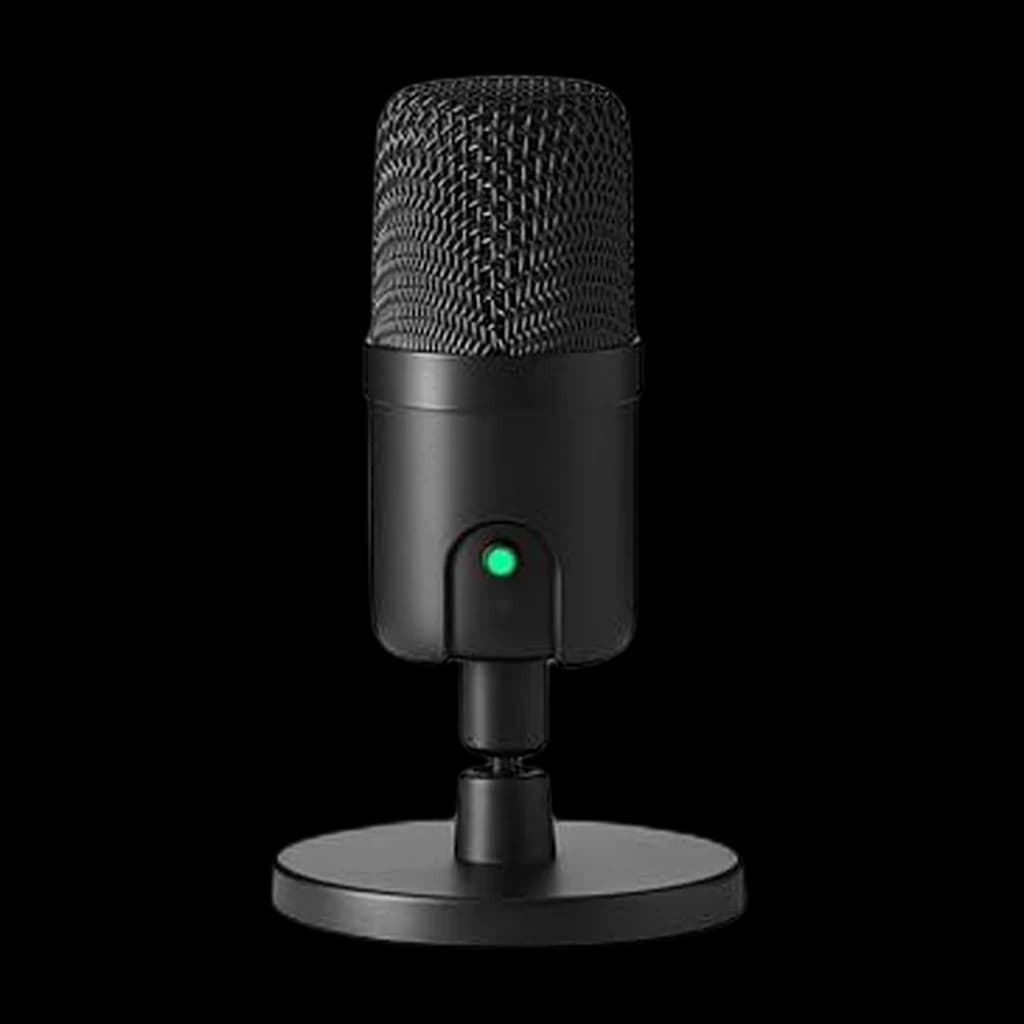
Amazon Basics USB Condenser Microphone, Cardioid
Lowest-priced pick in the category that still clears our 4.0★ minimum on Amazon.
Buy on AmazonSkip this
No-name $20-30 USB condenser mics with RGB lighting — These are condenser mics with too-cheap capsules in a market dominated by FIFINE and Maono clones. They sound boxy out of the box, pick up every keyboard click and HVAC rumble in the room, and have shockingly common USB connector failure inside the first year. The $25 saved costs you a re-buy and a noticeably worse first impression on every video call in between.
1The hybrid USB/XLR dynamic mic that does meetings and podcasting equally well - the buy-once answer for serious remote work voice
 2
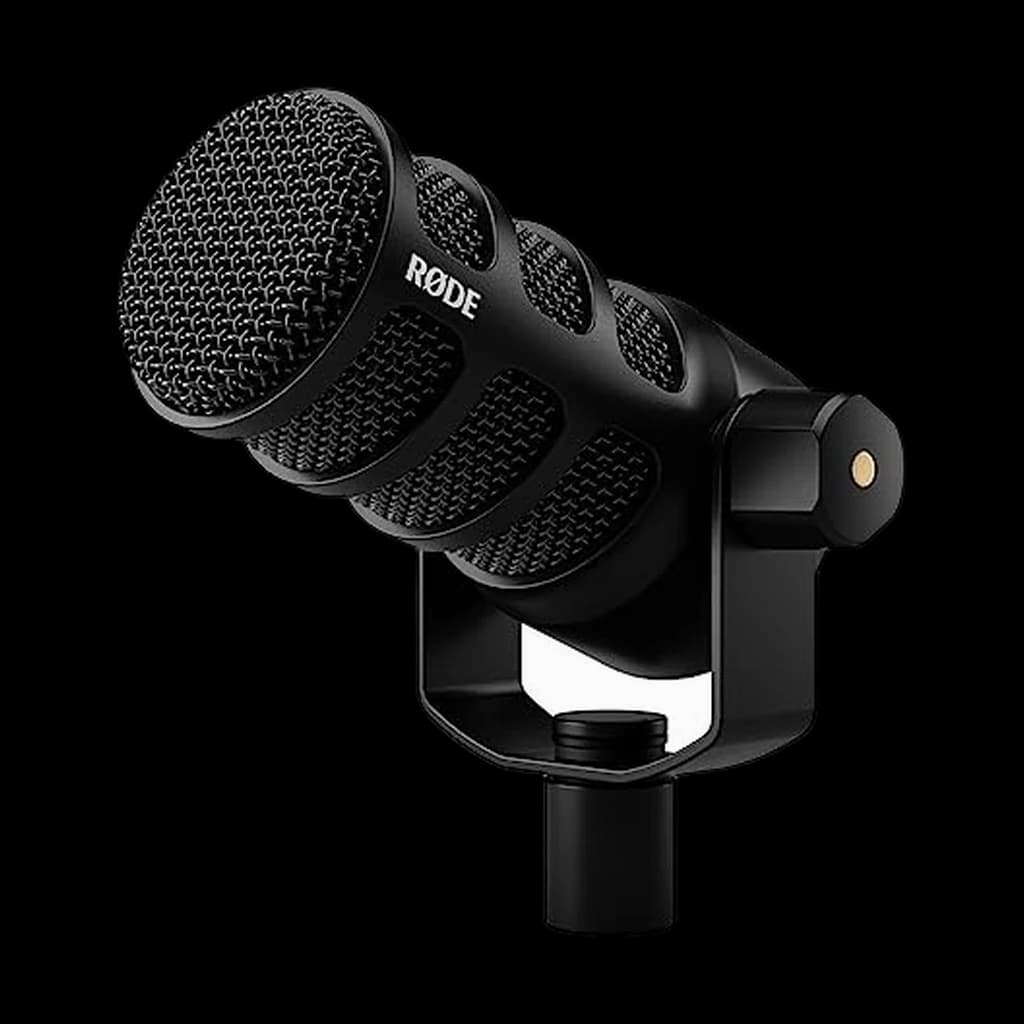
2Broadcast-tuned dynamic with full APHEX onboard processing - the podcast-first hybrid pick at a lower price than the MV7+
 3
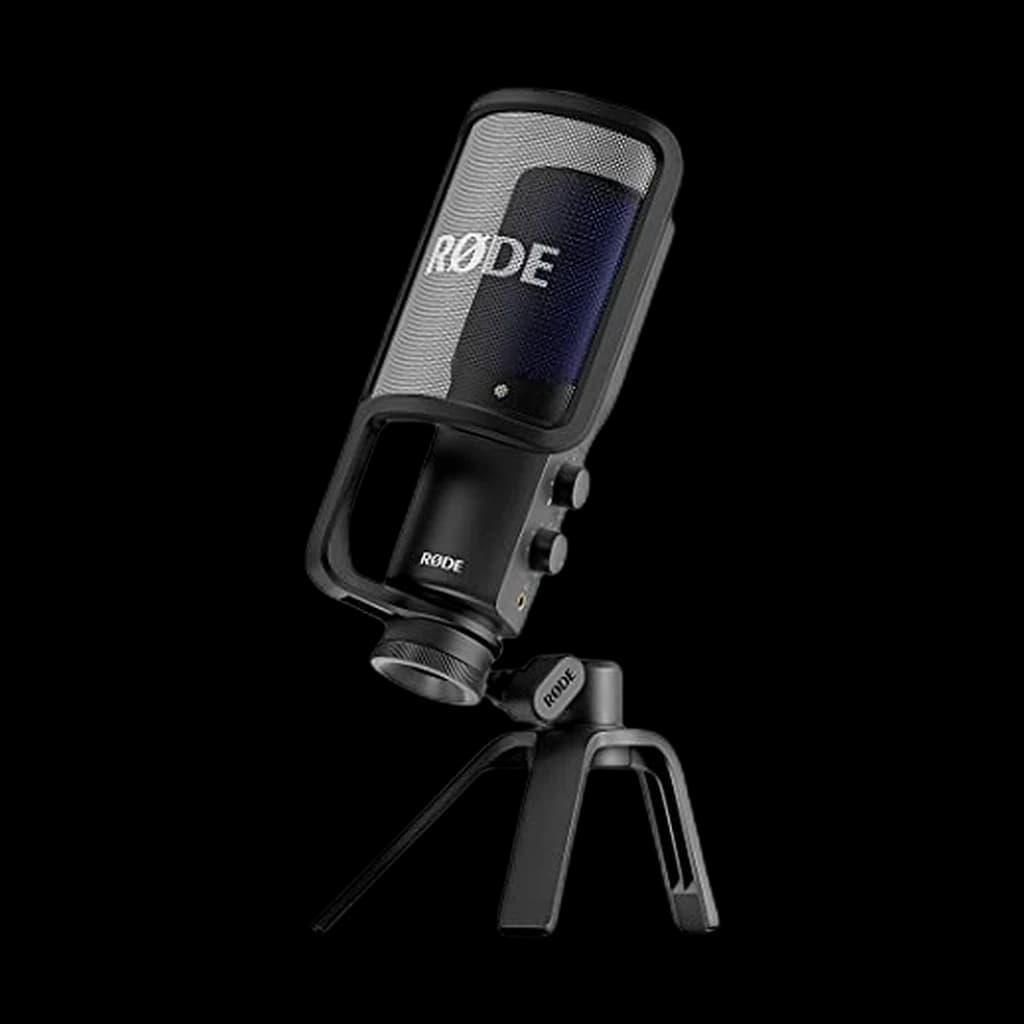
3The studio condenser pick - lush, detailed sound for treated rooms and serious voiceover work
 4
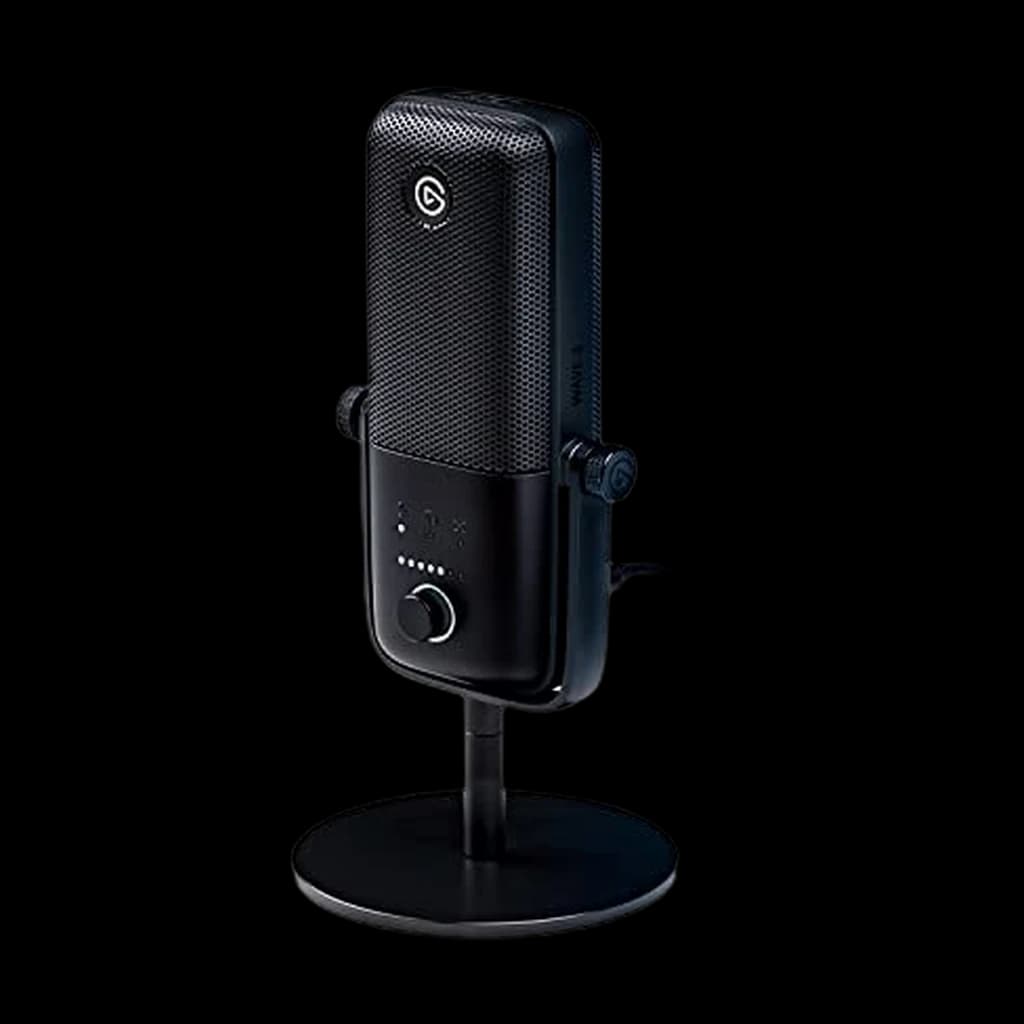
4The Elgato Wave:3 MK.2 is the current revision of the Wave:3 USB condenser mic, with onboard capacitive mute and Wave Link mixing software for calls and streaming; around $170.
 5
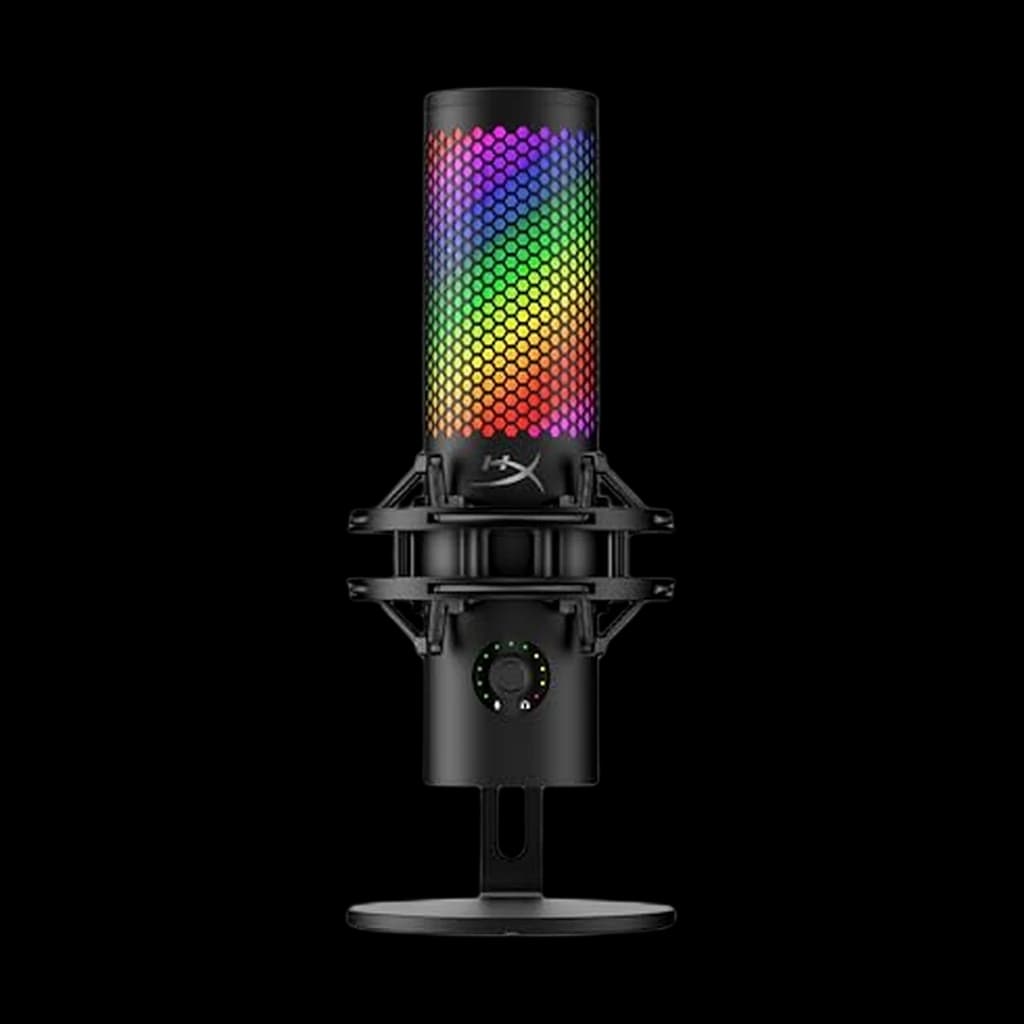
5Four polar patterns plus RGB in one mic - the versatile gaming and meetings condenser
| Spec | ||||||||
|---|---|---|---|---|---|---|---|---|
| Buy | ||||||||
WFH Scoremethodology → | Sound Quality 83 Build & Features 77 Ease of Use 80 Value 64 Owner Satisfaction 83 | Sound Quality 93 Build & Features 87 Ease of Use 78 Value 64 Owner Satisfaction 75 | Sound Quality 70 Build & Features 69 Ease of Use 78 Value 61 Owner Satisfaction 68 | Sound Quality 78 Build & Features 78 Ease of Use 78 Value 79 Owner Satisfaction 87 | Sound Quality 83 Build & Features 89 Ease of Use 74 Value 77 Owner Satisfaction 80 | Sound Quality 85 Build & Features 86 Ease of Use 76 Value 88 Owner Satisfaction 81 | Sound Quality 79 Build & Features 79 Ease of Use 76 Value 86 Owner Satisfaction 78 | Sound Quality 78 Build & Features 75 Ease of Use 78 Value 87 Owner Satisfaction 80 |
| Buyer sentiment | Quality Sound Quality Ease Of Use USB Connectivity Buyers praise quality, sound quality, ease of use and usb connectivity. Mixed feedback on functionality and value for money. Based on 316 user mentions | Sound Quality Quality Value for money Ease Of Use Buyers praise sound quality, quality, value for money and ease of use. Mixed feedback on functionality and usb connectivity. Based on 345 user mentions | Quality Sound Quality Ease Of Use Noise Level Stability Buyers praise quality, sound quality, ease of use and noise level. Mixed feedback on compatibility and value for money. Some flag stability. Based on 219 user mentions | Quality Sound Quality Value for money Ease Of Use Buyers praise quality, sound quality, value for money and ease of use. Mixed feedback on reliability and software. Based on 865 user mentions | Quality Sound Quality Easy To Set Up Appearance Software Buyers praise quality, sound quality, easy to set up and appearance. Mixed feedback on reliability and rgb lighting. Some flag software. Based on 174 user mentions | Sound Quality Quality Value for money Connectivity Durability Buyers praise sound quality, quality, value for money and connectivity. Mixed feedback on reliability and background noise. Some flag durability. Based on 1,391 user mentions | Sound Quality Quality Value for money Functionality Background Noise Durability Buyers praise sound quality, quality, value for money and functionality. Some flag background noise and durability. Based on 7,139 user mentions | Functionality Quality Sound Quality Value for money Buyers praise functionality, quality, sound quality and value for money. Mixed feedback on noise level. Based on 274 user mentions |
| Type | Dynamic, Cardioid | Dynamic, Cardioid | Condenser, Cardioid | — | Condenser, 4 patterns | Dynamic, Cardioid | Condenser, Cardioid | USB condenser |
| Connectivity | USB-C plus XLR | USB-C plus XLR | USB-C only | — | USB-C only | USB-A plus XLR | USB-A only | — |
| Sample Rate | 24-bit/48kHz | 24-bit/48kHz | 24-bit/48kHz | — | 24-bit/96kHz | 16-bit/48kHz | 16-bit/44.1kHz/48kHz | — |
| Frequency Response | 50 Hz to 16 kHz | 20 Hz to 20 kHz | 20 Hz to 20 kHz | — | 20 Hz to 20 kHz | 50 Hz to 15 kHz | 30 Hz to 16 kHz | — |
| Headphone Output | Yes, 3.5mm | Yes, 3.5mm | Yes, 3.5mm | — | Yes, 3.5mm | Yes, 3.5mm | No | — |
| Brand | — | — | — | Elgato | — | — | — | — |
| Pattern | — | — | — | — | — | — | — | Cardioid |
| Diaphragm | — | — | — | — | — | — | — | 14mm |
| Mute | — | — | — | — | — | — | — | One-tap, syncs with host |
| Mount | — | — | — | — | — | — | — | 360-degree desk stand, detachable to boom |
* Prices checked Sep 12, 2026 and may not reflect current rates. As an Amazon Associate I earn from qualifying purchases.
As an Amazon Associate I earn from qualifying purchases. Product prices and availability are subject to change.
Shure's published polar pattern data shows a cardioid dynamic mic rejects sounds arriving from 180 degrees off-axis by approximately 25 dB - meaning a keyboard or HVAC source behind the mic is roughly 18 times quieter at the capsule than your voice in front of it. That rejection ratio is the entire reason dynamic mics outperform condensers in untreated home offices, regardless of price.
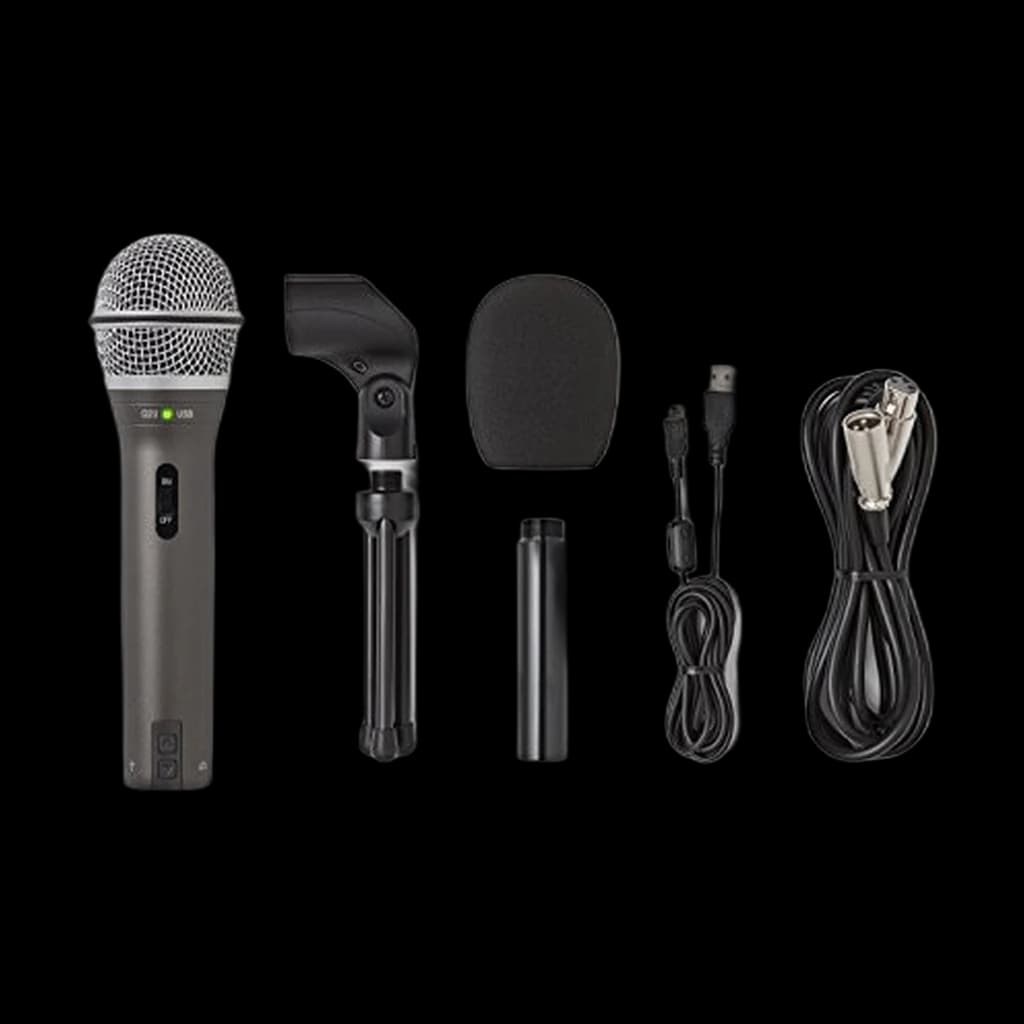
r/podcasting, r/HomeOffice, and r/microphones consistently land on three picks. The Shure MV7+ is the recommended buy-once mic for anyone who takes their voice seriously - meetings or podcasting. The Rode PodMic USB is the runner-up dynamic for podcast-first setups with full XLR upgrade headroom. For under $80, the Samson Q2U is the long-running consensus answer that has held up for over a decade. Threads asking for sub-$40 picks consistently land on the FIFINE K669B as the only budget condenser that actually clears the laptop-mic-quality bar.
A USB microphone is the single biggest audio quality upgrade you can make to a remote-work setup, but the picks split sharply by use case and the wrong choice will sound worse than the laptop's built-in mic. The first decision is dynamic versus condenser. Dynamic mics (Shure MV7+, Rode PodMic USB, Samson Q2U) reject room noise aggressively, which is what you want in a normal home office with hard walls, ceiling fans, or shared rooms - they only pick up what is six inches in front of them. Condenser mics (Rode NT-USB+, Blue Yeti X, Elgato Wave:3, HyperX QuadCast 2, FIFINE K669B) are far more sensitive, which sounds gorgeous in a treated room but pulls in keyboard clicks, refrigerator hum, and the neighbour's leaf blower in an untreated one. For 80% of remote workers in a normal home, dynamic is the safer pick. The second decision is USB-only versus USB plus XLR. USB-only mics (NT-USB+, Wave:3, QuadCast 2, Yeti X, K669B) are simpler to set up and cost less. Hybrid USB/XLR mics (MV7+, PodMic USB, Q2U) cost slightly more but give a clean upgrade path to a real audio interface later without buying a new microphone. For anyone who might podcast in 18 months, the hybrid pick is worth the extra spend now. The third decision is dual-purpose meetings versus podcast. Meetings reward consistency over warmth - a mic that sounds the same whether you lean in or back, with built-in features like auto-leveling and noise suppression (MV7+, Wave:3). Podcasting rewards proximity-effect warmth on a properly placed mic three to six inches from the mouth (PodMic USB, MV7+, NT-USB+). The MV7+ wins both jobs because it has a built-in Auto Level Mode for meetings and broadcast tone for podcasting. Skip the cheap clip-on lavaliers and the no-name $20 USB headsets that flood the Amazon search - they exist to make built-in laptop mics look good. Position matters as much as the mic. Even a $299 Shure MV7+ sounds bad sitting two feet across the desk; even a $35 FIFINE K669B sounds usable six inches from the mouth on a boom arm. Plan for a desk arm or boom stand at the same time you buy the mic, or budget for one straight after - a great mic two feet away is an incomplete upgrade.
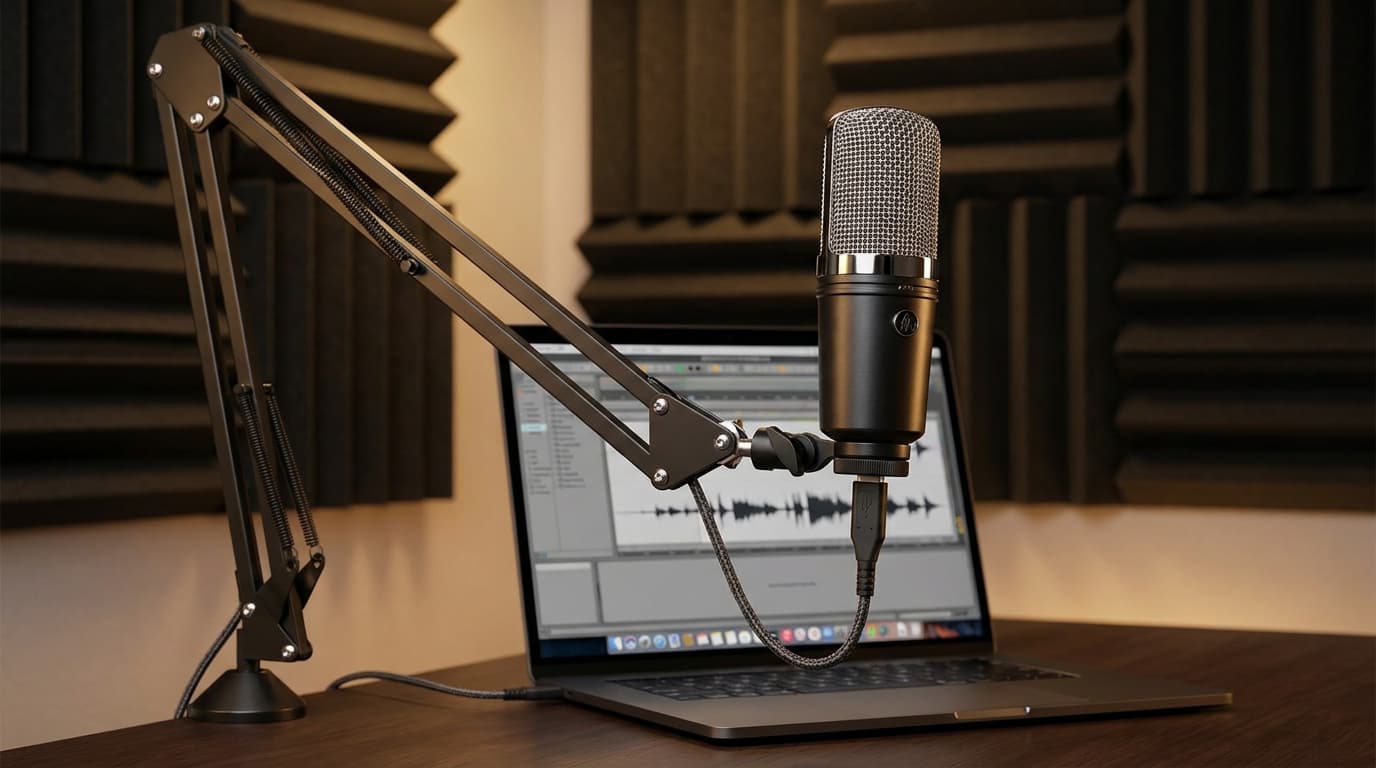
The 7 best USB microphones for remote workers in 2026 - Shure MV7+ wins overall, Rode PodMic USB for podcast-first, Samson Q2U budget hybrid. Plus the dynamic v...
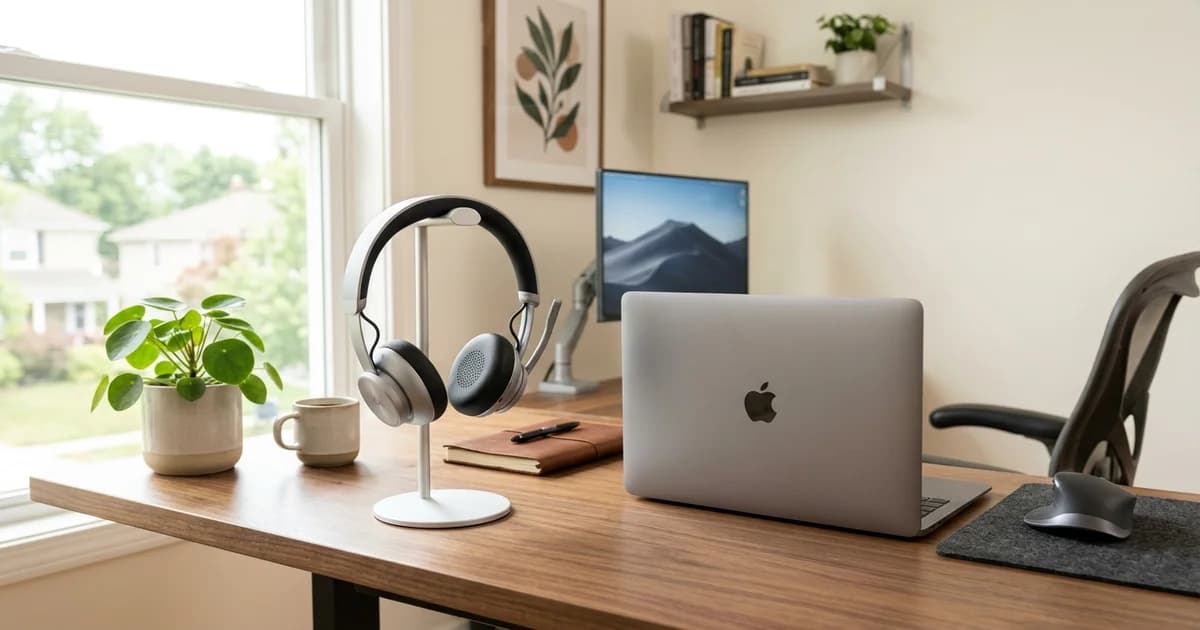
5 headphones ranked for Zoom, Meet, and Teams. AirPods Pro 3 wins overall, Jabra Evolve2 65 wins on mic for noisy rooms and back-to-back call days.
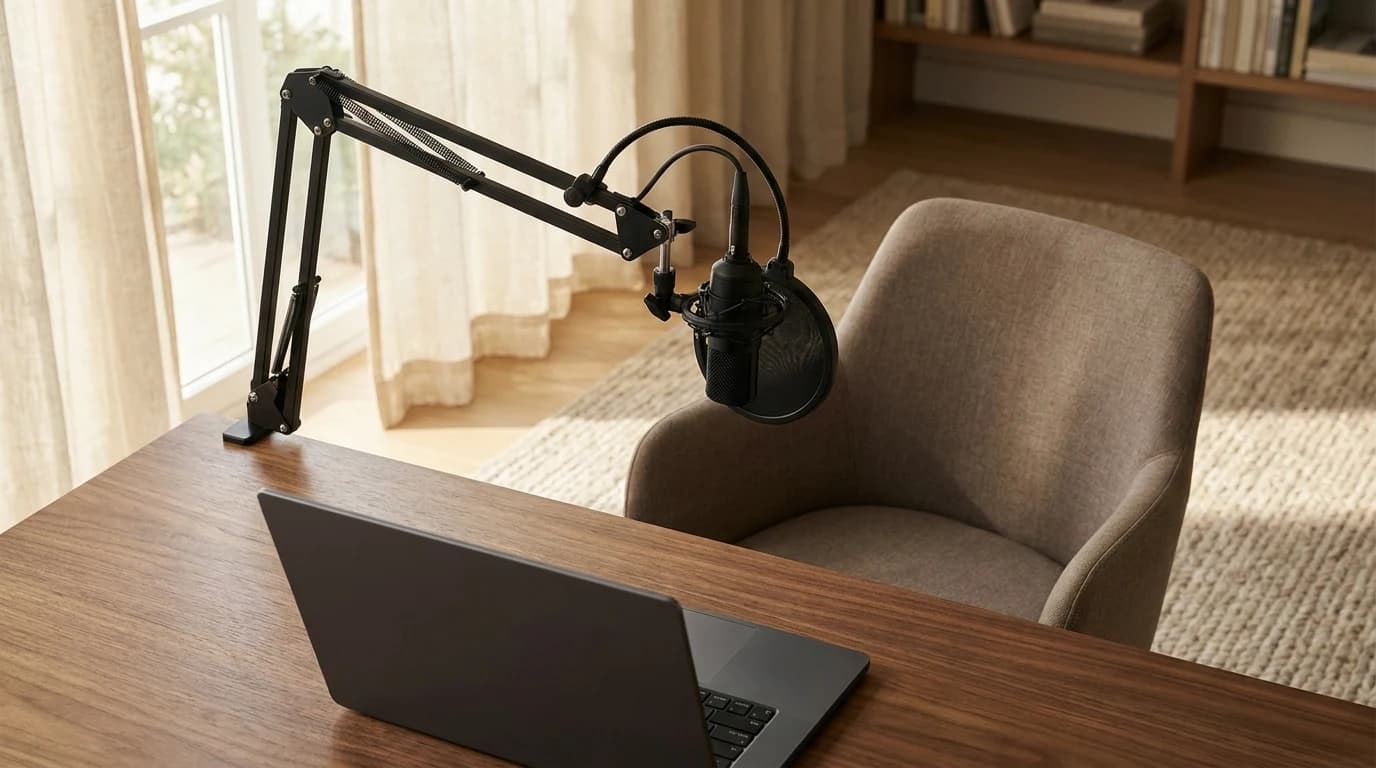
You sound worse on calls than you should — and it's almost never your voice. The three real causes, in order, and the free fixes that beat buying a mic.