How to Soundproof Your Home Office: Cheap Solutions
Acoustic panels + a good headset is the $75 solution that makes the biggest difference for call quality. Door sweep for $15 is the highest-ROI structural change. ANC headphones for blocking noise coming in.
Quick Answer
Acoustic panels plus a quality headset is the $75 combination that improves call quality most — panels kill the echo your mic picks up. A $15 door sweep is the highest-ROI structural change for noise coming in, and ANC headphones handle whatever gets through. True soundproofing is construction; sound absorption is what's realistic at home.
Key Takeaways
How to soundproof a home office — acoustic panels, door seals, thick rugs, and noise-canceling headphones compared by cost and effectiveness for WFH use.
As an Amazon Associate I earn from qualifying purchases. Product prices and availability are subject to change.
Home office noise has two directions: noise coming in (neighbors, family, street) and noise going out (you on video calls, disturbing others). Most soundproofing guides address the wrong problem — they focus on blocking sound entirely (expensive, structural) when most WFH users need to reduce it (cheap, effective).
Here's the practical approach.
True Soundproofing vs. Sound Absorption
True soundproofing blocks sound transmission between rooms. It requires mass (heavy walls, double-paned glass), decoupling (separating wall structures with air gaps), and sealing every gap. It's expensive, structural, and largely impractical for renters.
Sound absorption reduces echo and reverberation within a room, improving voice clarity on calls and reducing the amount of sound that escapes. It requires soft materials (fabric, foam, rugs) and is cheap, non-destructive, and highly effective for WFH purposes.
For most remote workers, sound absorption is what you actually need — not true soundproofing.
The Highest-Impact Changes
Acoustic Panels (Best Bang for Buck)
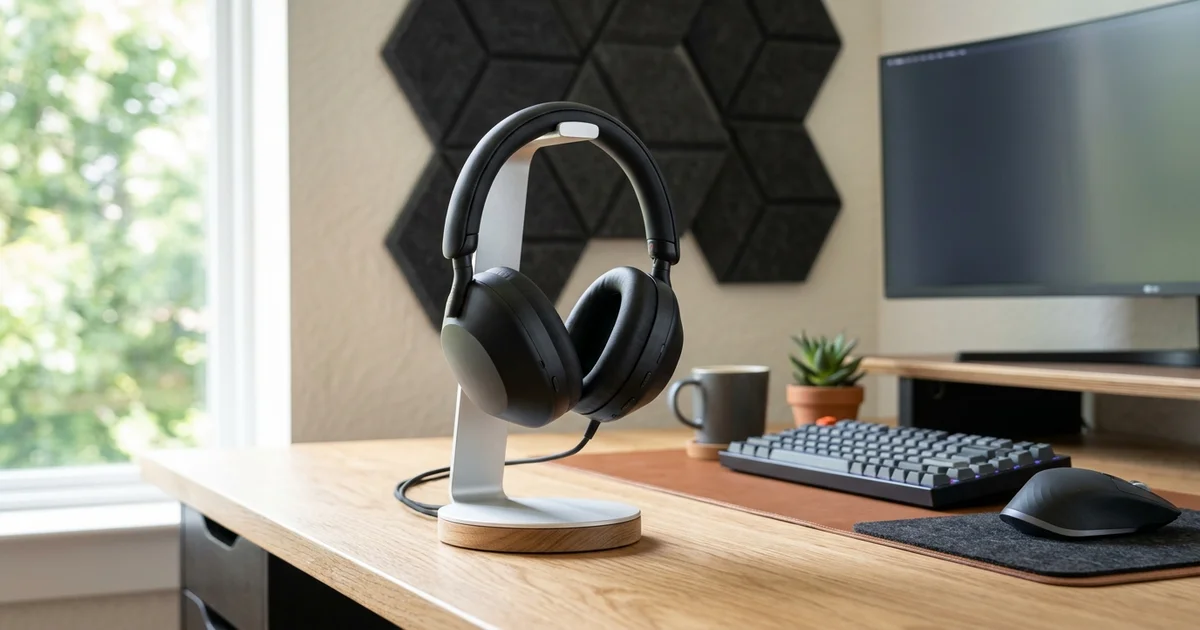
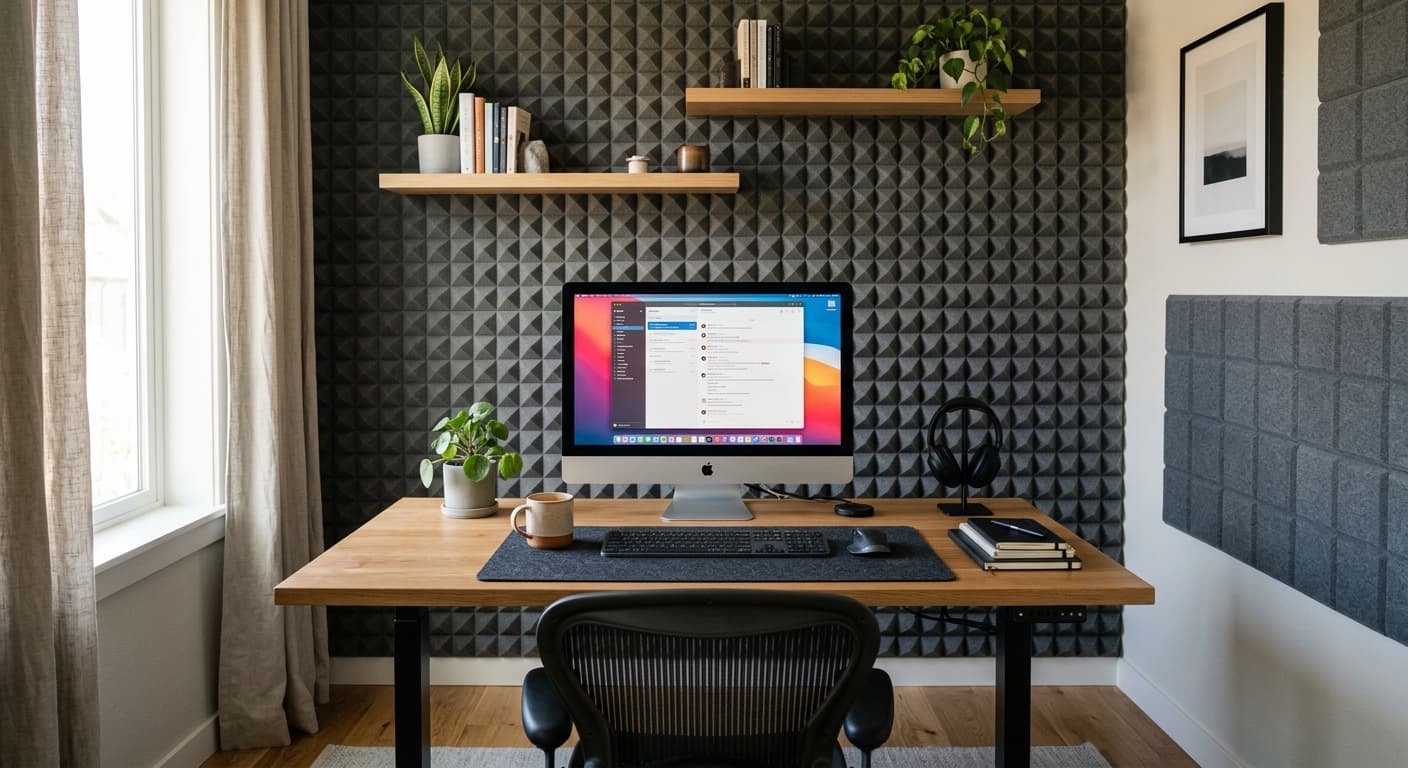
Self-adhesive foam acoustic panels on the wall behind and around your desk absorb reflected sound, reducing the room's reverb. On video calls, this makes your voice sound cleaner and more professional — similar to the difference between talking in a bathroom vs. a bedroom.
A set of 12 panels ($25–$40) applied to two walls behind your desk makes a noticeable difference. They don't need to cover every surface — targeting the reflection points (directly behind your desk, the wall to the side) is sufficient.
Door Seals and Draft Stoppers
The most effective single change for reducing sound transmission is sealing gaps around the door. A door with a gap at the bottom transmits sound almost as easily as no door at all. A door sweep ($10–$20) or adhesive foam door seal kit ($15) dramatically reduces what passes through.
Heavy Curtains
Sound travels through windows. Heavy blackout curtains do double duty: they block light for video call backgrounds and absorb a meaningful amount of sound transmission from outside. The denser the fabric, the more effective.
Rugs and Soft Furnishings
Hard floors reflect sound; soft surfaces absorb it. A rug under your desk, upholstered chair, and bookshelf of books all contribute to sound absorption. If you're working in a room that sounds echoey, adding soft furnishings is the cheapest fix.
For Video Call Audio Quality
If the goal is specifically better audio on video calls (not blocking sound from family or neighbors), the most effective solutions in order are:
-
Use headphones with a noise-canceling microphone — the headset microphone is physically close to your mouth and most quality headsets have active noise cancellation in the mic chain. This is far more effective than room acoustic treatment for call quality. See our best headsets for Zoom guide.
-
Acoustic panels behind you — reduces reflected sound that the microphone picks up.
-
Close the door — with a door sweep installed.
For Reducing Noise Coming In
When family or construction noise is breaking your concentration:
-
Noise-canceling headphones — the single best tool. See our noise-canceling headphones WFH guide. ANC headphones reduce low-frequency ambient noise by 20–35 dB.
-
White noise machine — masks irregular noise (conversation, footsteps) with a consistent broadband sound. Works better for focus than for video calls.
-
Door sweep + acoustic panels — reduces transmission but doesn't eliminate it.
Practical Soundproofing Budget Guide
| Budget | Best Moves | Expected Impact |
|---|---|---|
| Under $50 | Door sweep + 12 acoustic panels | Better call audio, reduced echo |
| $50–$150 | Above + heavy curtains + desk rug | Meaningful noise reduction for focus |
| $150–$300 | Above + quality ANC headphones | Near-professional call quality, good focus isolation |
| $300+ | Above + white noise machine + bookshelf as sound buffer | Comprehensive solution |
For more noise solutions, see our comprehensive best noise solutions WFH guide.
🏆 Bottom Line: For better video call audio, acoustic panels + a quality headset is the $75 combination that outperforms everything. For blocking noise coming in, ANC headphones are irreplaceable. Door sweeps are the highest-ROI structural change at $15.
Sources
- Long M — Architectural Acoustics Illustrated. Wiley, 2014.
- OSHA — Occupational noise exposure and hearing protection guidelines. osha.gov.
- Sabine WC — Reverberation equations and room acoustics. (historical reference)
- Noise Pollution Clearinghouse — Indoor noise measurement and reduction. nonoise.org.
- Acoustic Society of America — Room acoustics for home offices. acousticalsociety.org.
Your next step
Quieter calls start here.
Hilly Shore Labs
Editorial TeamWFH Lounge is published by Hilly Shore Labs. Every recommendation is built by synthesizing ergonomic research, manufacturer specs, expert reviews from outlets like Wirecutter, RTINGS, and The Verge, and aggregated long-term owner sentiment from thousands of verified buyers.
All product reviews are independently researched. Our recommendations are based on ergonomic guidelines, manufacturer specifications, and verified buyer sentiment. See our methodology.