Best Home Office Plants 2026: 9 Low-Maintenance Desk Picks
Quick Answer
Snake plants (Sansevieria) are the best home office plant — they survive neglect, low light, and irregular watering, while NASA research credits them with removing formaldehyde and benzene from indoor air. ZZ plants and pothos are close runners-up for the same reasons.
Key Takeaways
Nine indoor plants ranked for home offices with low light in 2026. Plus the 3 species that forgive neglect and the one most WFH buyers kill first.
As an Amazon Associate I earn from qualifying purchases. Product prices and availability are subject to change.
Why Every Home Office Needs at Least One Plant
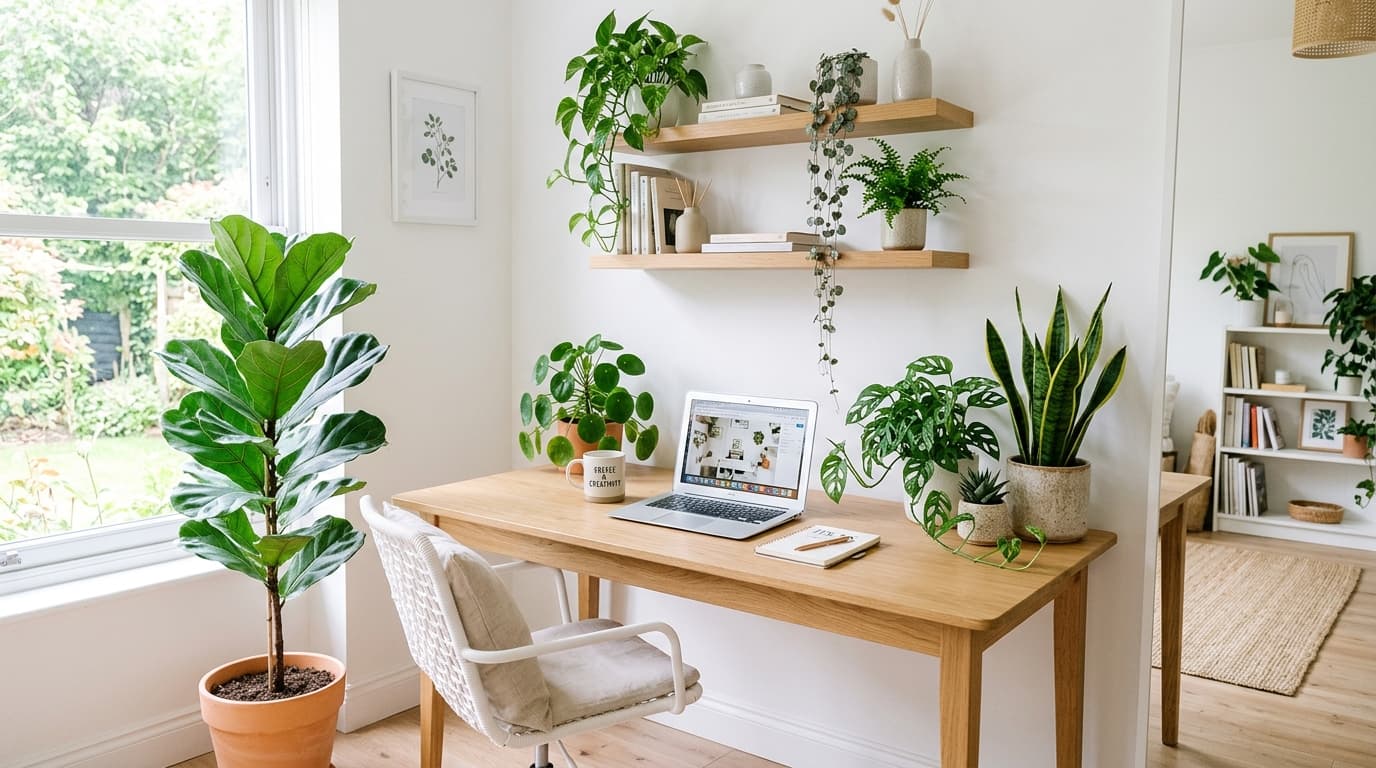
Adding plants to your workspace isn't just about aesthetics — though they do make a home office look significantly better on video calls. Research consistently shows that indoor plants:
- Reduce stress
- Improve air quality
- Boost mood
- Increase productivity
A 2022 study in the Journal of Environmental Psychology found that workers with plants in their workspace reported 15% higher well-being and were more productive on creative tasks.
The challenge for remote workers is finding plants that thrive indoors without requiring constant attention. You're busy with deadlines and meetings — you need greenery that survives occasional neglect, low light, and the dry air that HVAC systems create. Here are our top picks.
| Plant | Care level | Light | Water |
|---|---|---|---|
| Pothos | Beginner | Low light | When the soil feels dry, roughly every 1-2 weeks |
| Snake plant | Beginner | Low light | Every 2-3 weeks |
| ZZ plant | Beginner | Low to moderate light | Every 2-3 weeks |
| Rubber plant | Intermediate | Bright, indirect | When the top inch of soil is dry |
| Monstera deliciosa | Intermediate | Bright indirect | Weekly |
| Peace lily | Beginner to intermediate | Bright indirect, tolerates low | When the top inch of soil is dry |
| Succulents and cacti | Beginner, with direct light | Bright, direct | Sparingly — every 2-3 weeks in summer, monthly in winter |
| Air plants | Beginner | Bright, indirect | Soak 20-30 minutes once a week |
Best Low-Light Plants for Home Offices
Pothos (Epipremnum aureum)
If you've never kept a plant alive, start here. Pothos is virtually indestructible. It thrives in low light, tolerates irregular watering, and grows quickly, giving you visible results that are genuinely motivating. The trailing vines look beautiful on a shelf above your desk or in a hanging planter near a window.
Care level: Beginner. Water when the soil feels dry (roughly every 1-2 weeks). That's it. Pothos will tell you when it's thirsty — the leaves droop slightly — and perks right back up after watering.
Snake Plant (Sansevieria trifasciata)
Snake plants are the ultimate set-and-forget office plant. They tolerate low light, infrequent watering, and a wide range of temperatures. Their upright, architectural leaves add a modern look to any workspace without taking up much horizontal space — perfect for small desks.
Bonus: snake plants are one of the best air-purifying plants, filtering toxins like formaldehyde and benzene that off-gas from furniture and electronics. NASA's Clean Air Study specifically recommended them for indoor environments.
Care level: Beginner. Water every 2-3 weeks. The most common way to kill a snake plant is overwatering, so when in doubt, leave it alone.
ZZ Plant (Zamioculcas zamiifolia)
The ZZ plant's glossy, dark green leaves look polished and professional — like something you'd see in a high-end office lobby. It thrives in low to moderate light and can go weeks without water thanks to its rhizome root system that stores moisture underground.
Care level: Beginner. Water every 2-3 weeks. Place it anywhere in your office — it genuinely doesn't care about light conditions.
Best Plants for Bright Home Offices
Rubber Plant (Ficus elastica)
If your home office gets decent natural light, a rubber plant makes a bold statement. Its large, dark, glossy leaves are striking and it can grow into a substantial floor plant over time, adding real presence to your workspace. The burgundy and variegated varieties are especially attractive.
Care level: Intermediate. Water when the top inch of soil is dry (weekly in summer, less in winter). Prefers bright, indirect light but tolerates medium light. Wipe the leaves occasionally with a damp cloth to keep them shiny and dust-free.
Monstera Deliciosa
The iconic Swiss cheese plant has become a home office staple for good reason. Its dramatic split leaves add instant personality to any room and it grows surprisingly fast in the right conditions. A mature monstera behind your desk makes an incredible video call backdrop.
Care level: Intermediate. Water weekly, provide bright indirect light, and give it something to climb (a moss pole or trellis). Monsteras can get large, so make sure you have floor space.
Peace Lily (Spathiphyllum)
Peace lilies are one of the few flowering indoor plants that thrive in lower light conditions. Their white blooms add elegance to a home office, and they're excellent air purifiers. Like pothos, they'll tell you when they need water by drooping slightly, making them easy to read.
Care level: Beginner to intermediate. Water when the top inch of soil is dry. They prefer bright indirect light but tolerate low light (they'll just bloom less). Keep them away from cold drafts.
Best Small Plants for Your Desk
Succulents and Cacti
If your desk gets direct sunlight, small succulents and cacti are perfect. They take up minimal space, come in endless varieties, and need very little water. Arrange a few different types in a shallow tray for a mini desktop garden.
Care level: Beginner (with direct light). Water sparingly — every 2-3 weeks in summer, monthly in winter. The catch is that succulents need bright, direct light to thrive. Without it, they'll stretch and become leggy.
Air Plants (Tillandsia)
Air plants don't need soil at all — they absorb water and nutrients through their leaves. Display them in geometric holders, on driftwood, or simply on a shelf. They add a unique, modern look to a home office and are a great conversation starter on video calls.
Care level: Beginner. Soak in water for 20-30 minutes once a week, then shake off excess water and let them dry upside down. Provide bright, indirect light and good air circulation.
Tips for Keeping Office Plants Healthy
- Set a watering schedule: Add a recurring reminder to your calendar. Consistency matters more than perfection.
- Don't overwater: More houseplants die from overwatering than underwatering. When in doubt, wait another day.
- Rotate your plants: Turn them a quarter rotation each week so they grow evenly instead of leaning toward the light.
- Watch for pests: Inspect leaves regularly for tiny bugs, sticky residue, or yellowing. Catching problems early makes treatment much easier.
- Group plants together: Plants release moisture through their leaves, creating a slightly more humid microclimate when grouped. This benefits all of them, especially in dry office environments.
- Use well-draining pots: Always use pots with drainage holes to prevent root rot. If you love a decorative pot without holes, use it as a cachepot — put the plant in a plastic pot inside it.
Start With One, Then Grow Your Collection
You don't need to turn your home office into a jungle overnight. Start with one low-maintenance plant — a pothos, snake plant, or ZZ plant — and see how it goes. Once you experience the mood boost that a little greenery provides, you'll naturally want to add more.
Your home office should be a space where you feel comfortable and energized. A few well-chosen plants can make a bigger difference than you'd expect — and they cost a lot less than a new monitor or desk chair.
Your next step
Plants help — purifiers do the heavy lifting.
Hilly Shore Labs
Editorial TeamWFH Lounge is published by Hilly Shore Labs. Every recommendation is built by synthesizing ergonomic research, manufacturer specs, expert reviews from outlets like Wirecutter, RTINGS, and The Verge, and aggregated long-term owner sentiment from thousands of verified buyers.
All product reviews are independently researched. Our recommendations are based on ergonomic guidelines, manufacturer specifications, and verified buyer sentiment. See our methodology.