1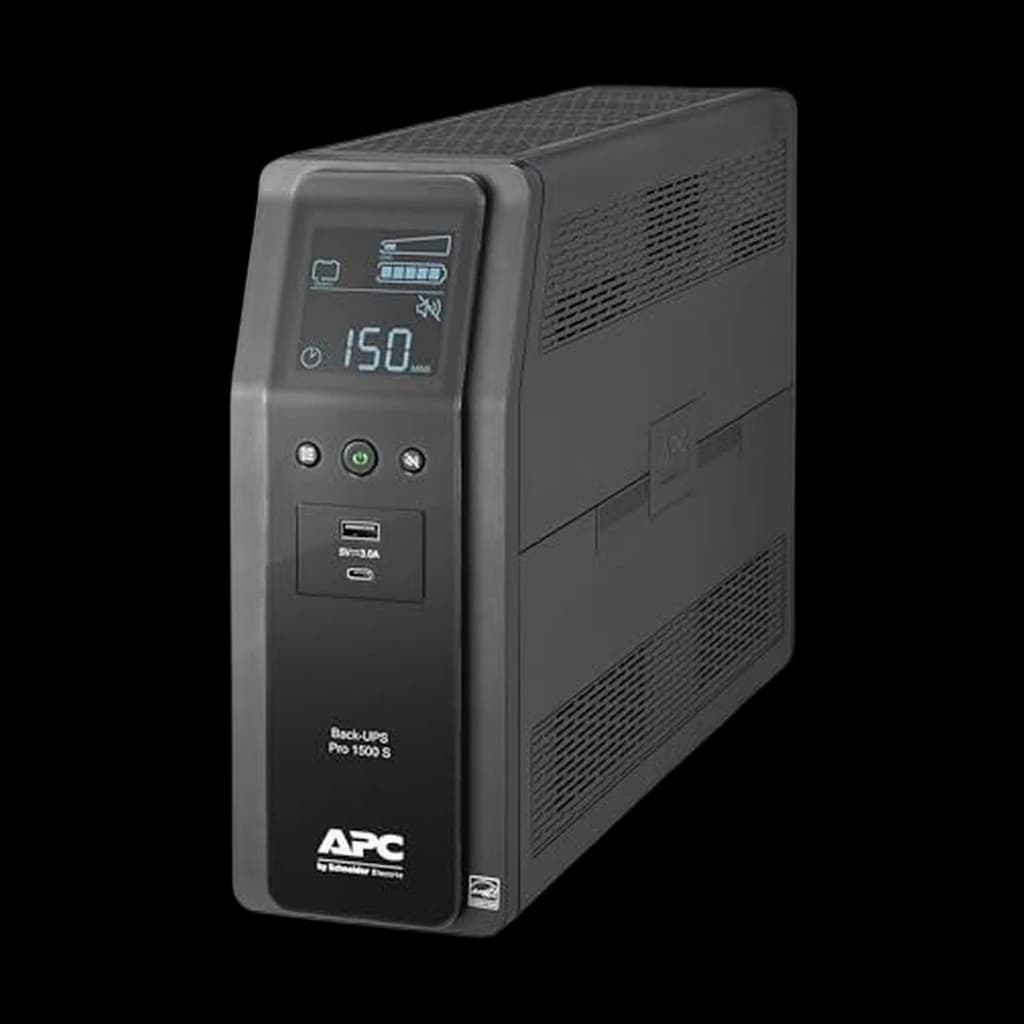 1
1
1APC Back-UPS Pro BR1500MS2
👑 Premium Pick1500VA / 900W of pure sine wave with USB-C charging and 10 outlets - the safe one-box pick for a desktop, monitor, and home network
↑ Quality↑ Power Backup↑ Setup↓ Noise
$299.99 Buy on Amazon
WFH Lounge · Best Picks
Uninterruptible power supplies that keep your computer, monitors, and home internet running through blackouts, brownouts, and surges so you do not lose work or get knocked off a video call.
For a home computer, buy two UPS units, not one - a 600VA standby for the router and modem, and a 1000VA pure sine wave unit for the desktop and monitor.
Top pick
APC Back-UPS Pro BR1500MS2
1500VA / 900W of pure sine wave power with 10 outlets, USB-C and USB-A charging, and a 5-year battery - the safest single-unit pick for a desktop, monitor, router, and modem on one box.
Buy on AmazonValue pick
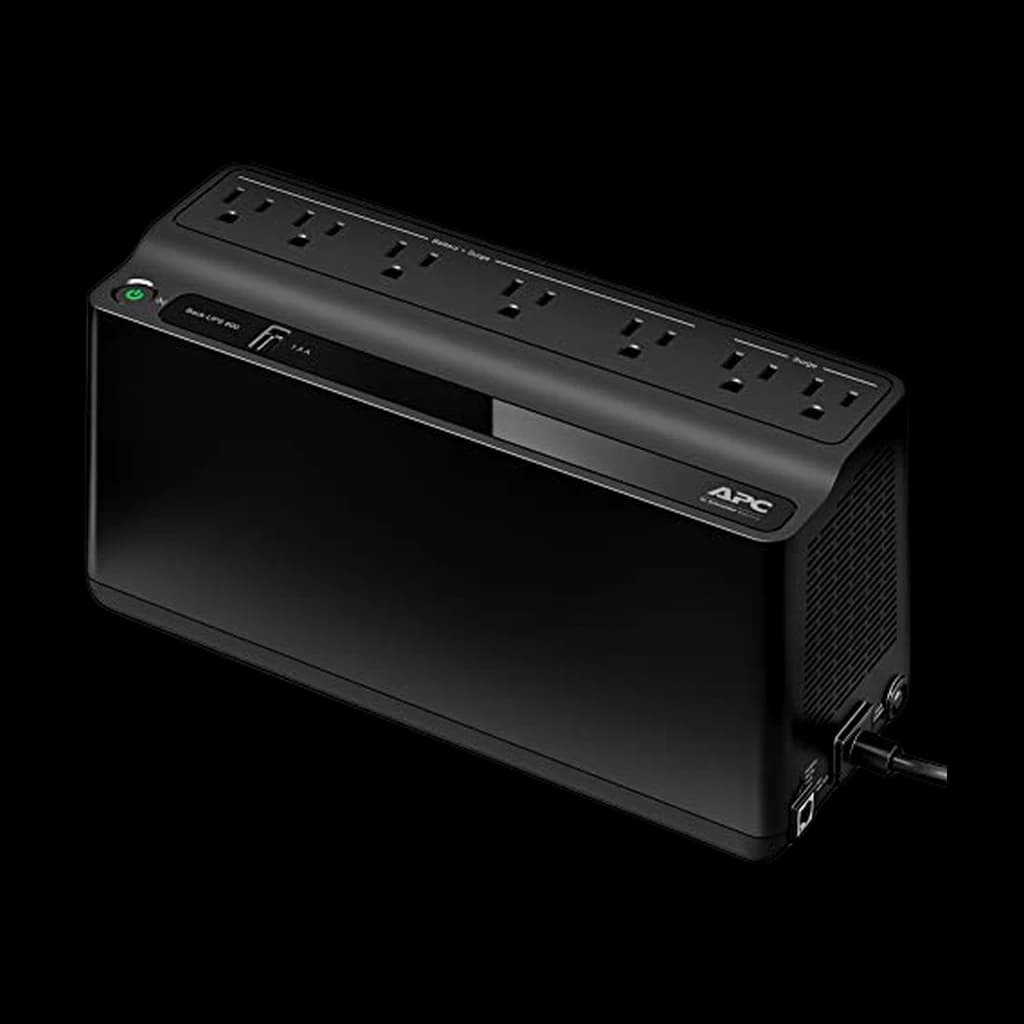
APC Back-UPS BE600M1
About $84 for 90 to 120 minutes of router and modem uptime — the cheapest way to stay on a call through a short outage.
Buy on AmazonSkip this
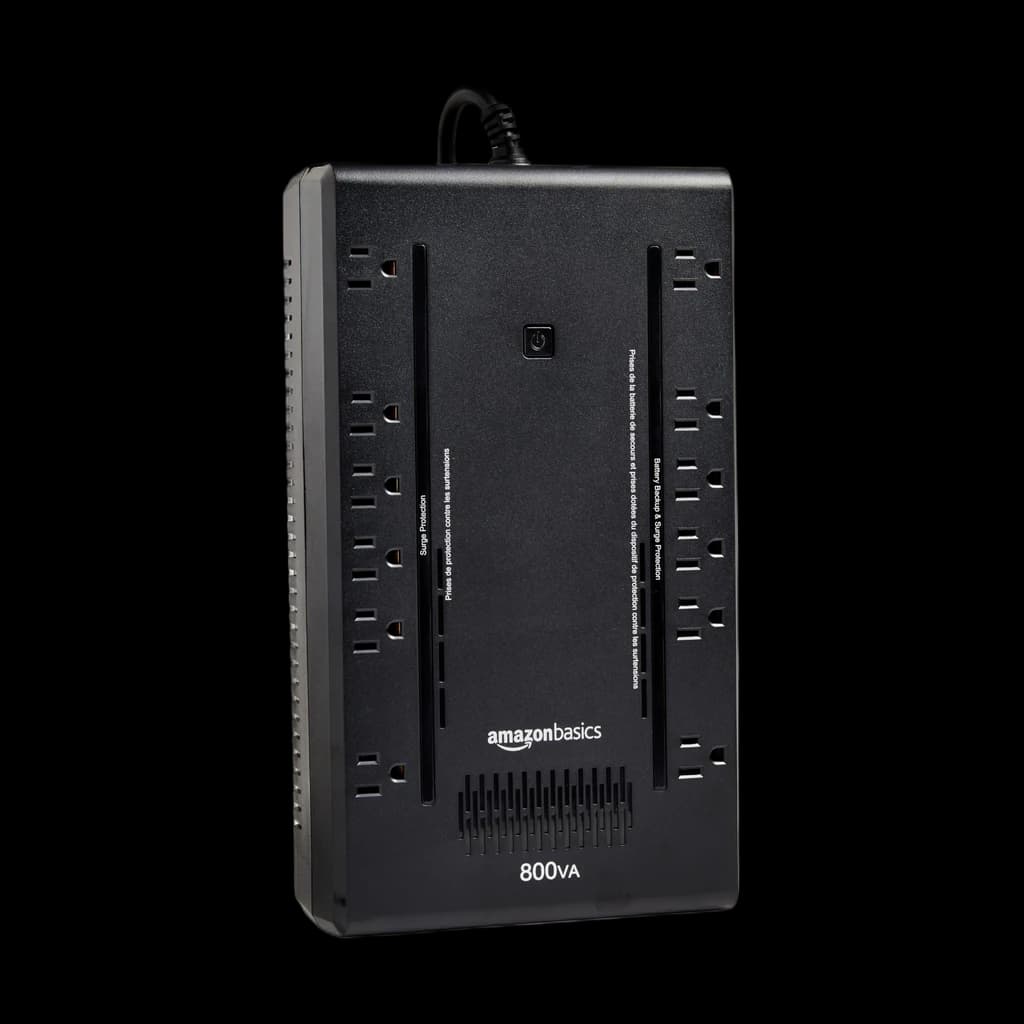
Cheap no-name 1500VA UPS units under $90 — Battery cells in budget UPS units fail in 12 to 18 months instead of the 4 to 5 years you get from APC or CyberPower, and the replacement battery is rarely a standard cartridge - you end up buying a whole new unit. The $40 you saved upfront becomes $80 in landfilled UPS hardware inside two years, and the equipment guarantee is non-existent or never honored when you try to file a claim.
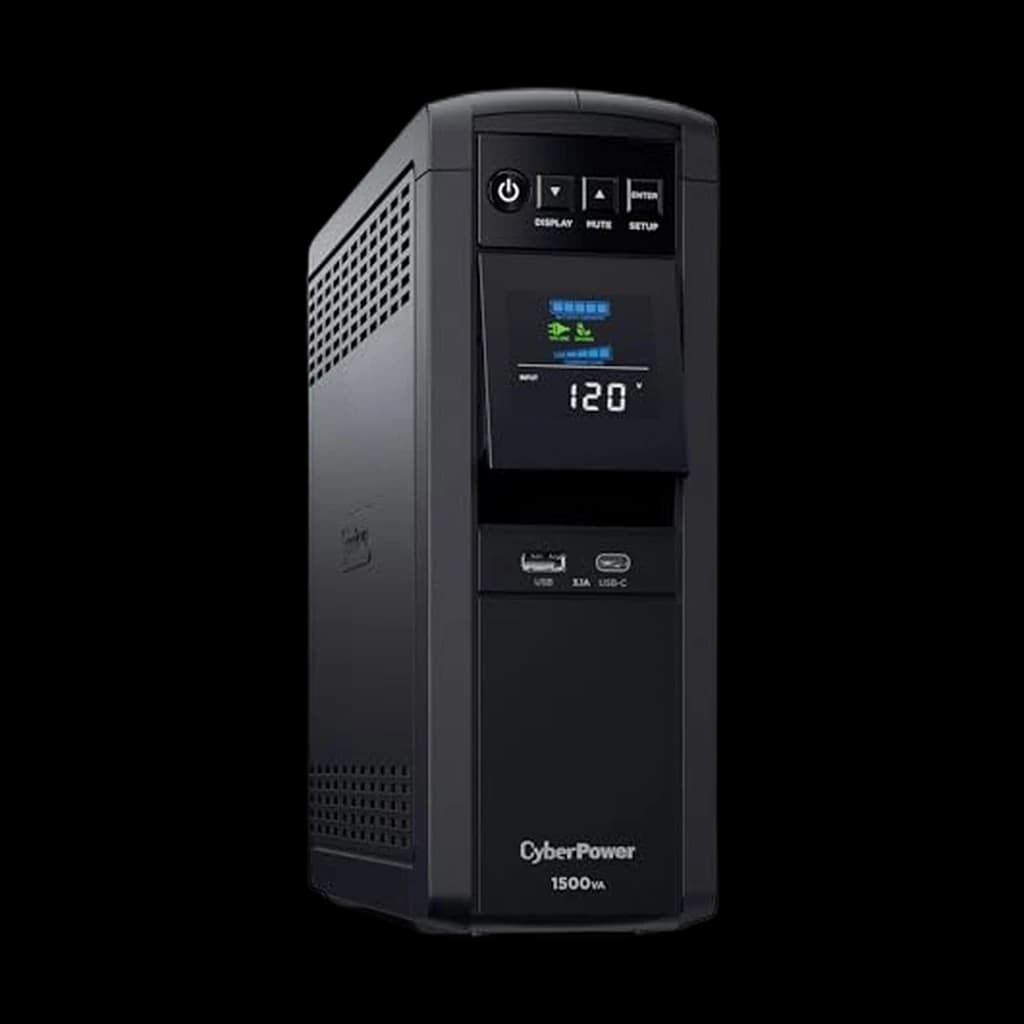
11500VA / 900W of pure sine wave with USB-C charging and 10 outlets - the safe one-box pick for a desktop, monitor, and home network
 2
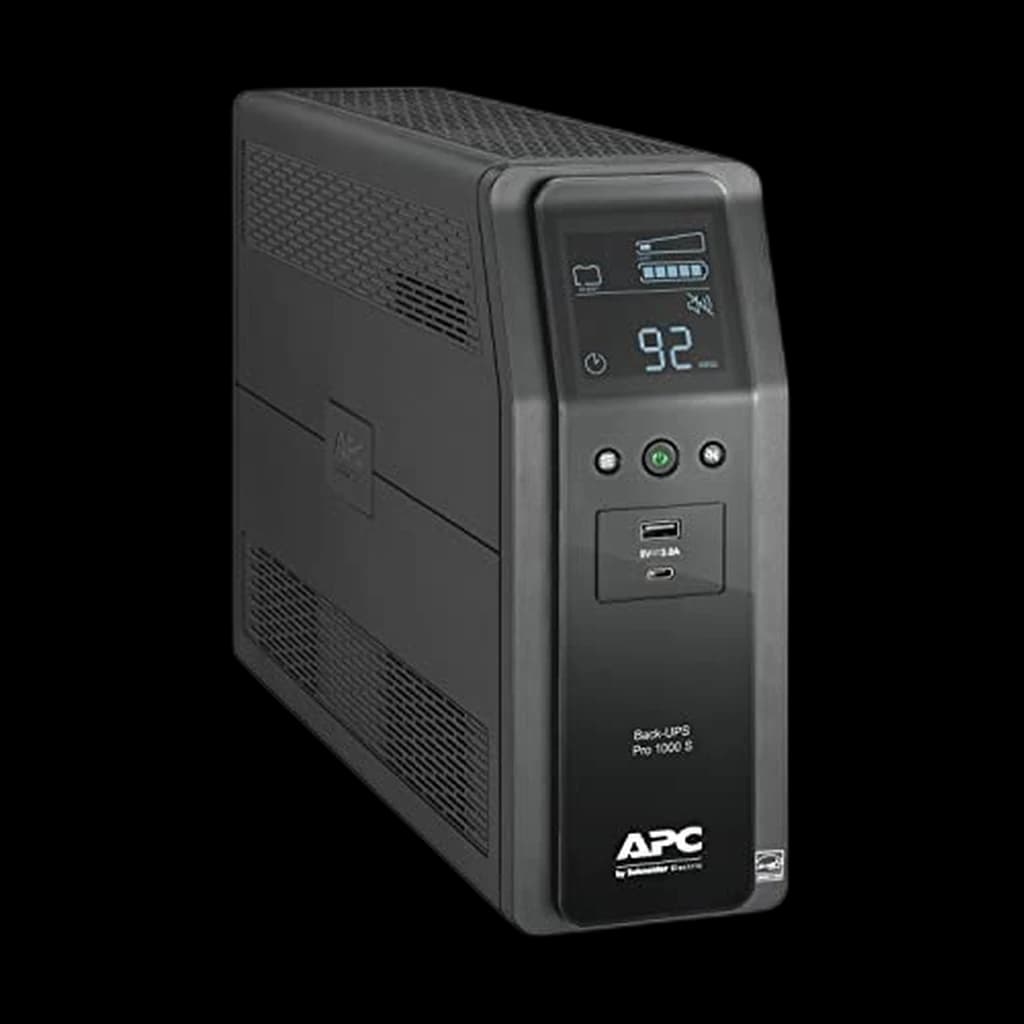
21500VA / 1000W of pure sine wave with a $500,000 equipment guarantee - the gaming PC and workstation pick that homelab Reddit recommends by default
 3
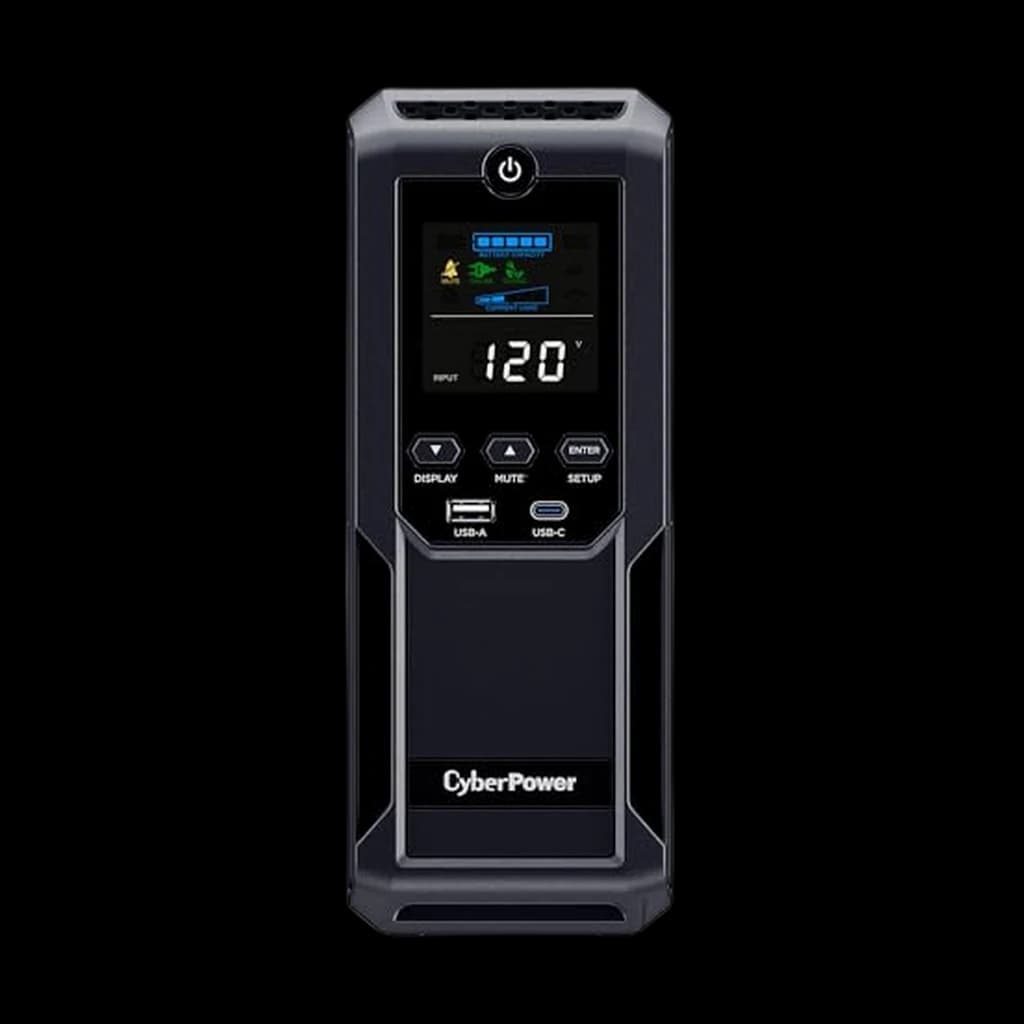
31000VA / 600W of pure sine wave at $150 - the right size for a single desktop and monitor without paying for headroom you will not use
 4
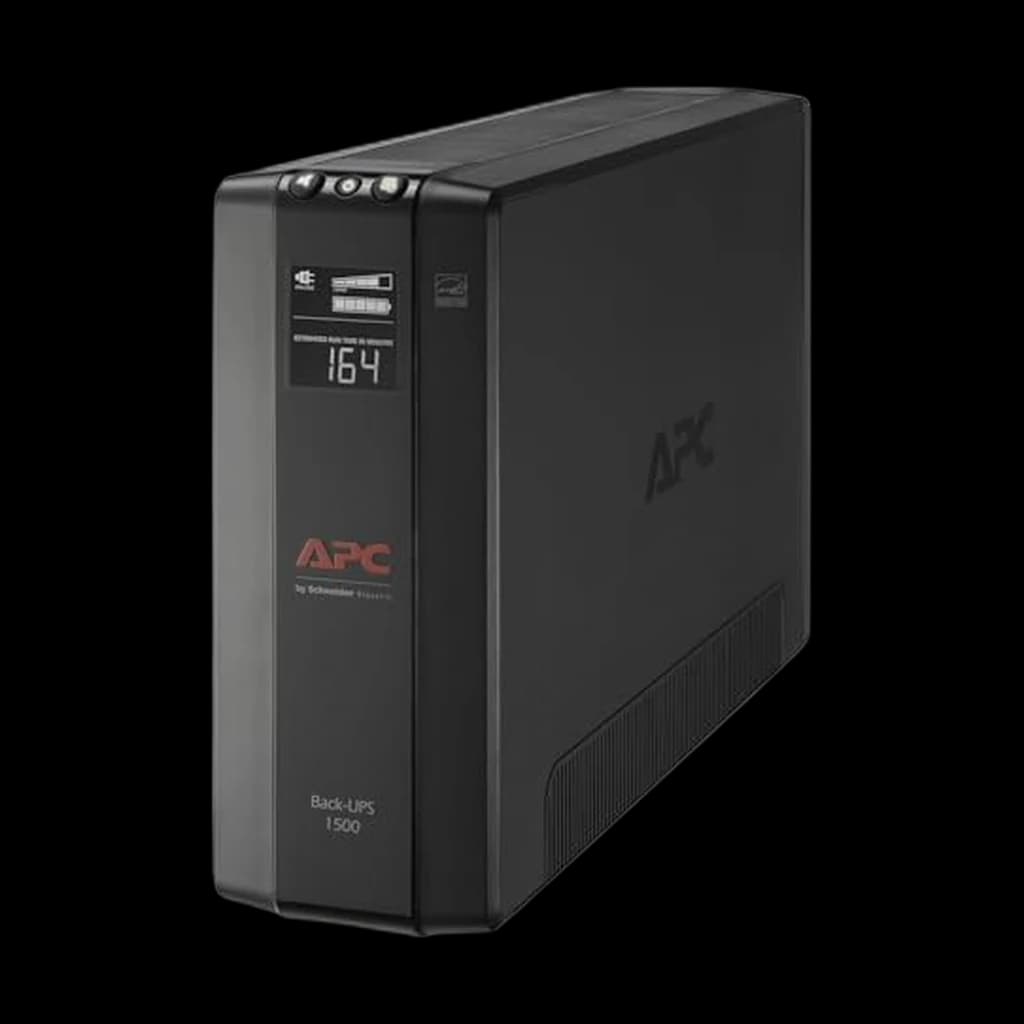
41500VA / 900W of simulated sine wave at $150 - the value pick for laptops, monitors, and home network gear without an active-PFC desktop
 5
51500VA / 900W simulated sine wave at $130 - the lowest-cost path to an APC-branded 1500VA box for laptops and monitors
| Spec | ||||||||
|---|---|---|---|---|---|---|---|---|
| Buy | ||||||||
WFH Scoremethodology → | Capacity & Runtime 81 Protection 93 Features & Build 75 Value 64 Owner Satisfaction 68 | Capacity & Runtime 81 Protection 87 Features & Build 75 Value 64 Owner Satisfaction 75 | Capacity & Runtime 81 Protection 93 Features & Build 75 Value 77 Owner Satisfaction 70 | Capacity & Runtime 83 Protection 90 Features & Build 77 Value 77 Owner Satisfaction 75 | Capacity & Runtime 81 Protection 88 Features & Build 75 Value 87 Owner Satisfaction 67 | Capacity & Runtime 87 Protection 75 Features & Build 75 Value 87 Owner Satisfaction 68 | Capacity & Runtime 81 Protection 81 Features & Build 75 Value 87 Owner Satisfaction 75 | Capacity & Runtime 70 Protection 70 Features & Build 73 Value 86 Owner Satisfaction 61 |
| Buyer sentiment | Quality Power Backup Setup Power Protection Noise Buyers praise quality, power backup, setup and power protection. Mixed feedback on reliability and battery life. Some flag noise. Based on 996 user mentions | Reliability Quality Power Protection Value for money Buyers praise reliability, quality, power protection and value for money. Mixed feedback on power reliability and battery life. Based on 5,078 user mentions | Quality Setup Power Protection Value for money Noise Buyers praise quality, setup, power protection and value for money. Mixed feedback on reliability and power capacity. Some flag noise. Based on 502 user mentions | Quality Power Backup Value for money Number Of Outlets Buyers praise quality, power backup, value for money and number of outlets. Mixed feedback on reliability and battery life. Based on 1,061 user mentions | Quality Battery Backup Easy To Set Up Surge Protection Battery Life Noise Buyers praise quality, battery backup, easy to set up and surge protection. Mixed feedback on reliability and value for money. Some flag battery life and noise. Based on 3,233 user mentions | Value for money Easy To Set Up Power Backup Power Reliability Beeping Buyers praise value for money, easy to set up and power backup. Mixed feedback on reliability and quality. Some flag power reliability and beeping. Based on 5,748 user mentions | Power Delivery Quality Value for money Surge Protection Buyers praise power delivery, quality, value for money and surge protection. Mixed feedback on reliability and power reliability. Based on 407 user mentions | Value for money Power Delivery Surge Protection Power Reliability Battery Life Noise Buyers praise value for money, power delivery and surge protection. Mixed feedback on reliability and quality. Some flag power reliability and battery life. Based on 1,316 user mentions |
| Capacity | 1500VA / 900W | 1500VA / 1000W | 1000VA / 600W | 1500VA / 900W | 1500VA / 900W | 600VA / 330W | 685VA / 390W | 600VA / 360W |
| Waveform | Pure sine wave | Pure sine wave | Pure sine wave | Simulated sine wave | Simulated sine wave | Stepped approximation | Simulated sine wave | — |
| Topology | Line-interactive with AVR | Line-interactive with AVR | Line-interactive with AVR | Line-interactive with AVR | Line-interactive with AVR | Standby with surge protection | Line-interactive with AVR | Standby |
| Outlets | 10 NEMA 5-15R (6 battery + surge, 4 surge-only) | 12 NEMA 5-15R (6 battery + surge, 6 surge-only) | 10 NEMA 5-15R (6 battery + surge, 4 surge-only) | 12 NEMA 5-15R (6 battery + surge, 6 surge-only) | 10 NEMA 5-15R (5 battery + surge, 5 surge-only) | 7 NEMA 5-15R (5 battery + surge, 2 surge-only) | 8 NEMA 5-15R (4 battery + surge, 4 surge-only) | 8 (4 battery + surge, 4 surge only) |
| USB Charging | 1 USB-C + 1 USB-A (15W shared) | None | 1 USB-C + 1 USB-A | 2 USB-A | None | 1 USB-A | None | — |
| Runtime at 300W | ~13 minutes | ~14.5 minutes | ~12 minutes | ~12 minutes | ~10 minutes | — | — | — |
| Warranty | 3 years + $300,000 equipment guarantee | 3 years + $500,000 equipment guarantee | 3 years + $150,000 equipment guarantee | 3 years + $375,000 equipment guarantee | 3 years + $100,000 equipment guarantee | 1 year + $75,000 equipment guarantee | 3 years + $300,000 equipment guarantee | — |
| Runtime at 50W (router+modem) | — | — | — | — | — | ~90-120 minutes | ~75-90 minutes | — |
| Cord | — | — | — | — | — | — | — | 5 ft, right-angle NEMA 5-15P |
| Software | — | — | — | — | — | — | — | Downloadable power management |
* Prices checked Sep 12, 2026 and may not reflect current rates. As an Amazon Associate I earn from qualifying purchases.
As an Amazon Associate I earn from qualifying purchases. Product prices and availability are subject to change.
U.S. EIA data shows the average American electricity customer experienced 5.6 hours of power interruptions in 2022, with major-event days driving most of that time - meaning a router-dedicated 600VA UPS that runs 90+ minutes covers the vast majority of real-world outages, while a single-box approach that quits in 8 minutes does not.
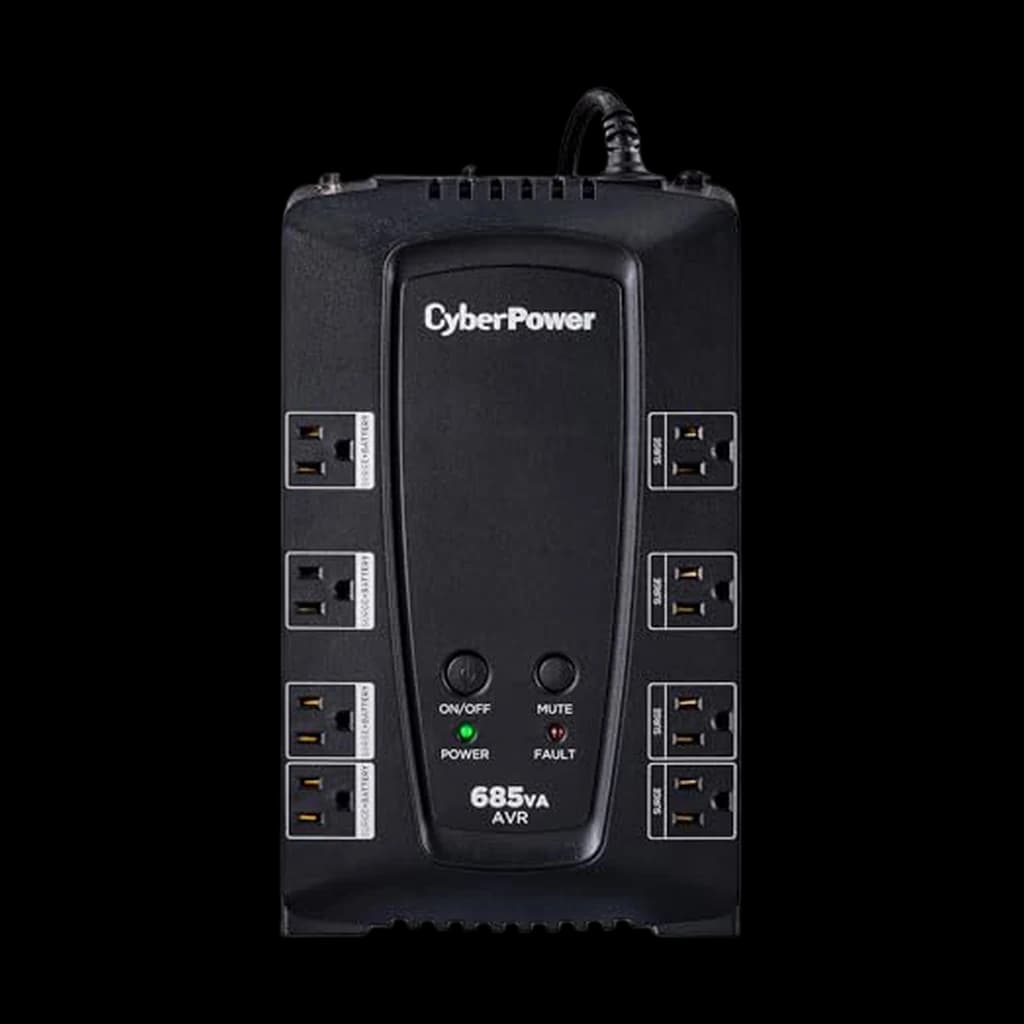
r/homelab, r/HomeNetworking, and r/HomeOffice converge on a clear two-tier pattern: APC Back-UPS Pro BR1500MS2 or CyberPower CP1500PFCLCD for desktops with active-PFC power supplies (both are pure sine wave), and a small APC BE600M1 or CyberPower CP685AVRG dedicated to the router and modem for cheap multi-hour internet continuity. The repeated warning across all three subs is do not trust simulated sine wave UPS units with modern desktop PCs - the PSU may refuse to run on battery or shut down hard the moment power transfers.
Most home offices buy a UPS the same wrong way: pick the highest VA number that fits the budget, plug everything into it, and assume the box will handle the rest. The result is a 1500VA unit that quits in 8 minutes during a blackout because the user plugged in a laser printer, two monitors, a desktop, a gaming console, and a space heater. The smarter approach starts with a question almost no buyer asks: what is the actual goal of this UPS? For most WFH workers it is one of two things. Goal one is graceful shutdown protection for a desktop and monitor so an outage does not corrupt files or drop a Zoom call mid-sentence. Goal two is internet continuity so that brownouts and 30-second blips do not knock out your router, modem, and laptop charger. Those two goals call for completely different products. A desktop and 27 inch monitor pull roughly 150 to 250 watts, which a 1000VA pure sine wave UPS will run for 10 to 15 minutes - enough to save your work and shut down. A modem plus router plus mesh node pulls about 30 to 50 watts, which a 600VA UPS will run for 60 to 120 minutes and keep you online through almost any short outage. Trying to do both jobs from one large UPS is the most common and most expensive mistake. The second decision is waveform. Pure sine wave (sometimes called PFC sinewave) costs more but is mandatory for any modern desktop with an active PFC power supply, which is essentially every gaming PC, every Mac mini, every workstation built since about 2015. A simulated sine wave UPS will sometimes refuse to run an active-PFC computer at all, and when it does, the computer can shut down hard the moment power transfers to battery. Laptops, monitors, routers, and chargers all tolerate simulated sine wave fine. The third decision is line-interactive vs standby vs online double-conversion. Line-interactive with AVR (automatic voltage regulation) is the right answer for almost every home office: it corrects brownouts and over-voltages without dipping to battery, which extends battery life dramatically. Standby topology is fine for a router-only backup. Online double-conversion is overkill outside a server rack. Sizing rule of thumb: total your continuous load wattage, multiply by 1.6 to get VA, then double the result for headroom and runtime. A 200W desktop+monitor setup wants roughly 600VA of capacity but a 900-1000W UPS for usable runtime. Skip the no-name AmazonBasics-tier UPS units. APC and CyberPower dominate this category because their batteries are user-replaceable in 5 minutes, they have 25 years of firmware iteration behind them, and the $250,000 to $500,000 connected equipment guarantees actually pay out when something goes wrong.
WiFi Routers & Mesh Networks
The router is the other device worth protecting on the same battery.
$399.98
Smart Plugs & Power Strips
Never plug a smart plug into a UPS output — but everything else on the desk is fair game.
$29.36
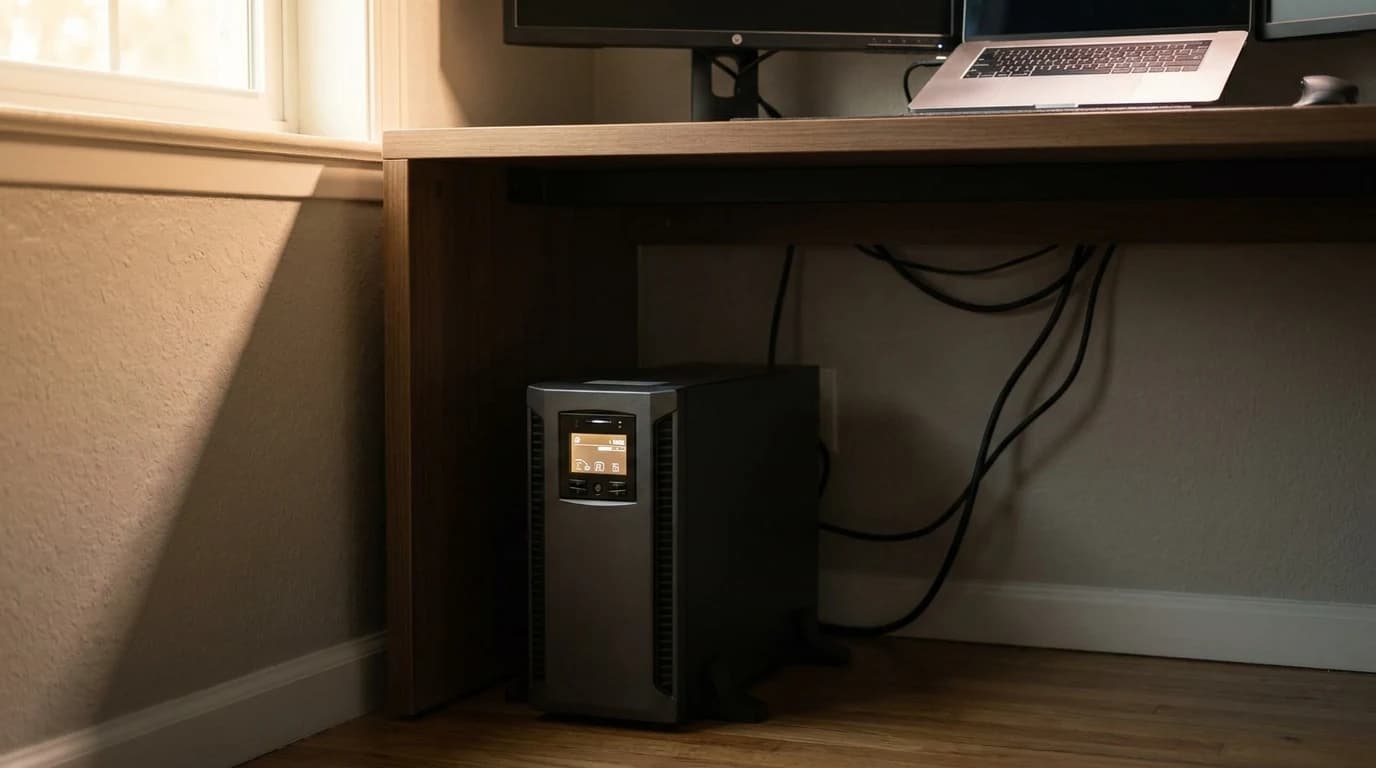
A 1500VA UPS is rated 900 to 1000 watts, not 1500, and its published runtime is only two points: half load and full load. Read both before buying.
From Time Machine backups to 4K video edits, these are the 7 external SSDs worth buying in 2026 - ranked by interface speed, rugged rating, and price per teraby...
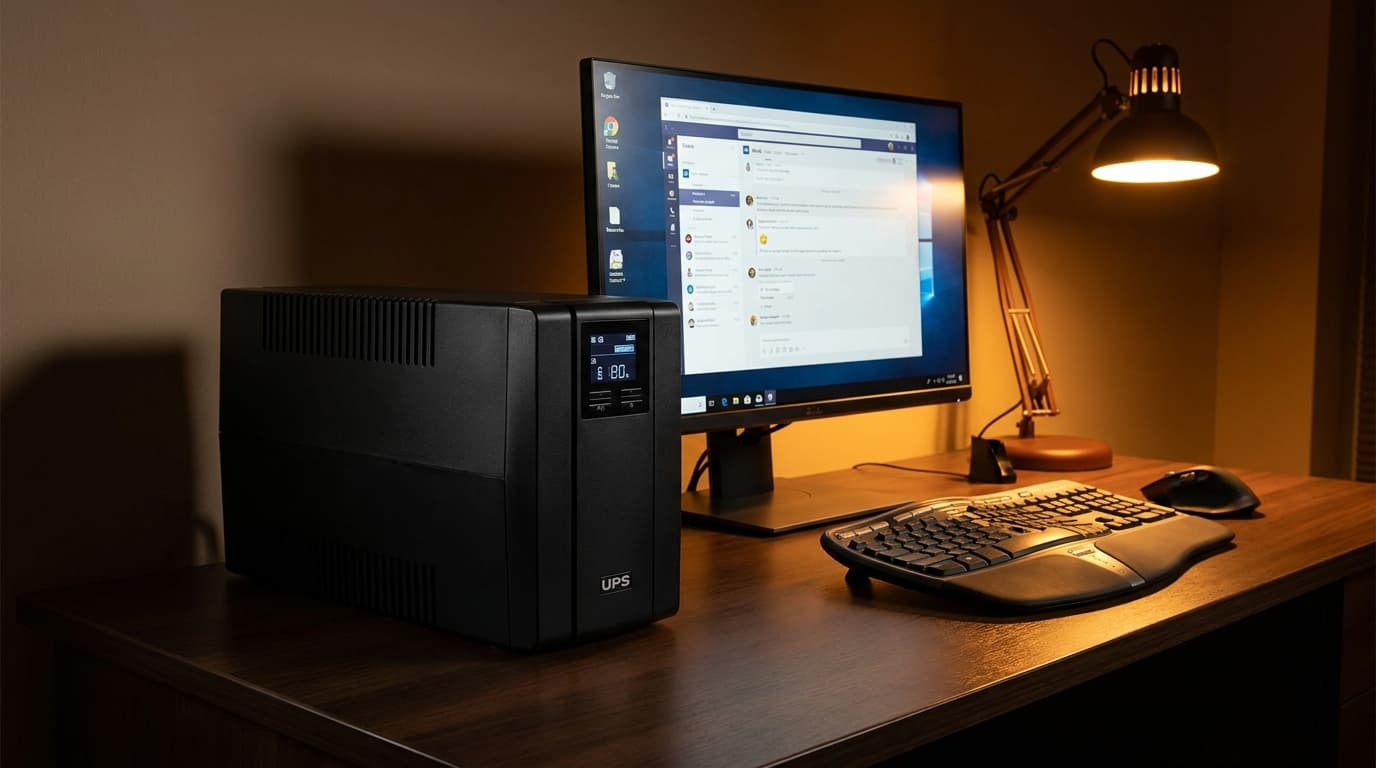
7 UPS picks ranked for working from home in 2026 — a pure sine wave unit for the desktop, a cheap dedicated one for the router. Which to buy, by use.