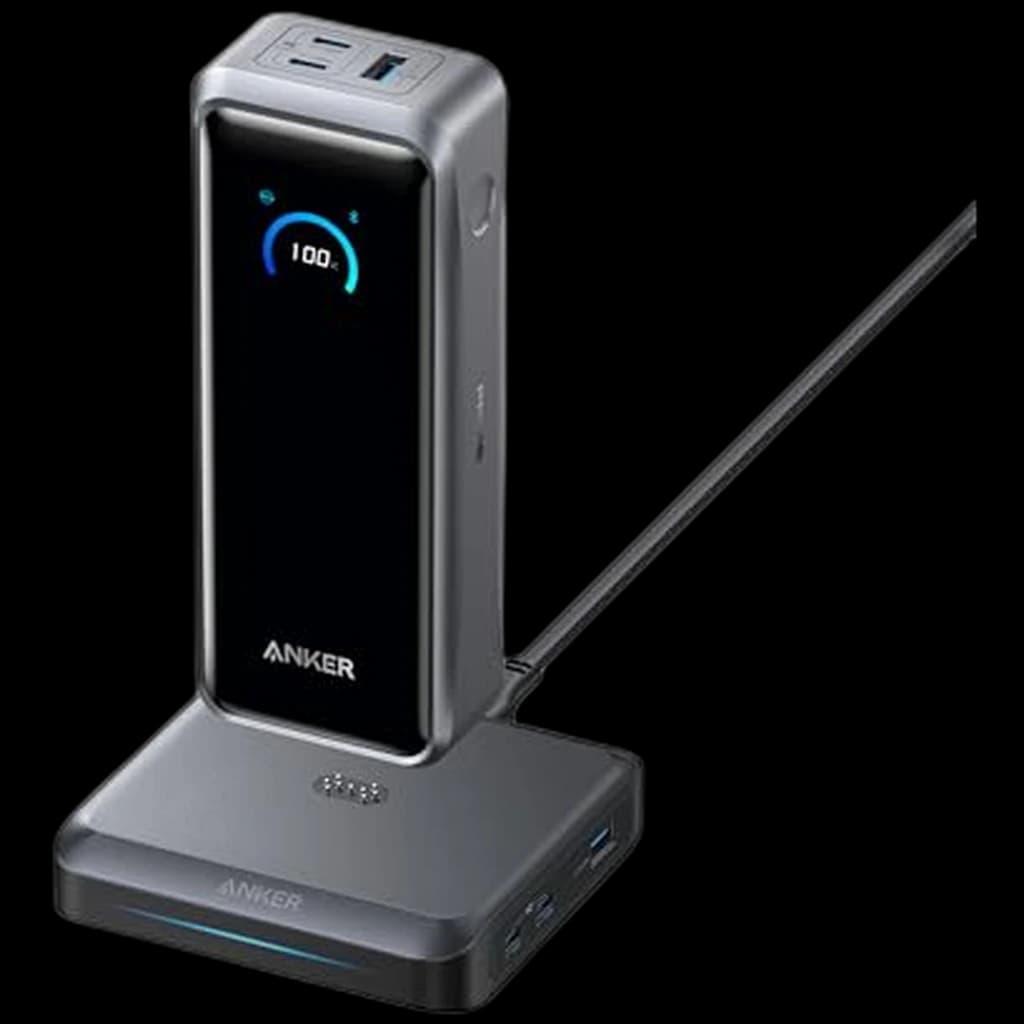
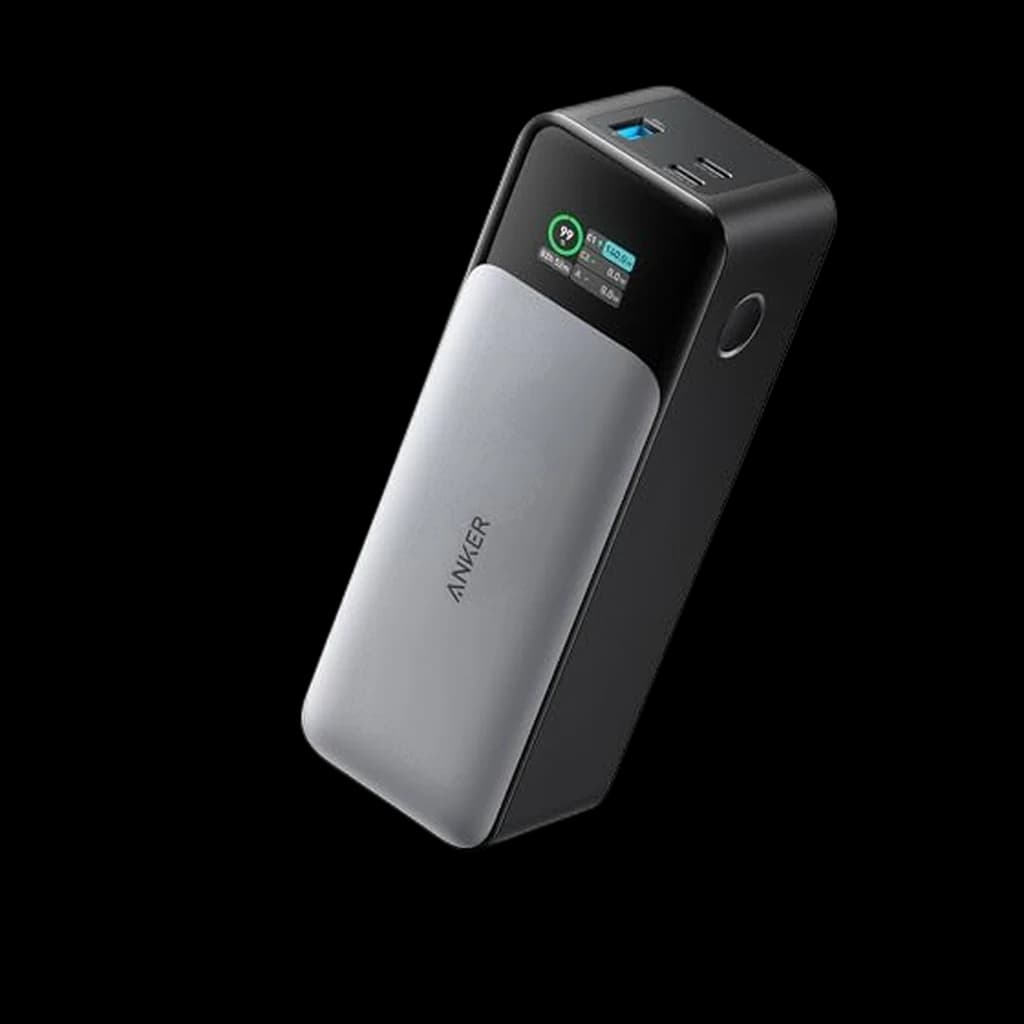
1Anker 737 Power Bank (PowerCore 24K) 140W
👑 Premium Pick140W USB-C PD output that charges a 16-inch MacBook Pro to 50% in 28 minutes, with FAA-legal 86.4Wh capacity
WFH Lounge · Best Picks
USB-C PD power banks that can actually charge a laptop - the right pick for cafe work, blackout backup, and travel days.
Get a power bank rated 100W USB-C PD or higher with capacity at or just under 100Wh - that combination charges a 16-inch laptop, fits FAA carry-on rules.
Top pick
Anker 737 Power Bank (PowerCore 24K) 140W
140W USB-C PD output charges a MacBook Pro 16 to 50% in 28 minutes, 86.4Wh stays well under FAA limits, and the smart digital display shows exact runtime instead of guessing from LEDs.
Buy on AmazonValue pick
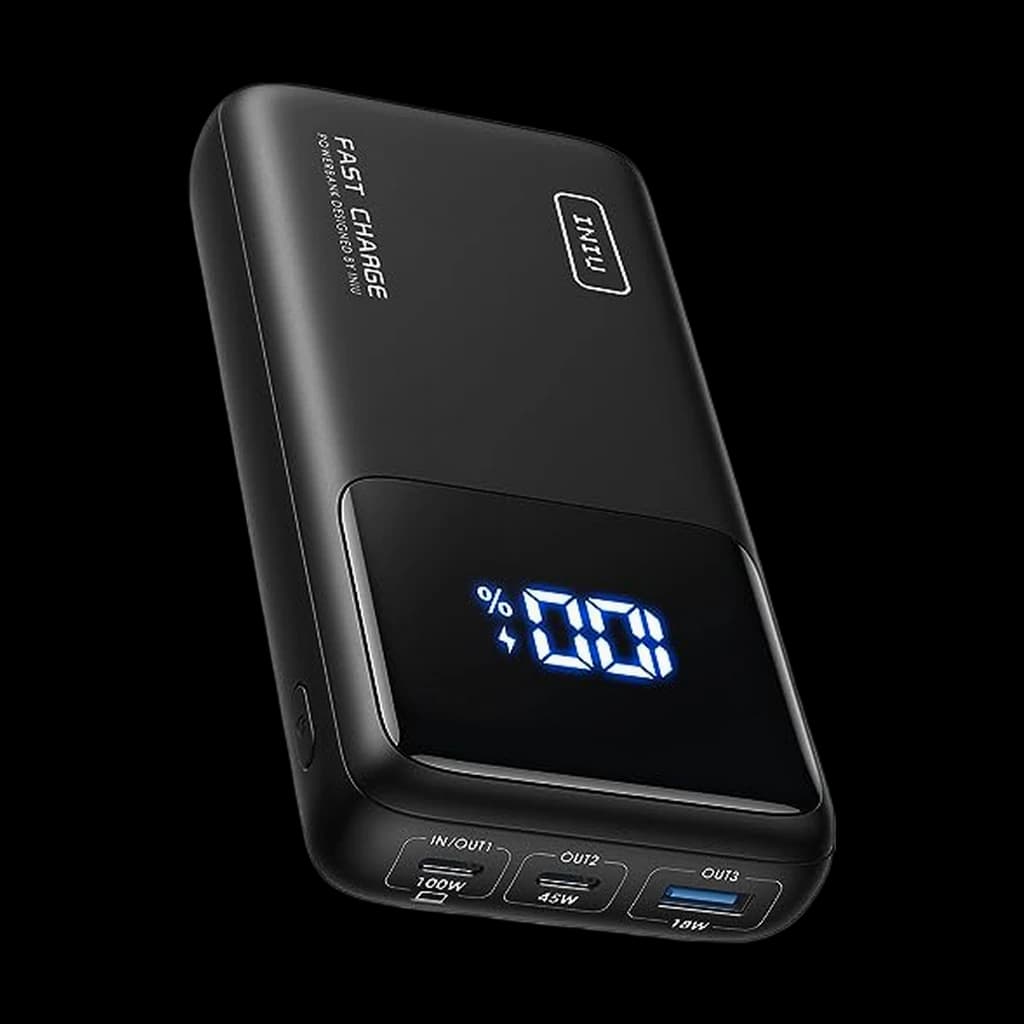
INIU 100W 25,000mAh USB-C Laptop Power Bank
Best score-to-price ratio in the category at the current Amazon price.
Buy on AmazonSkip this
No-name 30,000mAh+ power banks from unfamiliar Amazon brands — These almost always overstate capacity by 30-50%, lack the UL or CE certification airlines require, and skip the thermal protection circuits that prevent fires. Real 30,000mAh capacity also exceeds the 100Wh FAA carry-on limit, which means you cannot fly with it. The $40 you save costs you a brick that fails in a year, gets confiscated at the gate, or worse.
1140W USB-C PD output that charges a 16-inch MacBook Pro to 50% in 28 minutes, with FAA-legal 86.4Wh capacity
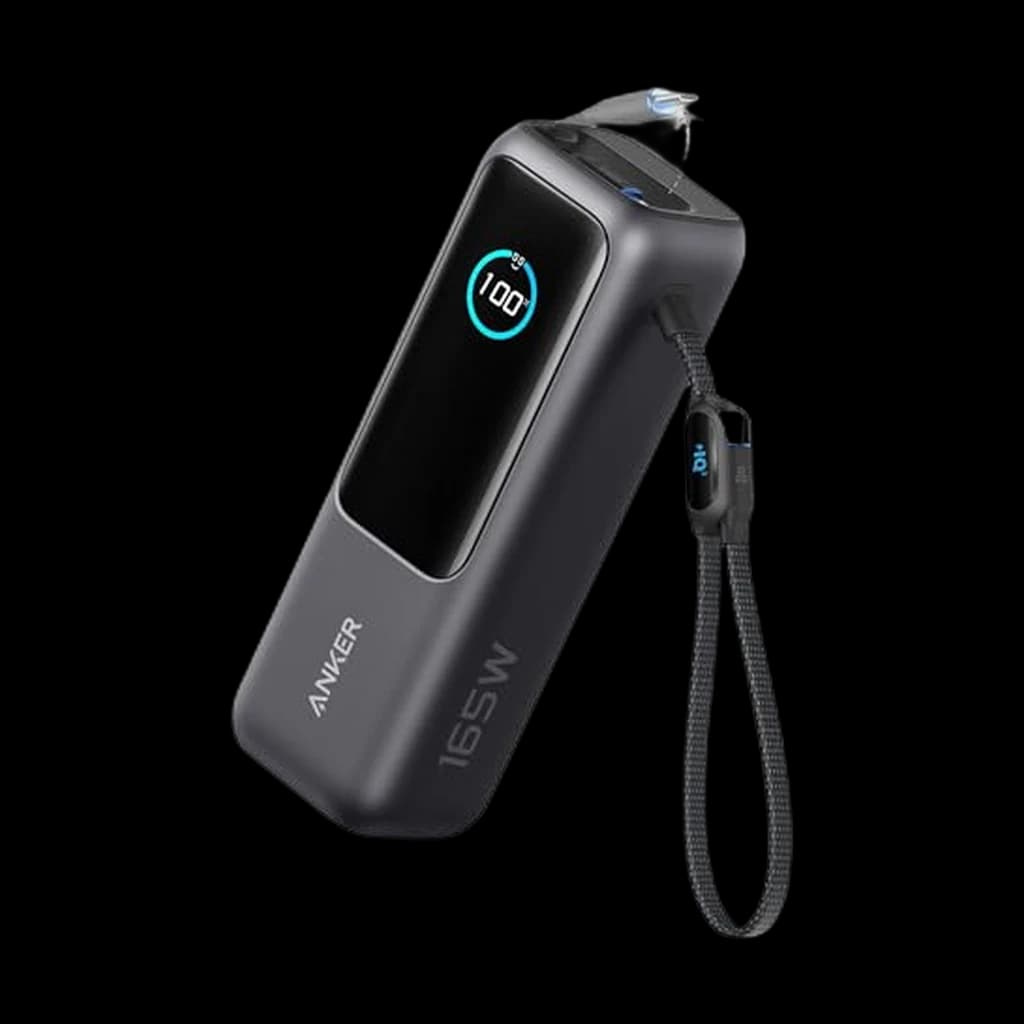
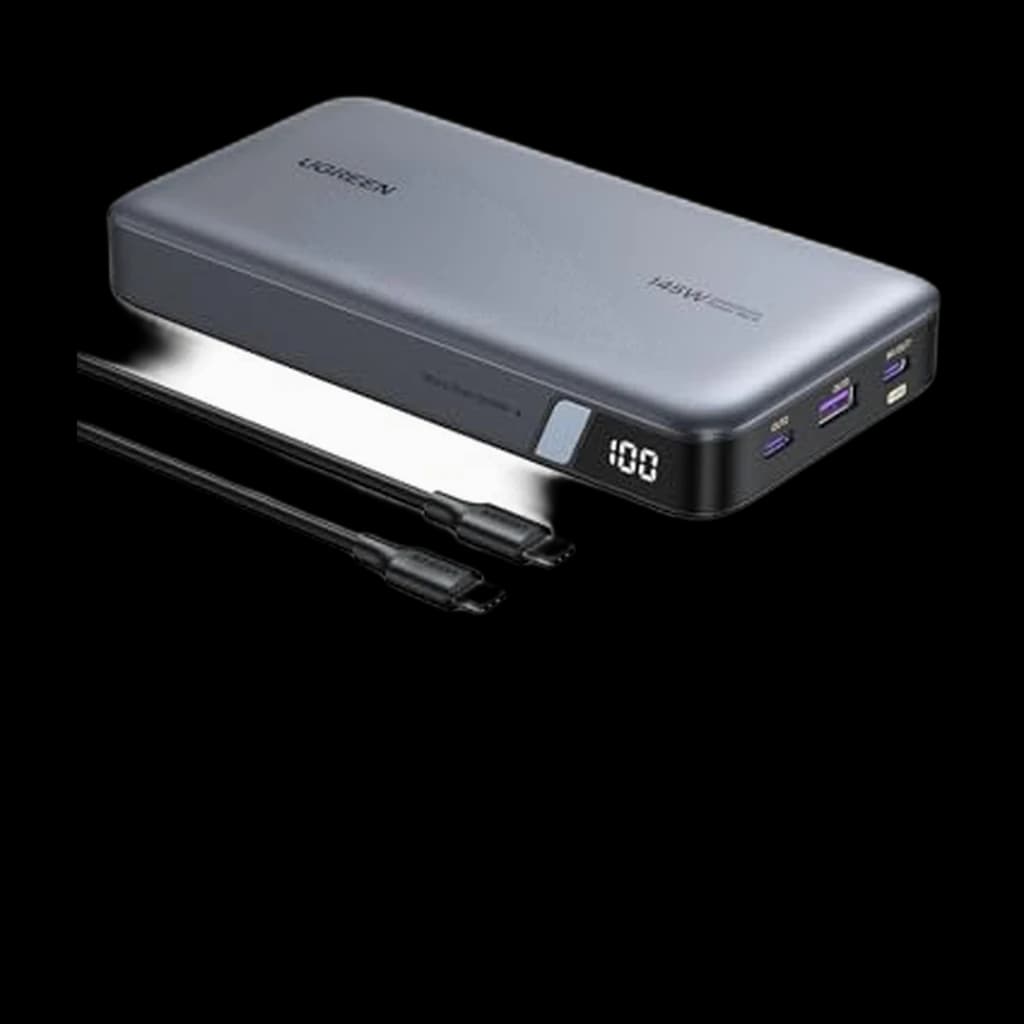
299.54Wh capacity at the FAA ceiling with 250W three-port output - the most legally flyable power bank for laptop work
3Three 100W USB-C ports plus a retractable USB-C cable - the no-cable-forgotten travel pick for multi-laptop households
4100W laptop charging at the budget end - the price-to-output value pick that r/HomeOffice keeps recommending
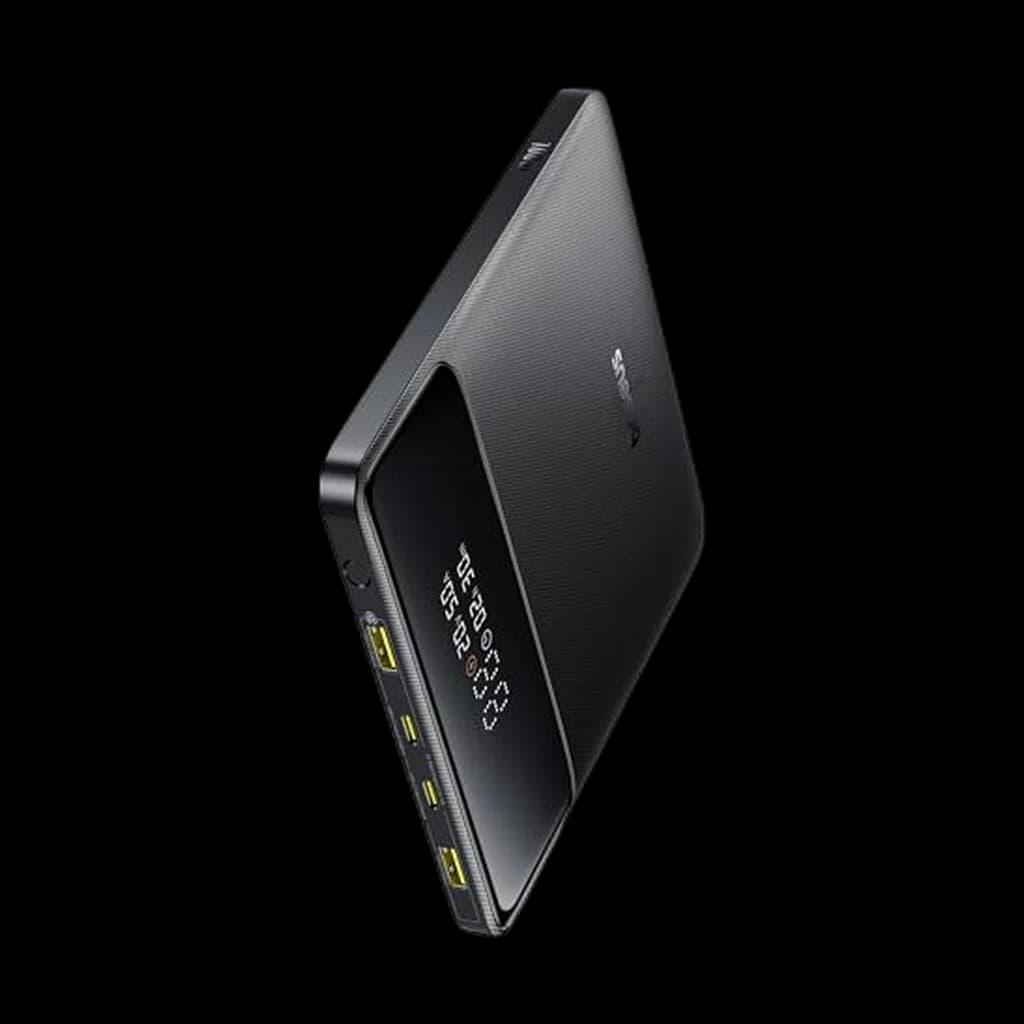
5Square ultra-slim profile that slides into a laptop sleeve - the bag-friendly 100W pick
| Spec | ||||||
|---|---|---|---|---|---|---|
| Buy | ||||||
WFH Scoremethodology → | Capacity & Output 85 Build Quality 73 Versatility 85 Value 63 Owner Satisfaction 70 | Capacity & Output 93 Build Quality 76 Versatility 81 Value 66 Owner Satisfaction 76 | Capacity & Output 89 Build Quality 77 Versatility 83 Value 64 Owner Satisfaction 80 | Capacity & Output 93 Build Quality 81 Versatility 93 Value 77 Owner Satisfaction 72 | Capacity & Output 87 Build Quality 75 Versatility 81 Value 77 Owner Satisfaction 77 | Capacity & Output 85 Build Quality 73 Versatility 85 Value 63 Owner Satisfaction 66 |
| Buyer sentiment | Performance Display Portability Power Battery Life Weight Buyers praise performance, display, portability and power. Mixed feedback on charging speed and charging capability. Some flag battery life and weight. Based on 4,147 user mentions | Charging speed Battery quality Reliability Value for money Buyers praise charging speed, battery quality, reliability and value for money. Based on 578 user mentions | Portability Charging Capacity Built-In Cable Weight Durability Buyers praise portability, charging capacity and built-in cable. Mixed feedback on charging speed and reliability. Some flag weight and durability. Based on 2,964 user mentions | Performance Charging Capacity Size Weight Buyers praise performance, charging capacity and size. Mixed feedback on charging speed and battery life. Some flag weight. Based on 2,095 user mentions | Charging Speed Quality Portability Buyers praise charging speed, quality and portability. Mixed feedback on reliability and size. Based on 302 user mentions | Quality Power Output Portability Battery Life Weight Buyers praise quality, power output and portability. Mixed feedback on charging speed and value for money. Some flag battery life and weight. Based on 794 user mentions |
| Capacity | 24,000mAh (86.4Wh) | 27,650mAh (99.54Wh) | 25,000mAh (about 92.5Wh) | 25,000mAh (about 92.5Wh) | 20,000mAh (about 74Wh) | 25,000mAh (about 90Wh) |
| USB-C Output | 140W max single port | 140W max single port (250W total) | 100W max per port (165W total) | 100W max single port | 100W max single port | 140W max single port (145W total) |
| Ports | 2 USB-C, 1 USB-A | 2 USB-C, 1 USB-A | 3 USB-C (1 retractable cable + 2 ports), 1 USB-A | 2 USB-C, 1 USB-A | 2 USB-C, 2 USB-A | 2 USB-C, 1 USB-A |
| Recharge Time | About 60 min at 140W input | About 37 min at 170W dual input | About 70 min full | About 2 hours at 65W input | About 90 min at 65W input | About 2 hours at 65W input |
| Weight | 22 oz | 22.4 oz | 23 oz | 17.5 oz | 16 oz | 20 oz |
| FAA Carry-On | Yes (under 100Wh) | Yes (just under 100Wh) | Yes (under 100Wh) | Yes (under 100Wh) | Yes (under 100Wh) | Yes (under 100Wh) |
* Prices checked Sep 12, 2026 and may not reflect current rates. As an Amazon Associate I earn from qualifying purchases.
As an Amazon Associate I earn from qualifying purchases. Product prices and availability are subject to change.
The FAA carry-on ceiling for spare lithium-ion batteries is 100Wh, which translates to roughly 27,000mAh at the typical 3.7V cell voltage. Power banks marketed at 27,650mAh and 25,000mAh sit just under this line by design - anything above 30,000mAh almost certainly requires airline approval and is regularly refused at the gate.
r/HomeOffice, r/digitalnomad, and r/macsetups consistently default to two recommendations: the Anker 737 for travelers who need 140W laptop charging and the Anker Prime 27,650 for users who want the highest capacity that still passes FAA. Threads asking for the budget answer keep returning to the INIU 100W 25,000mAh as the price-to-output value pick.
A laptop-capable power bank is a different category of product than the phone charger most people picture. The defining specs are USB-C Power Delivery output (65W minimum to keep a 13-inch laptop topped up, 100W or higher for a 16-inch MacBook Pro under load), capacity in watt-hours not just milliamp-hours, and FAA carry-on legality. The 100Wh ceiling matters more than buyers realize: anything over 100Wh requires airline approval and is often refused at the gate, and most 27,000mAh+ packs sit just under that line by design. Watch out for the marketing math: a 100W rating almost always describes a single port. Plug two laptops in and total output drops to a 65W plus 30W split, or sometimes lower. If you charge multiple devices, look for the multi-port wattage breakdown in the spec sheet, not the headline. For coffee shop work, prioritize fast input recharge over capacity - a power bank that takes 4 hours to refill is dead weight on a Sunday evening. Modern packs recharge in 60-90 minutes when paired with the right wall charger. Slim form factor matters in a laptop bag: the Baseus Blade, Anker Prime, and Anker MagGo lines are the slim-side picks; Anker 737, INIU 100W, and UGREEN Nexode 145W are brick-shaped and heavier. Built-in cables (Anker Laptop Power Bank, Anker 20K 87W) eliminate the cable you always forget. Smart-display models are worth the small price bump - knowing exactly how many minutes of charge are left beats guessing from a four-LED bar. Avoid no-name 30000mAh+ packs from unfamiliar brands on Amazon; they almost always overstate capacity, lack proper UL or CE certification, and skip the protection circuits that prevent thermal runaway. Anker, UGREEN, INIU, Baseus, Mophie, and Belkin all maintain the certifications and quality control to trust on a flight.
Wireless Chargers
The desk-side counterpart to the bag-side battery.
$79.99
Laptops
Check your laptop's charging wattage before assuming a bank can run it.
$1,259.99

An adapter changes the plug shape; a converter changes the voltage. One check on your charger settles which you need — and which destroys appliances.

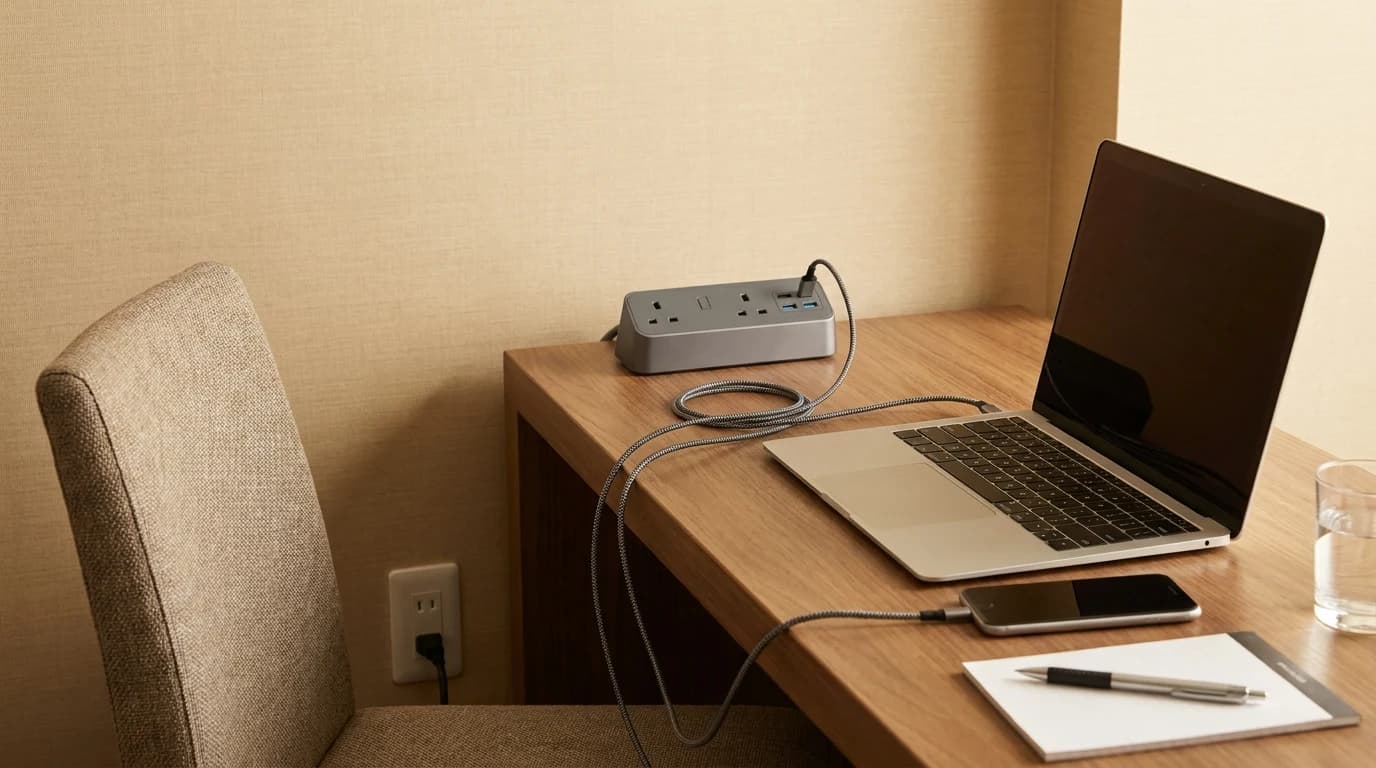
Hotel desks give you one socket. A flat-plug, non-surge travel strip fixes it — and surge protection is the feature you actively do not want abroad.

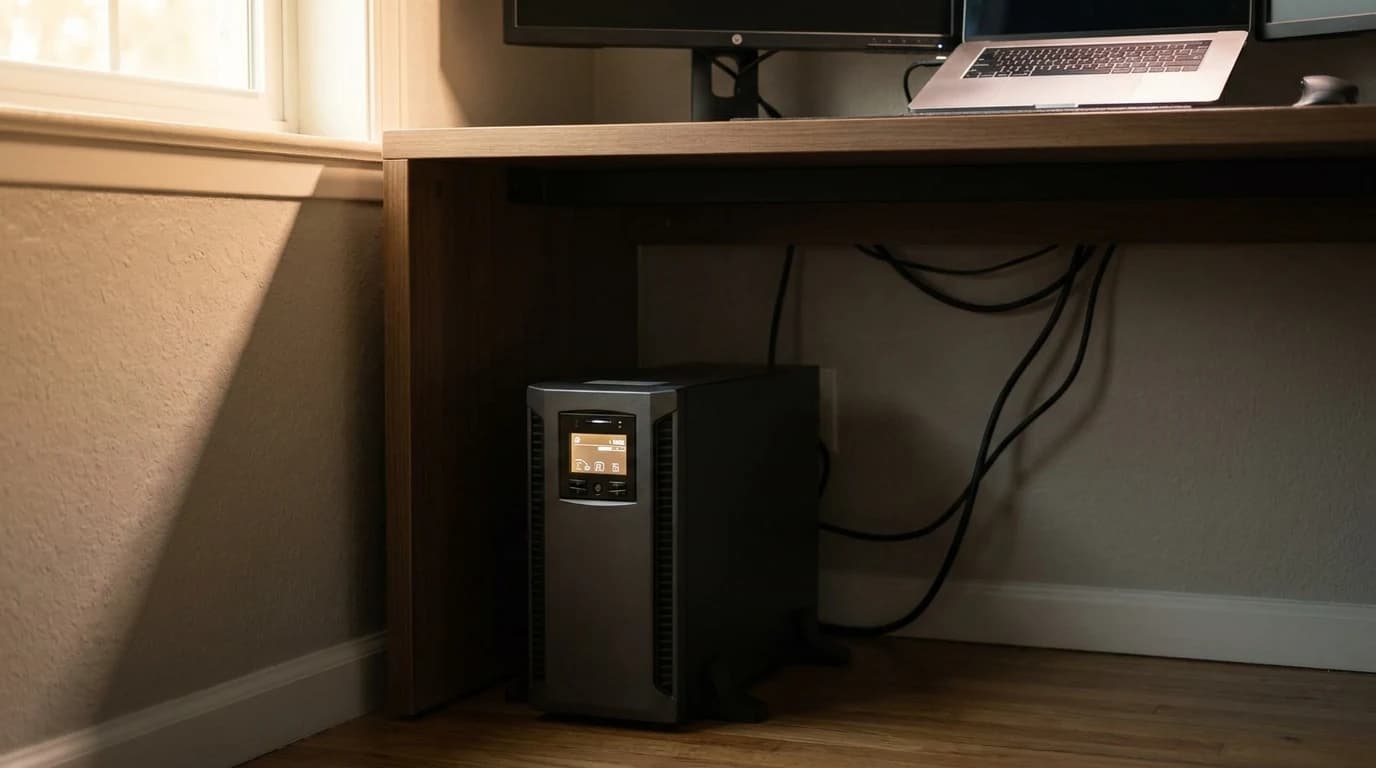
A 1500VA UPS is rated 900 to 1000 watts, not 1500, and its published runtime is only two points: half load and full load. Read both before buying.