1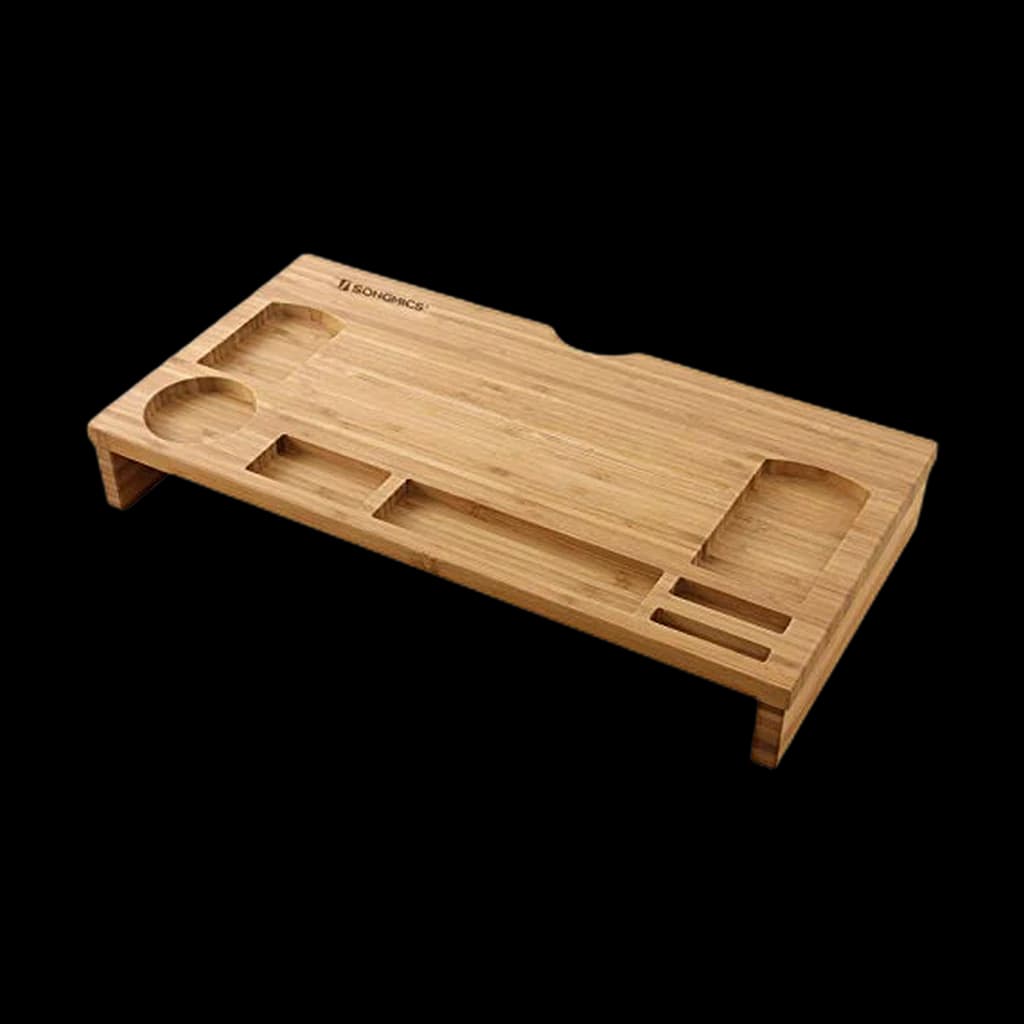 1
1
1HUANUO Monitor Stand Riser 3-Height Adjustable
⭐ Best ValueBamboo monitor riser with built-in storage slots and keyboard space underneath - the desk-organizer-and-monitor-stand in one piece
↑ Sturdiness↑ Assembly↑ Quality
$14.99 Buy on Amazon
WFH Lounge · Best Picks
Pen holders, file sorters, drawer organizers, and monitor risers with storage that turn cluttered desks into focused workspaces.
Princeton's visual cortex research shows clutter reduces focus by competing for neural attention, and the cure is empty surface area, not more.
Top pick
HUANUO Monitor Stand Riser 3-Height Adjustable
Solid bamboo monitor riser with built-in slots for phone, cup, papers, and sliding keyboard storage underneath. The desk-organizer-and-monitor-stand-in-one r/HomeOffice keeps recommending year after year.
Buy on AmazonValue pick
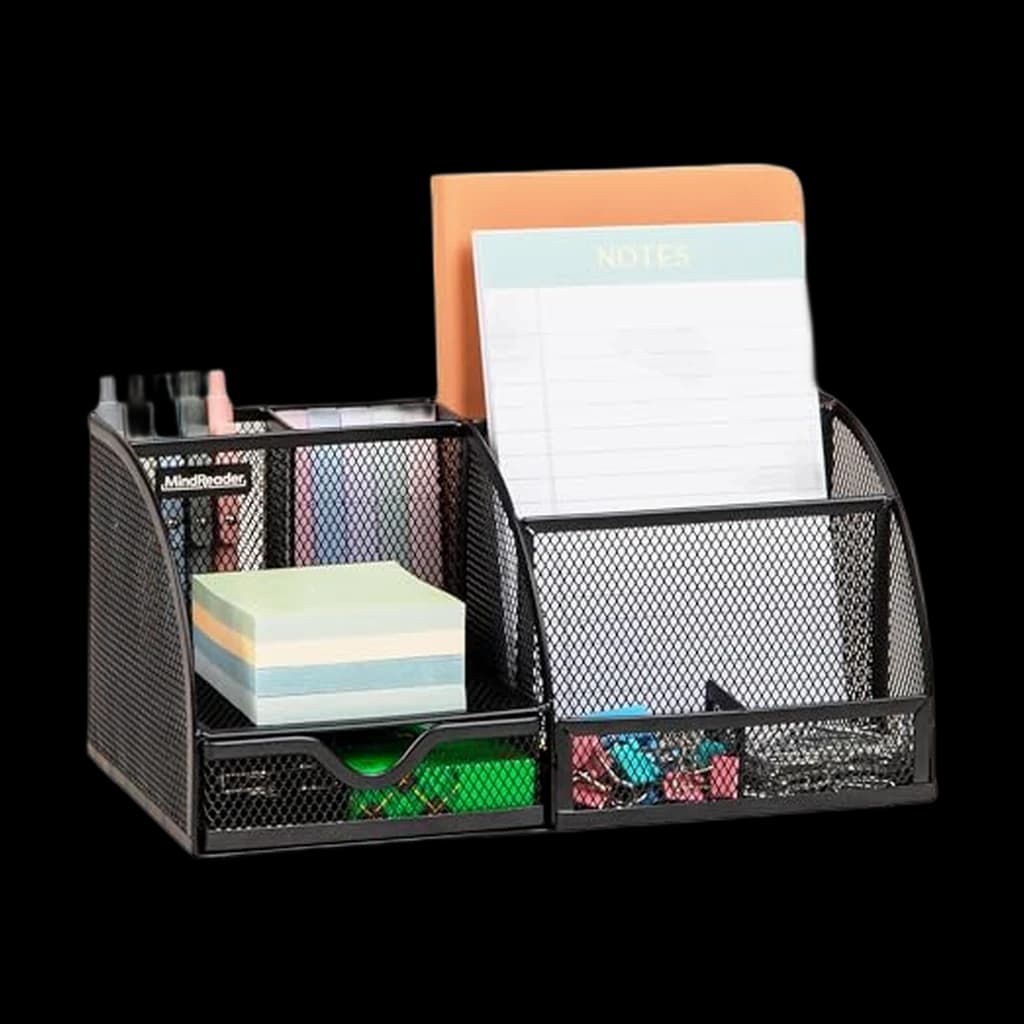
Mind Reader 7-Compartment Metal Mesh Desktop Organizer
Best score-to-price ratio in the category at the current Amazon price.
Buy on AmazonSkip this
Multi-piece matching desk organizer sets (pen cup + letter tray + drawer + file holder all in one box) — These sets photograph beautifully on day one and sit half-empty by month six. They double the surface footprint of a single well-chosen organizer without doubling the things you actually own that need a home. You end up with empty compartments that read as visual clutter - the exact problem the system was supposed to solve.
1Bamboo monitor riser with built-in storage slots and keyboard space underneath - the desk-organizer-and-monitor-stand in one piece
 2
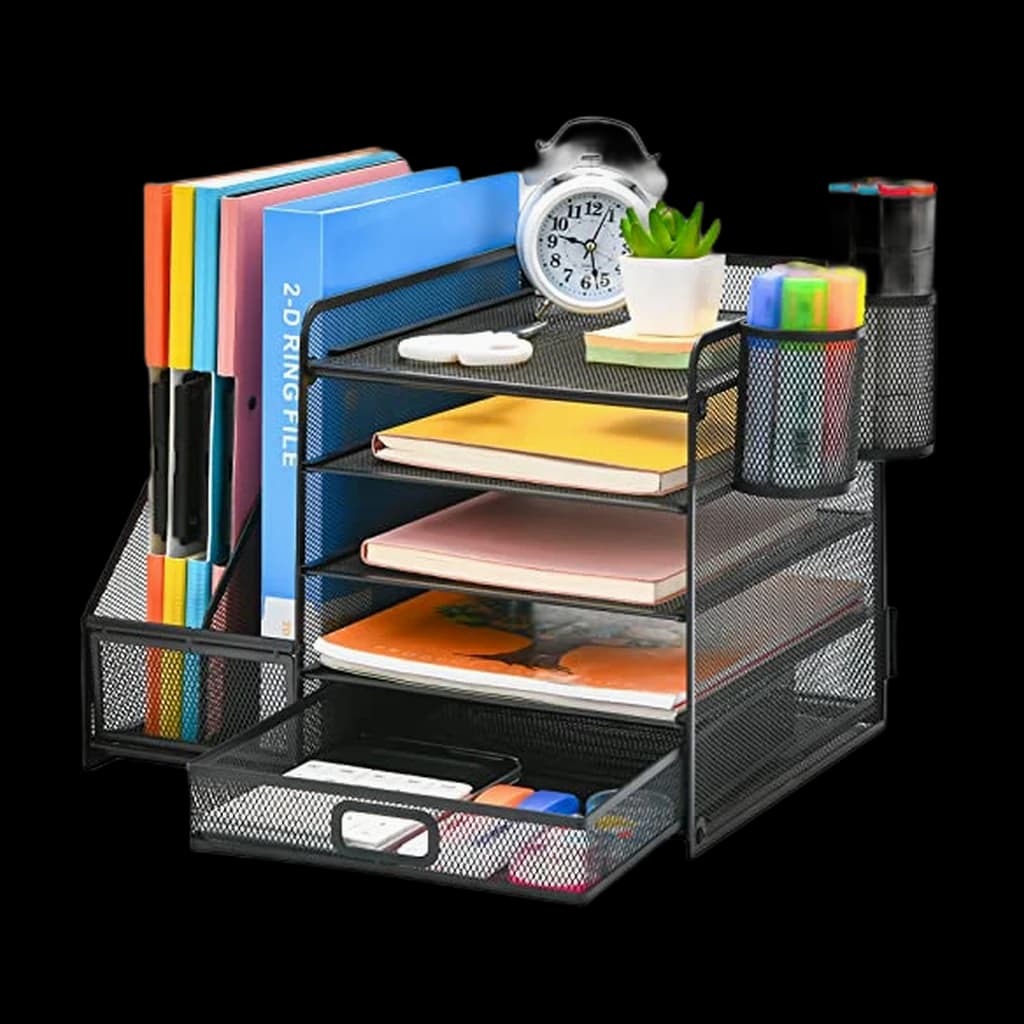
2All-in-one mesh stack with file trays, drawer, and two pen holders - the single piece that replaces a matching set
 3
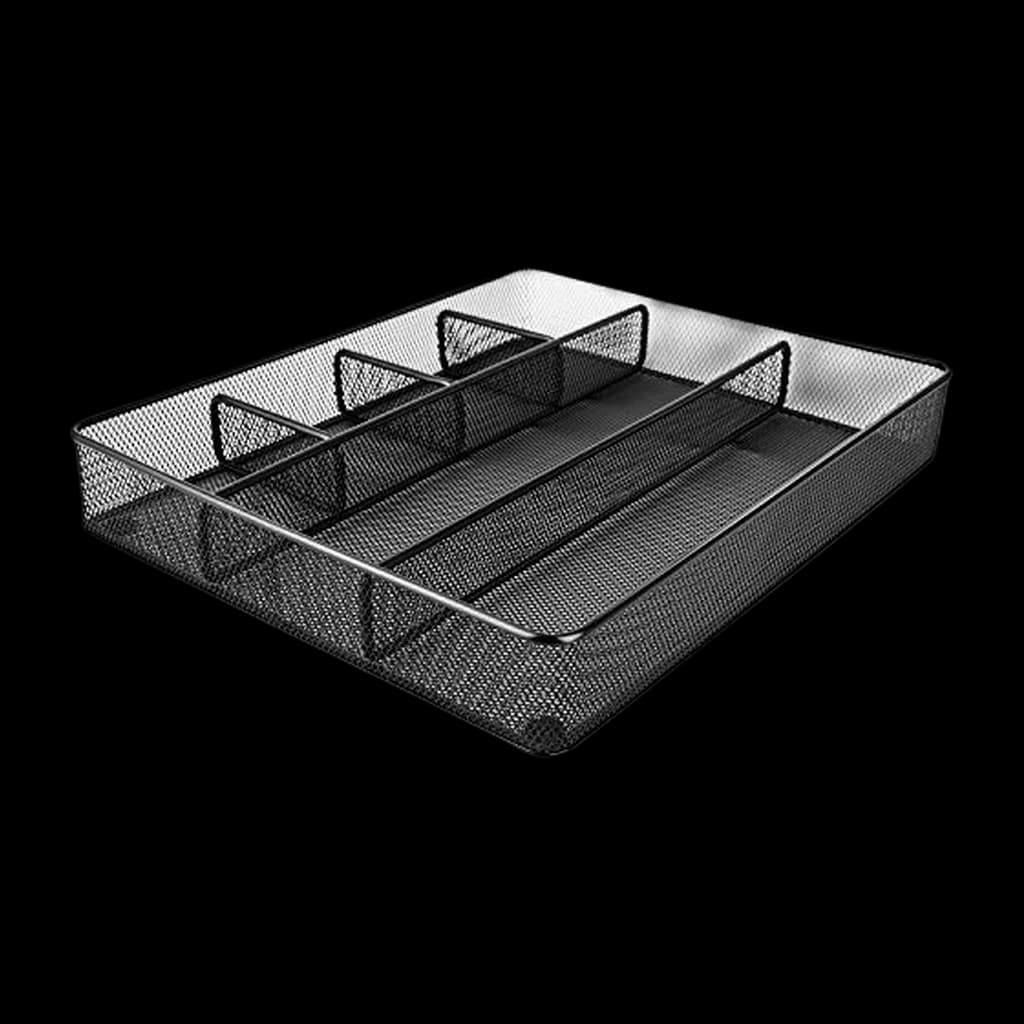
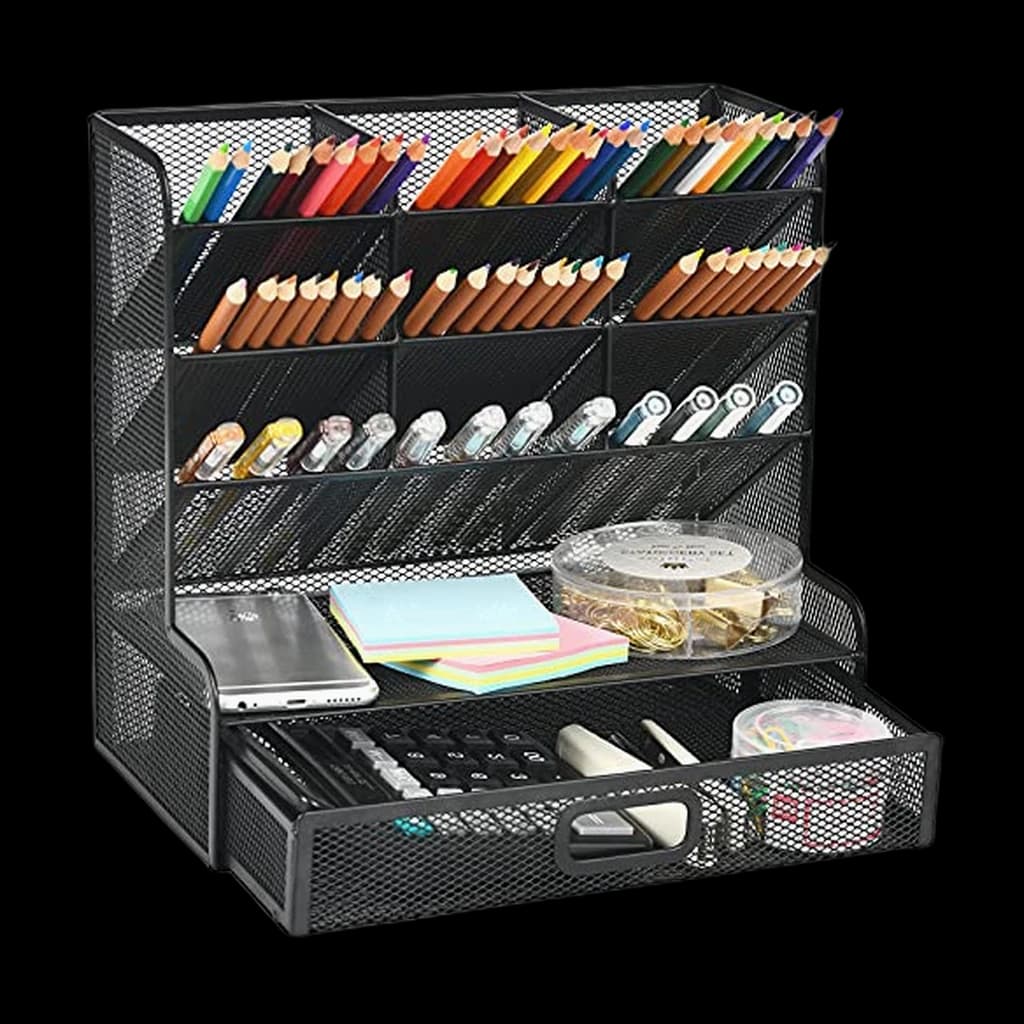
3Matte-black mesh organizer that disappears visually and absorbs the entire small-objects layer of a desk under $20
 4
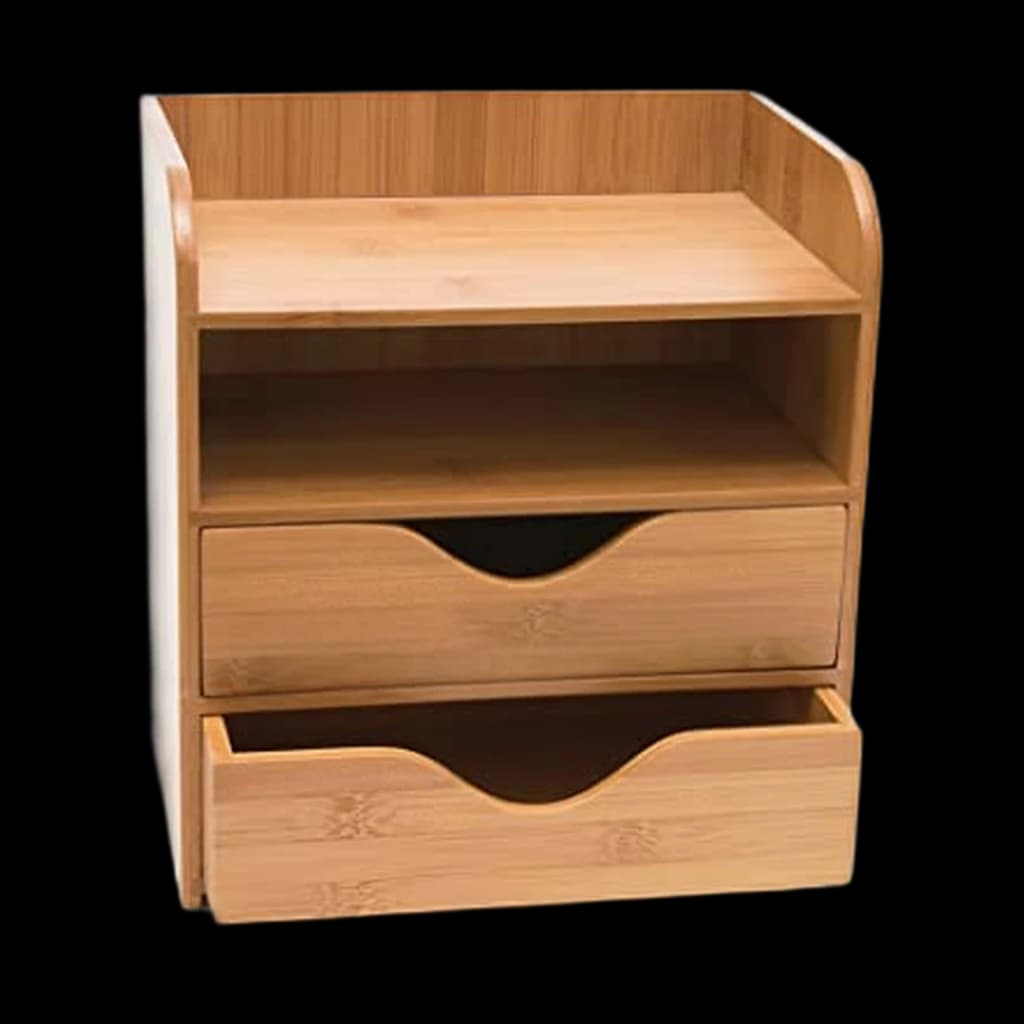
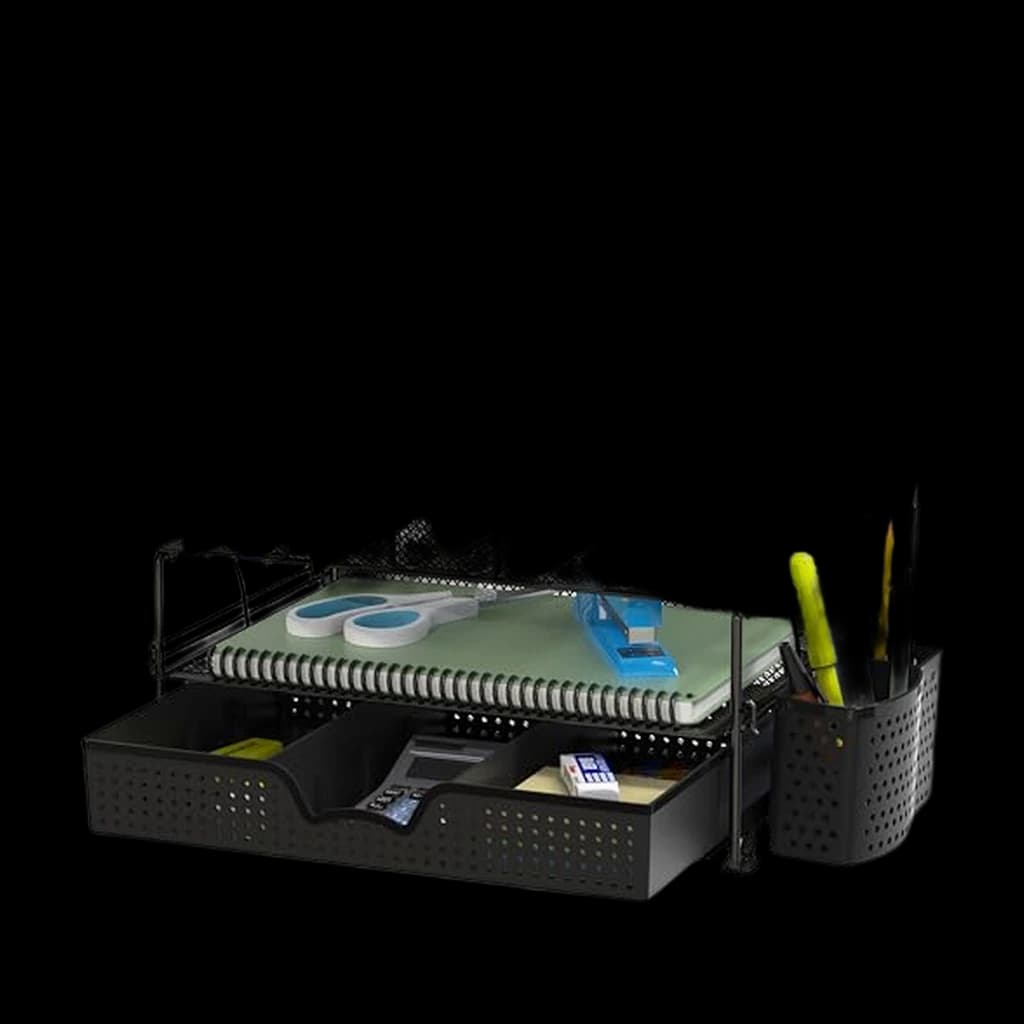
4Five upright sections plus a sliding drawer - the file sorter for people who still print
 5
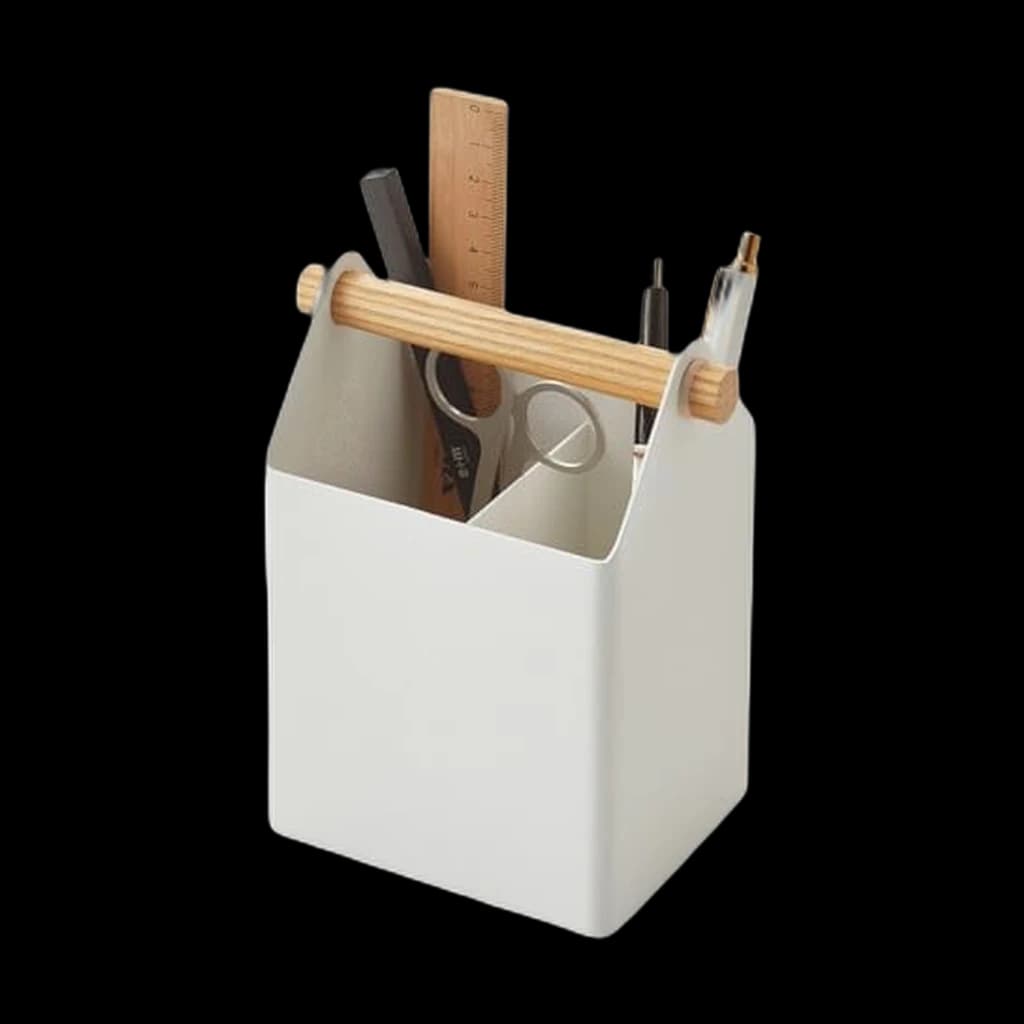
5Pen cup plus hidden drawer in one piece - the minimum viable upgrade for a near-empty desk
| Spec | ||||||||
|---|---|---|---|---|---|---|---|---|
| Buy | ||||||||
WFH Scoremethodology → | Capacity & Storage 79 Build Quality 91 Design & Footprint 79 Value 78 Owner Satisfaction 92 | Capacity & Storage 70 Build Quality 79 Design & Footprint 73 Value 76 Owner Satisfaction 71 | Capacity & Storage 83 Build Quality 83 Design & Footprint 89 Value 87 Owner Satisfaction 91 | Capacity & Storage 92 Build Quality 83 Design & Footprint 77 Value 77 Owner Satisfaction 87 | Capacity & Storage 67 Build Quality 73 Design & Footprint 79 Value 83 Owner Satisfaction 79 | Capacity & Storage 80 Build Quality 89 Design & Footprint 86 Value 64 Owner Satisfaction 89 | Capacity & Storage 76 Build Quality 97 Design & Footprint 91 Value 88 Owner Satisfaction 70 | Capacity & Storage 85 Build Quality 85 Design & Footprint 82 Value 88 Owner Satisfaction 92 |
| Buyer sentiment | Sturdiness Assembly Quality Functionality Buyers praise sturdiness, assembly, quality and functionality. Based on 3,902 user mentions | Organization Functionality Appearance Fit Buyers praise organization, functionality and appearance. Mixed feedback on assembly and quality. Some flag fit. Based on 1,283 user mentions | Size Sturdiness Buyers praise size and sturdiness. Based on 11 user mentions | Assembly Quality Organization Functionality Buyers praise assembly, quality, organization and functionality. Mixed feedback on sturdiness. Based on 7,460 user mentions | Versatility Capacity Quality Sturdiness Buyers praise versatility, capacity, quality and sturdiness. Based on 274 user mentions | Assembly Quality Sturdiness Appearance Buyers praise assembly, quality, sturdiness and appearance. Based on 112 user mentions | Quality Appearance Functionality Storage Capacity Size Durability Buyers praise quality, appearance, functionality and storage capacity. Mixed feedback on construction. Some flag size and durability. Based on 536 user mentions | Organization Quality Sturdiness Fit Buyers praise organization, quality, sturdiness and fit. Based on 244 user mentions |
| Material | Solid bamboo | Powder-coated steel mesh | Powder-coated steel mesh | Powder-coated steel mesh | Steel mesh with ABS coating | — | Solid bamboo | Steel mesh |
| Dimensions | 23.6 x 11.9 x 3.3 inches | 12.4 x 9.6 x 13.4 inches | 11 x 5.5 x 5.25 inches | 13.2 x 9 x 12 inches | 10.5 x 5.9 x 10.1 inches | — | 7.4 x 4.6 x 9 inches | — |
| Weight Capacity | 80 lbs | — | — | — | — | — | — | — |
| Storage | Phone slot, cup slot, paper compartments, under-stand keyboard space | — | — | — | — | — | — | — |
| Color | Natural bamboo | Black | Black | Black | Black | — | Natural bamboo | — |
| Tiers | — | 5 letter trays + magazine slot | — | — | — | — | 4 stacked horizontal trays | — |
| Drawer | — | 1 sliding drawer with adjustable dividers | — | 1 sliding drawer with 6 movable dividers | — | — | — | — |
| Compartments | — | — | 7 (1 large, 3 medium, 3 small) | — | 3 pen cup + 1 hidden drawer | — | — | 6 (2 rectangular, 4 square) |
| Sections | — | — | — | 5 upright dividers + 2 horizontal trays | — | — | — | — |
| tiers | — | — | — | — | — | 5 trays + 1 drawer + 2 pen holders | — | — |
| material | — | — | — | — | — | Wood + metal mesh | — | — |
| depth | — | — | — | — | — | 9.13" | — | — |
| fits | — | — | — | — | — | Letter / A4 paper | — | — |
| Feet | — | — | — | — | — | — | — | Rubber, non-slip |
| Finish | — | — | — | — | — | — | — | Black |
| Use | — | — | — | — | — | — | — | Desktop or in-drawer |
* Prices checked Sep 12, 2026 and may not reflect current rates. As an Amazon Associate I earn from qualifying purchases.
As an Amazon Associate I earn from qualifying purchases. Product prices and availability are subject to change.
Princeton's McMains and Kastner (Journal of Neuroscience, 2011) demonstrated that multiple visual stimuli in the field of view mutually suppress neural responses in the visual cortex - meaning every additional object visible at your desk literally reduces the brain's processing capacity for the one you are trying to focus on. The implication: empty surface area is the productivity feature, and a desk organizer's job is to hide stuff, not display it.
r/HomeOffice and r/Workspaces consistently default to two recommendations: a Songmics or generic bamboo monitor riser for anyone who wants storage without losing desk space, and a single mesh multi-compartment organizer (Mind Reader 7-compartment or SimpleHouseware) for everyone else. r/declutter threads keep landing on the same advice - empty surface beats more compartments, and one well-chosen piece beats a matching set every time.
A desk organizer is a tool you maintain, not a tool that organizes you, and that distinction kills more purchases than any product flaw. The Princeton Neuroscience Institute's 2011 study on visual cortex competition found that multiple stimuli in the visual field compete for neural representation, reducing the brain's ability to focus on any single task. The takeaway buyers get wrong is that adding compartments solves the problem. It does not. Empty desk surface solves the problem. Compartments solve the secondary problem of where things go once you remove them. Buy the organizer that matches the volume of stuff you will not throw away, and skip the rest. Form factor is the first decision. A monitor stand with storage trades vertical space (under-screen drawer or shelf) for desk surface, and is the highest-leverage option for anyone running a single laptop or external monitor at a sub-30-inch desk. A standalone multi-compartment organizer (5-9 slots) lives at one corner and absorbs pens, sticky notes, scissors, business cards, and the small parade of objects that accumulate around a desk. A vertical file sorter (3-5 tiers with letter trays) is the right tool only if you actually print, file, or shuffle paper, which most knowledge workers no longer do. A pure pen cup is the minimum viable upgrade and the right answer if your desk only has a handful of writing tools. Material matters more than spec sheets suggest. Steel mesh is the most durable and the easiest to clean, runs $15 to $30, and disappears visually against any color desk. Bamboo and solid hardwood look warmer and photograph better, but they pick up coffee rings and pen marks over time and require periodic conditioning. Powder-coated steel and steel-plus-wood combos (Yamazaki, Lipper, Grovemade) sit at the premium tier and last decades, but the price-to-organization ratio is poor compared to mesh. Capacity is usually overstated. A 7-compartment organizer holds far less than the photo suggests once real-world objects (a stapler, a pair of scissors, a pack of sticky notes) take their actual space. Buy one size up from what the listing photos imply. Specific scenarios to plan for: monitor users with limited desk depth want a stand-with-drawer to recapture surface; paperless workers should skip file sorters entirely and pick a multi-compartment plus a pen cup; aesthetic-driven setups (wooden desks, minimalist photography) justify the bamboo or steel-and-wood premium tier; chronic-clutter users should buy mesh in matte black so it disappears visually rather than calling attention to whatever ends up inside it. The single biggest mistake is buying a multi-piece system (matching pen cup, letter tray, drawer, file holder) when one well-chosen piece would do. The system tells the world you are organized; the desk tells the truth.