Digital Nomad on a Budget: Working From Anywhere in 2026
Digital nomad life in 2026 is more accessible than ever if you choose affordable destinations, pack the right gear, and plan your connectivity carefully.
Quick Answer
Nomad life in 2026 is accessible on a modest budget if you pick affordable bases, pack lean but deliberate gear (laptop, compact stand, universal adapter, eSIM), and treat connectivity as the make-or-break line item. Plan visas before flights, and budget for a coworking pass — it's the highest-ROI recurring expense most nomads under-rate.
Key Takeaways
You do not need a six-figure salary to be a digital nomad. This 2026 guide covers budget destinations, gear essentials, and practical money-saving tips.

As an Amazon Associate I earn from qualifying purchases. Product prices and availability are subject to change.
The fantasy version of digital nomad life looks like this: you are sitting in a Bali beach bar, laptop open, cocktail in hand, crushing your Jira tickets while watching the sunset. The reality is more like hunting for reliable Wi-Fi in a humid co-working space, budgeting carefully to make the numbers work, and figuring out time zones that let you attend the 9 AM standup without setting an alarm for 3 AM.
But here is the thing — the realistic version is still incredible. And in 2026, it is more accessible than ever. You do not need a Silicon Valley salary to work from another country. With the right planning, many remote workers can live abroad for less than they spend at home.
This guide covers how to actually make it work on a budget.
The Numbers: Where Your Money Goes
Let us get specific. The average monthly cost of living in a mid-tier US city (think Austin, Denver, or Raleigh) is roughly $3,500-$4,500 for a single person including rent, food, transport, and basic entertainment.
Here is what that same lifestyle costs in popular digital nomad destinations in 2026:
| Destination | Monthly Cost | Nomad Visa Available |
|---|---|---|
| Chiang Mai, Thailand | $1,000-$1,500 | Yes (DTV visa) |
| Lisbon, Portugal | $2,000-$2,500 | Yes (D8 visa) |
| Mexico City, Mexico | $1,200-$1,800 | No visa needed (<180 days) |
| Medellin, Colombia | $1,100-$1,600 | Yes (digital nomad visa) |
| Tbilisi, Georgia | $800-$1,200 | No visa needed (<365 days) |
| Budapest, Hungary | $1,500-$2,000 | Yes (White Card) |
| Da Nang, Vietnam | $900-$1,300 | Yes (e-visa + extensions) |
The savings are real.
What that frees up: moving from a $4,000/month US lifestyle to a $1,500/month lifestyle abroad frees up $30,000 per year — retirement savings, debt payoff, or a serious travel fund.
The Gear You Actually Need
Packing for nomad life is an exercise in ruthless minimalism. Every item needs to earn its space. After three years of trial and error across multiple countries, here is the essential tech kit.
- Laptop. This is your livelihood. A MacBook Air or a Lenovo ThinkPad are the workhorses of the nomad community for good reason — durable, lightweight, and excellent battery life. Budget $800-$1,200 for something that will last.
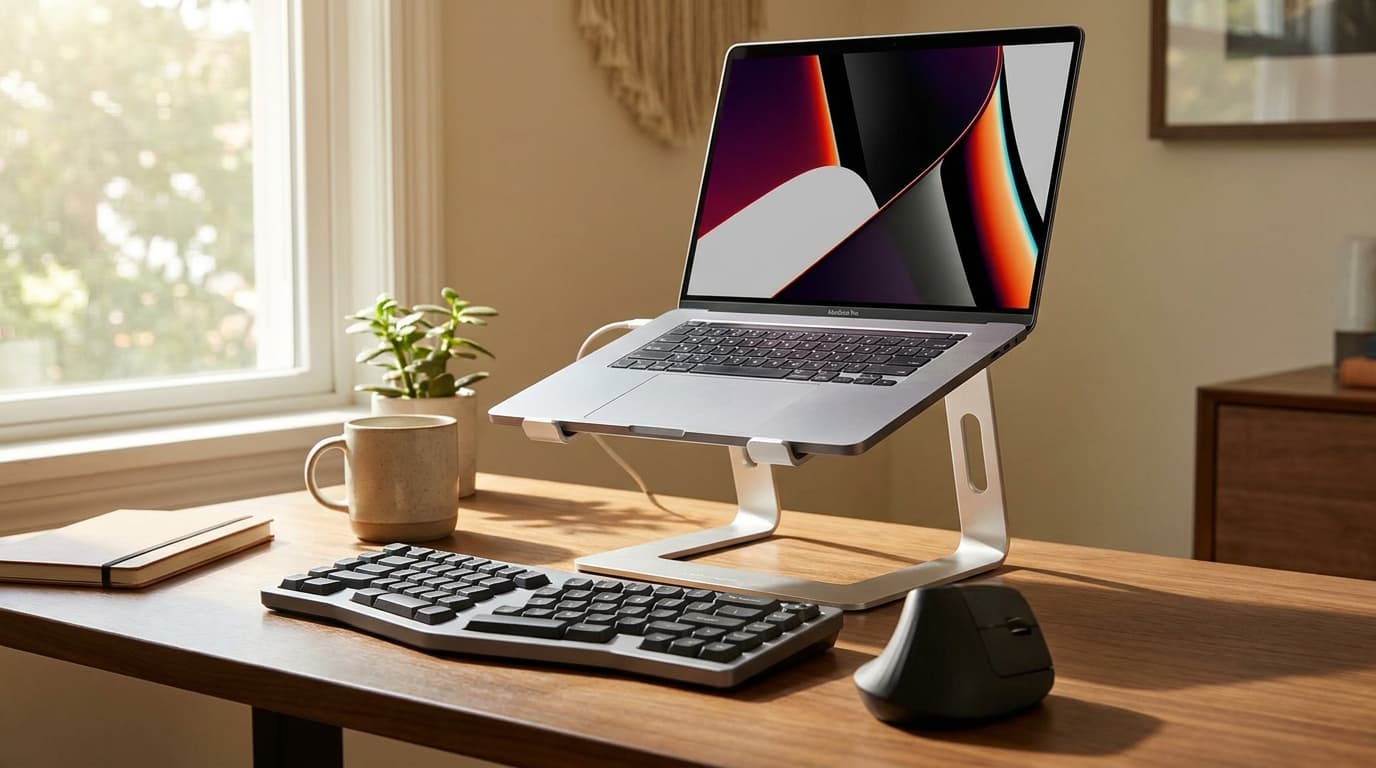
- Laptop stand. A portable, foldable laptop stand weighs under a pound and saves your neck when you are working from coffee shops, Airbnb dining tables, and co-working hot desks. We reviewed the best options in our laptop stand guide.
- Noise-canceling headphones. Non-negotiable. You will work from noisy cafes, hostels with thin walls, and co-working spaces with open floor plans. Good noise cancellation is the difference between focused work and frustrated flailing. Check out our noise-canceling headphones guide for tested recommendations.
- Portable charger. A 20,000mAh power bank keeps your phone and laptop alive during long cafe sessions or travel days. Power outlet availability varies wildly across countries.
- Universal power adapter. Get one with USB-C PDUSB-C PDUSB Power Delivery: the spec that lets USB-C deliver up to 100W (240W on PD 3.1) of charging power. A 90W+ PD monitor can charge most laptops while also handling video and peripherals over a single cable. charging so it can power your laptop directly.
- Phone with international eSIM. Services like Airalo and Holafly let you activate data plans for virtually any country from your phone. No more hunting for local SIM cards at the airport.
For a complete budget gear setup, our $500 WFH setup guide covers how to get everything you need without overspending.
Connectivity: The Make-or-Break Factor
Nothing ends a nomad stint faster than unreliable internet. Here is how to protect yourself:
- Always have a backup connection. Your primary connection is the co-working space or Airbnb Wi-Fi. Your backup is your phone's hotspot via a local data plan. Before booking accommodation, check reviews specifically for Wi-Fi speed and reliability.
- Test before you commit. Run a speed test before signing a monthly co-working membership. You need at minimum 25 Mbps download and 10 Mbps upload for comfortable video calls. Chiang Mai and Lisbon consistently deliver excellent speeds; rural Southeast Asia can be hit or miss.
- Consider a portable Wi-Fi hotspot. A dedicated travel router like the GL.iNet Beryl lets you create your own secure network from any source — hotel ethernet, cafe Wi-Fi, or a SIM card. It adds a layer of both reliability and security.
Visa and Legal Considerations
This is where many aspiring nomads get nervous, but the landscape has improved dramatically. As of 2026, over 50 countries offer some form of digital nomad visa. The requirements typically include:
- Proof of remote employment or freelance income
- A minimum income threshold (usually $1,500-$3,000/month)
- Health insurance
- A clean criminal record
Popular options include Portugal's D8 visa (renewable, path to residency), Thailand's Destination Thailand Visa (DTV, valid for 180 days, extendable), and Colombia's digital nomad visa (up to 2 years).
Important: working remotely while on a tourist visa exists in a legal gray area in many countries. A proper digital nomad visa gives you legal certainty and often comes with tax benefits. Consult a tax professional about your obligations — US citizens are taxed on worldwide income but the Foreign Earned Income Exclusion can shield up to roughly $130,000.
Money-Saving Strategies That Actually Work
- Slow travel. Moving cities every week is expensive and exhausting. Staying one to three months in each location lets you negotiate monthly rent discounts (typically 30-50% off nightly rates), find the cheap local restaurants, and avoid constant transportation costs.
- Cook most meals. Eating out for every meal adds up even in cheap countries. Get accommodation with a kitchen and shop at local markets. In Thailand or Vietnam, fresh produce from a market costs almost nothing.
- Use co-working day passes first. Before committing to a monthly membership, buy a few day passes to test different spaces. Monthly memberships range from $50 in Southeast Asia to $200-300 in European cities.
- Travel during shoulder season. Flights and accommodation are cheapest between high and low seasons. For Southeast Asia, that is April to May and October to November.
- Join nomad communities. Facebook groups, Nomad List forums, and local meetups are goldmines for tips on deals, reliable apartments, and hidden gems.
The Honest Downsides
Budget nomad life is not all sunsets and cheap pad thai.
- Loneliness is real, especially in the first few months.
- Time zone differences strain relationships back home.
- Healthcare logistics require planning.
- The constant context-switching of new cities and routines can be mentally draining.
Go in with eyes open: have a financial cushion of at least three months of expenses, and give yourself permission to go home if it is not working.
Getting Started
If you are seriously considering the nomad path, here is a simple first step: pick one destination from the table above, calculate your monthly budget, and plan a one-month trial. Keep your apartment at home or sublet it. One month is enough to know whether this lifestyle resonates with you without burning bridges.
The hardest part is booking the flight. Everything after that is problem-solving.
Related Reading
Your next step
The carry-anywhere kit, ranked.
Hilly Shore Labs
Editorial TeamWFH Lounge is published by Hilly Shore Labs. Every recommendation is built by synthesizing ergonomic research, manufacturer specs, expert reviews from outlets like Wirecutter, RTINGS, and The Verge, and aggregated long-term owner sentiment from thousands of verified buyers.
All product reviews are independently researched. Our recommendations are based on ergonomic guidelines, manufacturer specifications, and verified buyer sentiment. See our methodology.