The Lunch-Break Dog Walk: Remote Work's Built-In Reset Button
The dog was going to need the walk anyway. Anchoring it to your lunch break turns an obligation into the most reliable focus reset in your day — and unlike most productivity advice, the dog will hold you accountable.
Quick Answer
If you work from home with a dog, the midday walk is the single best break available to you: it forces movement, daylight, and a real boundary between the morning and afternoon — three things remote workers chronically under-get. Treat it as a fixed calendar block, not a maybe. The only real obstacles are friction (gear scattered everywhere) and guilt (it isn't slacking; you return sharper).
Key Takeaways
The midday dog walk is the best break a remote worker can take — movement, daylight, and a hard boundary in one. How to make it a keystone habit, and the gear that removes the friction.
As an Amazon Associate I earn from qualifying purchases. Product prices and availability are subject to change.
Quick answer
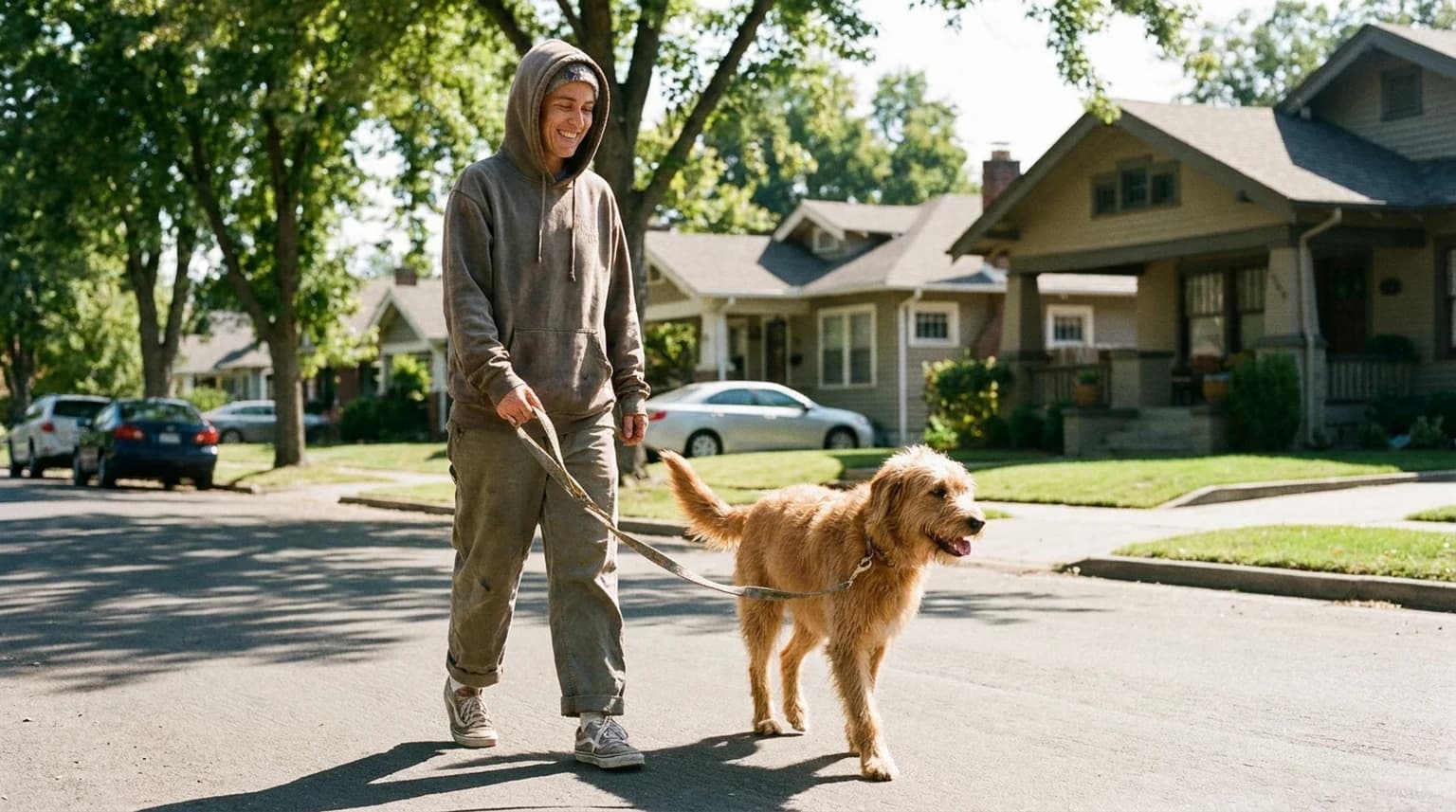
Remote workers are terrible at taking real breaks. We eat at the desk, "rest" by scrolling, and wonder why 2pm feels like wading through glue. If there's a dog in the house, you're sitting on the fix: the midday walk is movement, daylight, and a hard boundary between the halves of your day, bundled into something you were obligated to do anyway.
The frame: treat it like infrastructure instead of an interruption.
Why the dog walk beats every other break
A good break has three properties:
- It gets you away from the screen.
- It involves low-stimulation input, so your attention can actually recover.
- It has a natural end, so it doesn't swallow the afternoon.
The dog walk has all three built in, plus two things no app can give you:
- An accountability partner who doesn't take excuses. You can skip a calendar reminder. You cannot skip the dog staring at you at 12:30.
- Daylight exposure, which anchors your circadian rhythm and does more for the afternoon slump than a second coffee.
The walk also solves the guilt problem that stops remote workers from breaking at all: it doesn't feel like slacking, because it isn't optional. That psychological cover is worth more than it should be.
Make it a fixed block, not a gap-filler
The failure mode: "I'll take him out when I finish this" — and this never finishes.
The walk drifts to 3pm, the dog is restless all afternoon (which means you get interrupted anyway, just unpredictably), and the break never lands where your energy actually dips.
Put it on the calendar as a recurring block, same time daily, and treat it with meeting-level seriousness. Most people land on 12:00–1:00, which conveniently matches the natural post-lunch attention dip. If your team uses shared calendars, block it — "walking meeting with a stakeholder" is technically accurate.
Remove the friction
Every step between "decide to walk" and "out the door" is a place the habit dies. The fix is a launch station on one hook by the door, always:
- Leash
- Waste bags
- Keys
- A towel for wet paws, if you walk in variable weather
Gear matters more here than people admit, because bad gear adds friction daily. A tangled retractable or a collar your dog slips out of turns a reset into a chore. PawBench's leash and collar rankings are a solid starting point for a setup that makes the walk pleasant instead of a negotiation. And if your route includes off-leash stretches or your dog is an escape artist, a GPS activity tracker removes the one anxiety that makes people cut walks short.
Use the walk deliberately
You don't have to optimize this — a walk is already good — but a few patterns make it compound:
- Leave the phone in your pocket. The whole value is low-stimulation recovery. A podcast is fine; a Slack check is not.
- Use it to close the morning. Before you leash up, jot the next step on whatever you were working on. You'll come back without the "where was I?" tax.
- Let hard problems ride along. Walking is famously good thinking time — many people find the stuck problem un-sticks itself somewhere around the second block.
The afternoon payoff
The version of you that walked at noon and the version that ate at the desk diverge hard around 2:30pm. Movement clears the post-lunch fog, the daylight steadies your energy, and the dog — now exercised — sleeps through your afternoon meetings instead of bringing you a ball during them. If you want the full playbook for dogs and cats underfoot during work hours, our guide to working from home with pets covers the rest of the day; this walk is just the keystone.
Frequently asked questions
How long should the midday dog walk be?
20–30 minutes hits the sweet spot: enough movement and daylight to reset your attention, short enough to fit a lunch hour with time to actually eat.
Consistency beats length: the block matters far more than the minutes.
What if I have back-to-back meetings at midday?
Shift the block, don't drop it — the walk works at 11am or 2pm too. If a day is truly wall-to-wall, even a 10-minute loop preserves the habit and the dog's routine, which is what keeps the afternoon calm.
Is walking during work hours really okay?
You return measurably sharper, the dog needed it anyway, and desk workers in offices take longer coffee breaks without a second thought. Block it on the calendar and treat it as part of how you work, because it is.
Hilly Shore Labs
Editorial TeamWFH Lounge is published by Hilly Shore Labs. Every recommendation is built by synthesizing ergonomic research, manufacturer specs, expert reviews from outlets like Wirecutter, RTINGS, and The Verge, and aggregated long-term owner sentiment from thousands of verified buyers.
All product reviews are independently researched. Our recommendations are based on ergonomic guidelines, manufacturer specifications, and verified buyer sentiment. See our methodology.