The Perfect WFH Morning Routine: 7 Tips From Pros
Quick Answer
The strongest predictor of a productive WFH day is a consistent morning routine: wake at the same time, get dressed, create a commute substitute (a short walk works), and protect the first hour for real work instead of email. The routine matters more than its contents — your brain needs a repeatable on-ramp.
Key Takeaways
Build a WFH morning routine that sets you up for a productive day. 7 proven tips from experienced remote workers to start strong.
As an Amazon Associate I earn from qualifying purchases. Product prices and availability are subject to change.
Your Morning Routine Sets the Tone for Your Entire WFH Day
When your commute is ten steps from the bedroom to the desk, it's tempting to roll out of bed five minutes before your first meeting. But experienced remote workers know that a solid morning routine is the single biggest predictor of a productive work-from-home day.
Across published remote-work research and practitioner write-ups — from software engineers to marketing managers to freelance designers — the same habits keep surfacing. We distilled the best advice into seven actionable tips. These aren't theoretical productivity hacks. They're battle-tested habits from people who've figured out what actually works.
1. Wake Up at a Consistent Time (Even Without a Commute)
The most common advice from experienced remote workers was surprisingly simple: wake up at the same time every day. Without the external pressure of a commute, it's easy to let your wake-up time drift later and later. But inconsistent sleep schedules lead to worse sleep quality, lower energy, and brain fog that persists all morning.
You don't have to wake up at 5 AM. Pick a time that gives you at least 45-60 minutes before your first meeting or work block, then stick to it — even on days when nothing is scheduled until 10 AM.
Why it works: your body's circadian rhythm will thank you with more natural energy and better focus.
How to Make It Stick
- Put your alarm across the room so you have to physically get up
- Give it a week — your body will start waking up naturally at the same time
- Avoid the snooze button: research shows that fragmented sleep in those extra minutes actually makes you groggier
2. Get Dressed (Yes, Really)
This tip gets eye-rolls, but every long-term remote worker we talked to emphasized it. You don't need to put on a suit — but changing out of pajamas signals to your brain that the day has started. Many remote workers have a "WFH uniform": comfortable but intentional clothing that's different from what they sleep in.
Think joggers and a clean t-shirt, or leggings and a pullover.
The psychological shift is real: when you feel put-together, you act more decisively and feel more professional, even if nobody sees you all day.
3. Move Your Body Before Opening Your Laptop
Physical movement in the morning primes your brain for focused work. It doesn't have to be a full gym session — even 15-20 minutes makes a measurable difference. Options that remote workers swear by include:
- A brisk walk around the block: Simulates a commute and gets natural light exposure, which regulates your circadian rhythm
- Yoga or stretching: Counteracts the effects of sitting all day and reduces tension before it builds
- Bodyweight exercises: Push-ups, squats, and planks get blood flowing without needing equipment
- A short bike ride: If you have a bike, 15 minutes of cycling is an excellent way to wake up your whole body
The key: do it before you check email or Slack. Once you open that laptop, the day takes over and exercise becomes something you'll "do later" (and probably won't).
4. Eat a Real Breakfast (Not Just Coffee)
Many remote workers fall into the trap of drinking coffee as breakfast and not eating until noon. While intermittent fasting works for some people, most find that eating a balanced breakfast within an hour of waking up leads to better focus and fewer energy dips.
You don't need anything elaborate. These all take less than ten minutes and provide sustained energy through the morning:
- A bowl of oatmeal with nuts and berries
- Eggs and toast
- Greek yogurt with granola
Prepare what you can the night before to remove friction.
If you want the coffee itself to earn its slot in the ritual, a manual method like a pour-over or press turns the brew into a genuine few-minute pause — BrewSift's manual brewer guide covers the options without the gear-hobby rabbit hole.
5. Define Your Top Three Priorities Before 9 AM
One of the biggest advantages of working from home is fewer interruptions in the morning. Use that quiet time wisely by identifying your top three priorities for the day before you dive into email, Slack, or meetings.
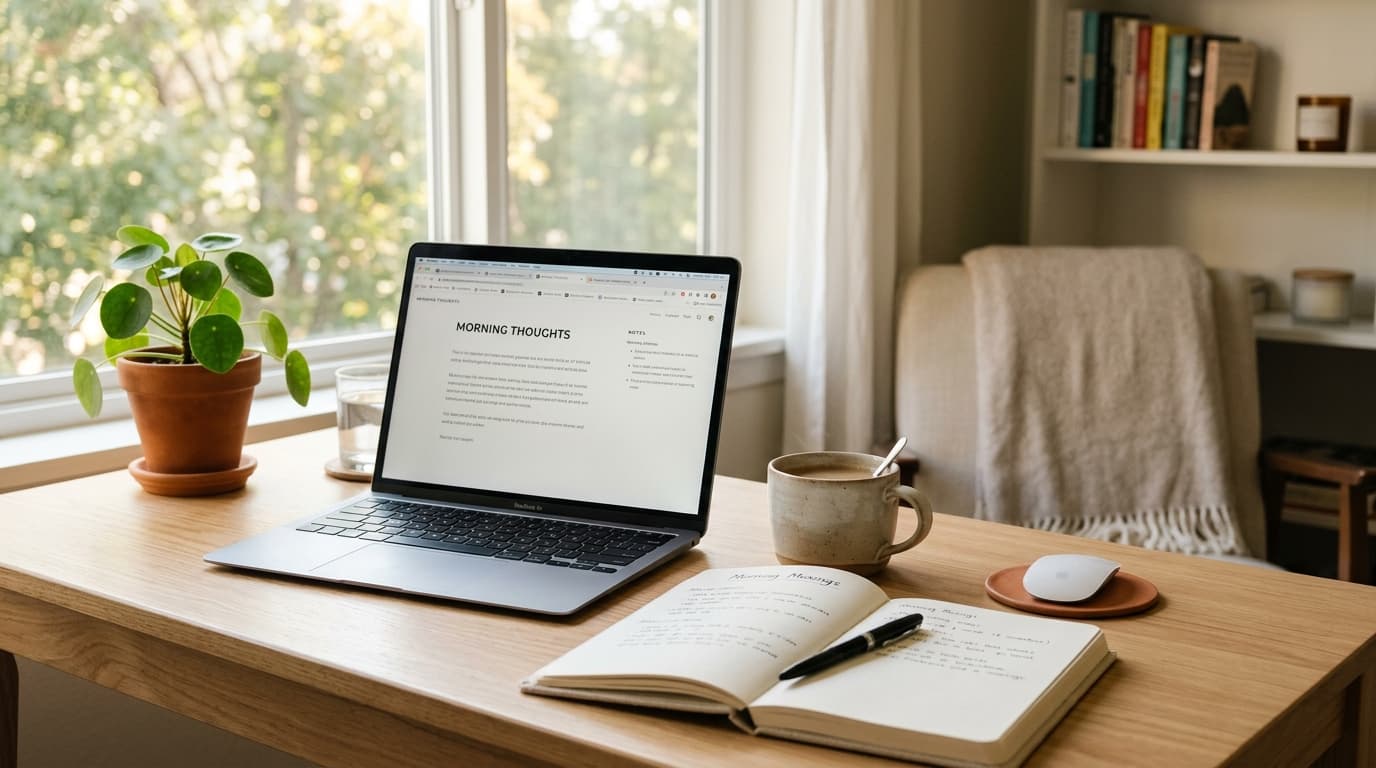
Write them down — on paper, in a notes app, or on a sticky note on your monitor. This takes two minutes but completely changes how intentionally you spend your day. Without clear priorities, you'll spend the day reacting to other people's agendas instead of advancing your own work.
The Two-Minute Review
Three things to run through:
- Check your calendar for meetings
- Review yesterday's to-do list
- Ask yourself: "If I could only accomplish three things today, what would have the biggest impact?"
Those are your priorities. Everything else is secondary.
6. Create a "Commute Replacement" Ritual
Commutes are annoying, but they serve a purpose: they create a transition between home life and work life. Without that buffer, many remote workers feel like they're always at work or never fully in work mode.
Create your own transition ritual. Some ideas that work well:
- Walk to a nearby coffee shop and bring your drink back to your desk
- Listen to a podcast or playlist that signals "work is starting"
- Spend ten minutes reading something non-work-related with your morning coffee
- Do a brief meditation or breathing exercise to center yourself
The specific activity matters less than the consistency. When your brain associates a particular ritual with "now we're working," the transition into focus mode becomes automatic.
7. Start with a Quick Win
Once you're at your desk, resist the urge to tackle your biggest, hardest task immediately. Instead, start with a quick win — a small task you can complete in 10-15 minutes. Reply to an important email. Review and approve a document. Clear out one small to-do.
This isn't procrastination. It's momentum-building. Completing a task triggers a small dopamine release that makes you feel capable and motivated.
Once that momentum is rolling: shift to your most important deep work while your energy and focus are at their peak.
Putting It All Together: A Sample WFH Morning
Here's what a solid WFH morning might look like in practice:
| Time | What you're doing |
|---|---|
| 7:00 AM | Wake up, get dressed, make the bed |
| 7:15 AM | 20-minute walk or workout |
| 7:40 AM | Shower, get ready |
| 8:00 AM | Breakfast and coffee with a podcast or light reading |
| 8:30 AM | Review calendar, write down top three priorities |
| 8:45 AM | Quick win task at your desk |
| 9:00 AM | Deep work block on your most important task |
Adapt this to your schedule and preferences, but the structure — movement, fuel, intention, then focused work — is the pattern that successful remote workers follow again and again.
Start Small and Build
You don't need to overhaul your entire morning overnight. Pick one or two of these tips and try them for a week. Once they feel natural, add another. Within a month, you'll have a morning routine that makes your work-from-home days consistently more productive and enjoyable.
Your next step
Structure the day from the wrist.
Hilly Shore Labs
Editorial TeamWFH Lounge is published by Hilly Shore Labs. Every recommendation is built by synthesizing ergonomic research, manufacturer specs, expert reviews from outlets like Wirecutter, RTINGS, and The Verge, and aggregated long-term owner sentiment from thousands of verified buyers.
All product reviews are independently researched. Our recommendations are based on ergonomic guidelines, manufacturer specifications, and verified buyer sentiment. See our methodology.