Meal Prep for Remote Workers: Stop Snacking Start Eating
Spending 60 to 90 minutes on Sunday prepping meals for the week eliminates the WFH snacking trap, saves money, and keeps your energy steady throughout the workday.
Quick Answer
Sixty to ninety minutes on Sunday — batching two proteins, a grain, vegetables, and a sauce — eliminates the WFH snacking trap for the whole week. Plate-style lunches, prompt refrigeration, and scheduled snack windows keep the kitchen from becoming a constant workday distraction.
Key Takeaways
Remote workers snack more and eat worse. This practical meal prep guide helps you eat real meals, save time, and stay focused all day.
As an Amazon Associate I earn from qualifying purchases. Product prices and availability are subject to change.
There is a specific kind of eating pattern that remote work creates, and if you have been working from home for any length of time you already know it. You skip breakfast or grab something small. By 10:30 you are in the kitchen looking for a snack. You eat some crackers. At noon you think about making lunch but you are in the middle of something, so you grab a handful of nuts instead. By 2 PM you are hungry again. More snacking. By the time dinner rolls around you have consumed 800 calories of random grazing and have not eaten a single actual meal.
This pattern is so common in WFH communities that it has become a running joke. But the effects are not funny. Constant snacking on processed foods spikes and crashes your blood sugar, killing your afternoon focus. The lack of structured meals leaves you feeling simultaneously overfed and undernourished. And the constant trips to the kitchen break your concentration far more than you realize.
The fix is not willpower. It is systems. Specifically, a simple meal prep routine designed for remote workers.
Why WFH Makes Eating Harder
When you worked in an office, your eating was structured by external forces. You ate breakfast before you left the house. Lunch happened at noon because that was when the team went out or when you heated up your packed meal. Snacking was limited because the only options were whatever was in the break room.
At home, all constraints disappear. The kitchen is 15 steps away at all times. Every food you own is available at every moment. There is no social structure around meals. And because you are trying to maximize productivity, you convince yourself that skipping a proper lunch to keep working is efficient — even though the resulting energy crash at 3 PM wipes out whatever time you "saved."
Meal prep solves this by rebuilding structure. When lunch is already made and sitting in the fridge, there is no decision to make. You do not have to interrupt your focus to cook. You do not have to decide what to eat. You just grab it, eat it, and get back to work.
The Sunday Session: 90 Minutes That Change Your Week
You do not need to be a meal prep influencer with 40 matching containers. You need three things: a protein, a carb, and vegetables — prepped in bulk and ready to assemble.
Here is a realistic Sunday prep session that takes about 90 minutes:
Batch 1: Protein (30 minutes)
Pick one protein and cook a big batch:
- Season and bake a sheet pan of chicken thighs (25 minutes at 425 degrees)
- Brown two pounds of ground turkey with garlic and onions
- Cook a pot of lentils or black beans if you are plant-based
- Hard-boil a dozen eggs for quick breakfasts and snacks
Batch 2: Carbs (20 minutes, mostly passive)
- Cook a large pot of rice, quinoa, or farro
- Roast a sheet pan of sweet potatoes cut into cubes
- Cook a batch of pasta (slightly underdone so it reheats well)
Batch 3: Vegetables (20 minutes)
- Roast a sheet pan of mixed vegetables — broccoli, bell peppers, zucchini, and onions work great
- Wash and chop raw vegetables for snacking: carrots, cucumbers, cherry tomatoes, celery
- Make a big container of salad greens (store with a paper towel to absorb moisture)
Batch 4: Sauces and Extras (15 minutes)
- Make or buy two to three sauces to rotate through the week: a teriyaki glaze, a tahini dressing, a simple vinaigrette, hot sauce, pesto
- Sauces are the secret to meal prep that does not get boring. Same chicken and rice on Monday with teriyaki tastes completely different on Wednesday with pesto.
Assembly
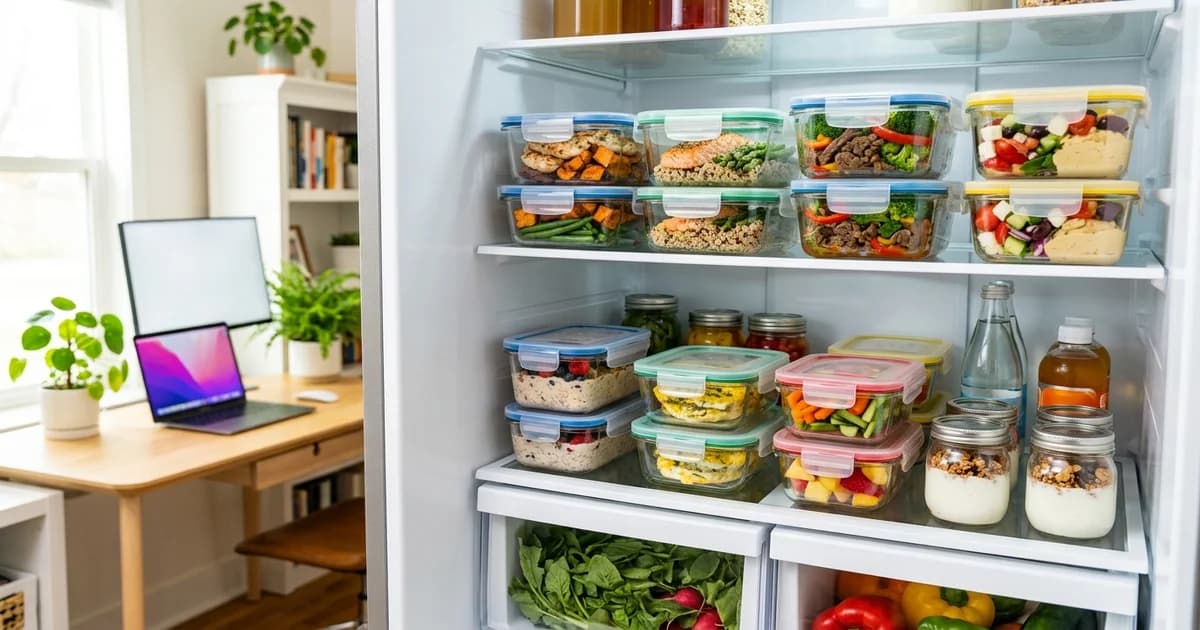
Divide everything into containers for the week. Glass meal prep containers keep food fresh longer and reheat better than plastic. The Pyrex Simply Store (12-Pack) Glass Food Storage Containers is a kitchen staple — they are microwave safe, dishwasher safe, and stack neatly in the fridge.
The WFH-Optimized Eating Schedule
Once your food is prepped, build a simple schedule:
- 8:00 AM — Breakfast: Eat before you start working. Even if it is just two hard-boiled eggs, a piece of toast, and some fruit. Eating breakfast sets your blood sugar for the morning and prevents the 10:30 AM snack spiral.
- 12:00 to 12:30 PM — Lunch: This is non-negotiable. Block 30 minutes on your calendar. Heat up your prepped meal. Eat it away from your desk if possible — even just at your kitchen counter instead of your work chair. The change of scenery gives your brain a micro-reset.
- 3:00 PM — Afternoon snack: Have a planned snack. This is strategic. Instead of wandering to the kitchen when your energy dips, have something ready: Greek yogurt, an apple with peanut butter, a handful of trail mix, or some of those prepped raw vegetables with hummus.
The key word is planned. The problem with WFH snacking is not snacking itself — it is unplanned, mindless snacking driven by boredom or procrastination. When your snack is deliberate, it fuels you. When it is reactive, it drains you.
The Snacking Trap and How to Beat It
Let us be honest about why you snack when you work from home. Sometimes it is hunger, but more often it is one of these:
- Boredom. You hit a wall on a task and your brain seeks stimulation. The kitchen provides it.
- Procrastination. Making a snack feels productive without actually being productive. It is a socially acceptable way to avoid the hard thing on your to-do list.
- Habit. You have trained yourself to get up and snack at certain times, and now the behavior runs on autopilot.
Understanding your trigger helps you pick the right intervention. If you snack from boredom, the fix is having a non-food alternative — step outside for two minutes, do a set of pushups, or switch to a different task. If it is procrastination, the fix is recognizing the pattern and sitting with the discomfort for five minutes. Usually the urge passes.
For more strategies on maintaining focus during the workday, check out our guide on how to stay focused when you work from home. Many of the techniques for managing distraction apply directly to managing snack urges.
Hydration: The Overlooked Piece
Before you reach for a snack, drink a glass of water. This is not just wellness advice — thirst and hunger signals are processed in the same part of the brain, and many people mistake mild dehydration for hunger.
Keep a large water bottle at your desk and aim to refill it at least twice during the workday. A 32-ounce insulated bottle like the Hydro Flask keeps water cold for hours and serves as a visual reminder to drink. If plain water bores you, add lemon slices, cucumber, or a splash of electrolyte mix.
Quick Lunch Ideas That Need Zero Cooking
For the days when meal prep did not happen or your containers ran out, here are five-minute lunches that are better than snacking:
- Deli wrap. Tortilla, deli turkey or hummus, spinach, cheese, mustard. Roll it up.
- Grain bowl. Microwave rice, top with canned beans, salsa, avocado, and cheese.
- Upgraded ramen. Instant ramen with a soft-boiled egg, frozen vegetables, and a splash of soy sauce and sesame oil.
- Loaded toast. Sourdough with avocado, everything bagel seasoning, and a fried egg on top.
- Snack plate done right. Cheese, crackers, deli meat, hummus, vegetables, fruit. It is still snack-style but it is a complete, balanced plate rather than random grazing.
Protecting Your Lunch Break
The other half of this equation is actually taking a lunch break. Remote workers consistently report skipping lunch or eating at their desks while working. This is counterproductive for two reasons:
- You eat faster and feel less satisfied when your attention is on a screen, which leads to more snacking later.
- You miss a valuable mental reset. A proper lunch break away from your desk improves afternoon performance. It is not wasted time — it is recovery time.
Block your lunch on your calendar so meetings cannot be scheduled over it. Treat it like any other appointment. Your work-life balance depends on these small boundaries as much as it depends on logging off at a reasonable hour.
Start This Sunday
You do not need to overhaul your diet overnight. This Sunday, try a minimal version: cook one protein, one carb, and roast some vegetables. Put them in containers. On Monday, eat a real lunch from those containers instead of grazing. Notice how different your afternoon feels.
That is the hook. Once you experience a focused, energized afternoon powered by actual food instead of handfuls of snack mix, you will never go back.
Related Reading
Your next step
Keep the workday fuel simple.
Hilly Shore Labs
Editorial TeamWFH Lounge is published by Hilly Shore Labs. Every recommendation is built by synthesizing ergonomic research, manufacturer specs, expert reviews from outlets like Wirecutter, RTINGS, and The Verge, and aggregated long-term owner sentiment from thousands of verified buyers.
All product reviews are independently researched. Our recommendations are based on ergonomic guidelines, manufacturer specifications, and verified buyer sentiment. See our methodology.