WFH Burnout Is Real: How to Recognize It and Fix It
WFH burnout is driven by dissolved boundaries, social isolation, and physical stagnation — recognizing the seven warning signs early and implementing hard work-hour limits, daily movement, and real breaks is the path to recovery.
Quick Answer
WFH burnout is driven by dissolved boundaries, social isolation, and physical stagnation. The seven warning signs include exhaustion sleep doesn't fix, creeping cynicism, more hours with less output, and inability to disconnect. The fix is structural: hard work-hour limits, daily movement, real breaks, and boundaries your household and team both know about.
Key Takeaways
WFH burnout looks different from office burnout. Learn the warning signs specific to remote workers and evidence-based fixes.

As an Amazon Associate I earn from qualifying purchases. Product prices and availability are subject to change.
When people picture burnout, they imagine an overworked executive pulling 80-hour weeks. But WFH burnout is a different animal. It's quieter, sneakier, and harder to recognize because you're already home — the place where you're supposed to rest.
A 2025 Gallup survey found that fully remote workers reported higher burnout rates than in-office counterparts, not because they worked harder, but because boundaries between work and life had dissolved completely. The result is chronic exhaustion that weekends can't fix.
How WFH Burnout Differs
Office burnout stems from external pressures — demanding bosses, politics, long commutes. WFH burnout comes from the absence of structure:
- The "always on" feeling. Your laptop sits on your desk at 9 PM, silently suggesting one more email.
- Social isolation. Months without casual human interaction erode emotional resilience.
- Decision fatigue. Without external schedules, every aspect of your day requires a conscious choice.
- Physical stagnation. No walking to meetings, no commute, no lunch outings.
- Blurred identity. You're never fully "at work" and never fully "at home."
The 7 Warning Signs
1. Chronic Exhaustion That Sleep Doesn't Fix
You're getting enough hours but wake up tired. Weekends don't recharge you. This bone-deep fatigue doesn't respond to rest because the source is emotional, not physical.
2. Cynicism Toward Your Work
You used to care about projects. Now you're mentally checked out during meetings and irritated by routine requests. This cynicism is a defense mechanism against emotional depletion.
3. More Hours, Less Output
You sit at your desk from 8 AM to 7 PM but produce what used to take four hours. Quality degrades, decisions take longer, creative problem-solving disappears.
4. Physical Symptoms
Headaches, muscle tension, digestive problems, disrupted sleep. A cluster of unexplained symptoms coinciding with months of remote work often points to burnout.
5. Social Withdrawal
Declining virtual coffee chats, turning off your camera, avoiding Slack. Social withdrawal is both a symptom and accelerator of burnout.
6. Inability to Disconnect
Checking email at 11 PM, thinking about projects during dinner, feeling anxious away from your desk. This isn't productivity — it's anxiety masquerading as dedication.
7. Loss of Satisfaction
You finish a big project and feel nothing. You immediately move to the next task without acknowledging the completion. This emotional flatness is a clear indicator.
How to Fix It
Create Hard Boundaries Around Work Hours
Define when your workday ends and make it non-negotiable. Close your laptop. Log out of Slack. Turn off email notifications. Our guide on work-life balance while working from home offers specific strategies for creating and maintaining boundaries.
Some remote workers physically remove their laptop from their workspace each evening. The act of putting work away is a powerful psychological signal.
Reintroduce Physical Movement
Exercise is one of the most effective burnout interventions. A 2019 meta-analysis in PLOS ONE found that physical activity significantly reduced burnout symptoms across multiple studies.
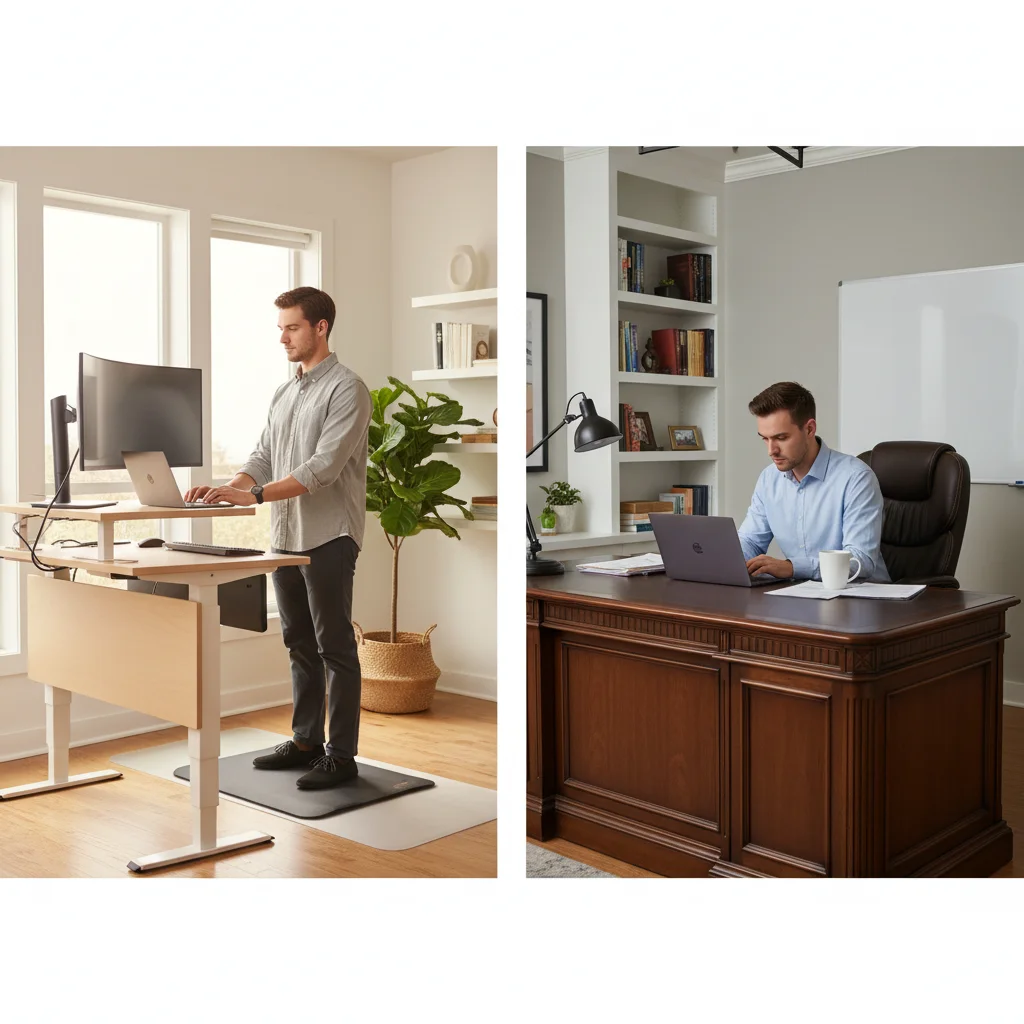
A 30-minute daily walk, yoga, or a standing desk routine that alternates sitting and standing makes a measurable difference. An anti-fatigue standing mat makes standing periods more comfortable. A light therapy lamp on your desk can also help combat the seasonal energy dips that compound burnout.
Take Real Breaks
Switching from your work laptop to your phone is not a break. Your brain needs genuine cognitive rest. Go outside. Play with a pet. Read a physical book. Give your brain completely different input for 10 to 15 minutes every two hours.
Reconnect Socially
If burnout has caused withdrawal, start small. Schedule one virtual coffee chat this week. Text a friend you haven't talked to. Accept the next social invitation, even if your instinct is to decline.
Audit Your Workload
Take an honest look. Are you doing work that should be delegated? Have you taken on responsibilities that aren't yours? Have a candid conversation with your manager about capacity. Frame it proactively: "I want to maintain quality, and here's what would help."
Change Your Environment
If you've worked from the same desk for months, change the scenery. Work from a coffee shop or library. Even rearranging your home office — moving your desk to face a window, adding a plant — can break the monotony.
Making your workspace more intentional and focused is worth considering. A stale environment contributes more to burnout than we realize.
Use Your PTO
Remote workers take 20 percent fewer vacation days than in-office employees. Take your PTO even if you "don't need it." And fully disconnect during it — no checking email "just in case."
Preventing It From Coming Back
- Weekly self-check-ins. Rate your energy, motivation, and social satisfaction 1-to-10. Track trends.
- Quarterly routine audits. What's working? What's draining you? Adjust.
- Non-negotiable personal time. Block it on your calendar with the same seriousness as a meeting with your CEO.
- Daily movement. Don't let exercise be the first thing cut when work gets busy.
WFH burnout is a signal, not a sentence. It's telling you something in your system needs to change. Listen to it, make the changes, and remote work becomes sustainable for the long haul.
Related Reading
Your next step
Rebuild the boundaries, gently.
Hilly Shore Labs
Editorial TeamWFH Lounge is published by Hilly Shore Labs. Every recommendation is built by synthesizing ergonomic research, manufacturer specs, expert reviews from outlets like Wirecutter, RTINGS, and The Verge, and aggregated long-term owner sentiment from thousands of verified buyers.
All product reviews are independently researched. Our recommendations are based on ergonomic guidelines, manufacturer specifications, and verified buyer sentiment. See our methodology.