Best Ergonomic Office Chair Under $300: Sihoo M57 Wins
The Sihoo M57 at about $199.99 — two-way adjustable lumbar, 3D arms and a 330 lb capacity — is the best ergonomic chair under $300. Buy a used Steelcase instead only if you can inspect it first.
Our #1 Pick
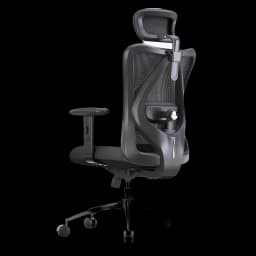
Sihoo M57 Ergonomic Chair
The most proven ergonomic chair under $300 for full 8-hour days: adjustable lumbar, 3D armrests, an adjustable headrest and a 330 lb capacity for about $200, backed by 7,900+ owner ratings at 4.4 stars.
- Adjustable 3D armrests plus adjustable lumbar
- Adjustable headrest included
- Breathable mesh back, 330 lb capacity
Price checked Sep 19, 2026 — verify the live price on Amazon.
Also Great
Budget pick: Staples Hyken Mesh Task Chair ($154.99) — A full-mesh back and seat with adjustable headrest, lumbar and tilt tension for about $155 — the cheapest chair here we would still sit in all day.
Buy on AmazonMost adjustable (just over the cap): Nouhaus Ergo3D ($299.99) — 4D armrests, 3D lumbar and a 135-degree recline — the closest thing here to a $500 chair's adjustment range. It has crept to $329.99, so it now sits just over the $300 line
Buy on Amazon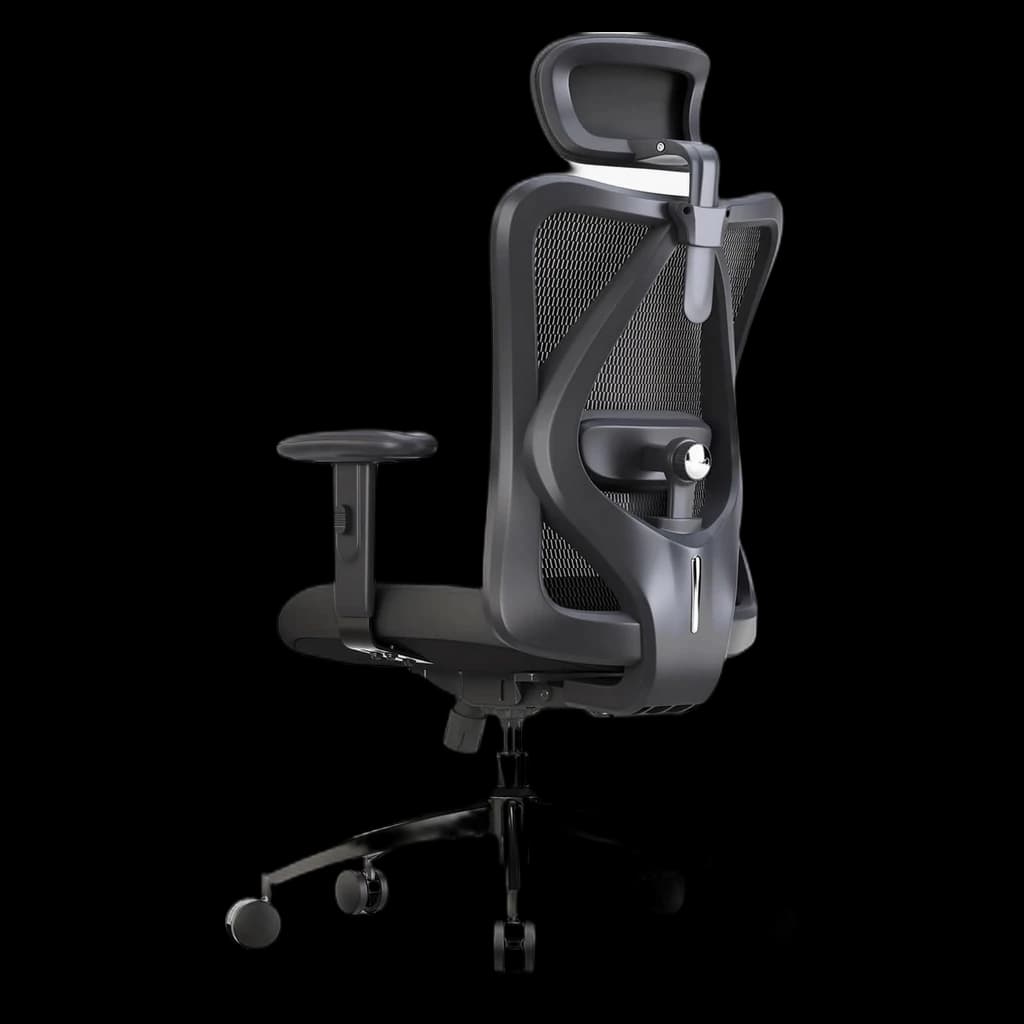 #1 4.4 | 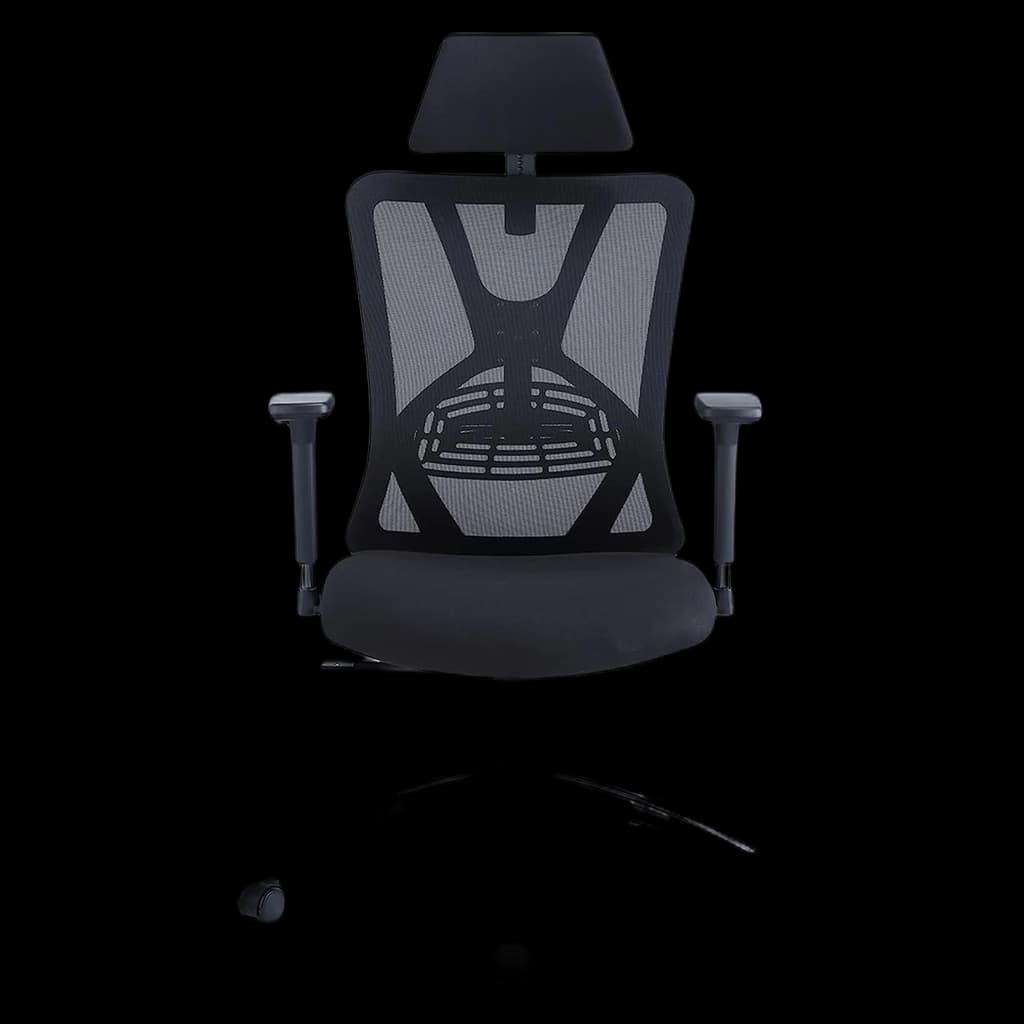 #2 4.1 | 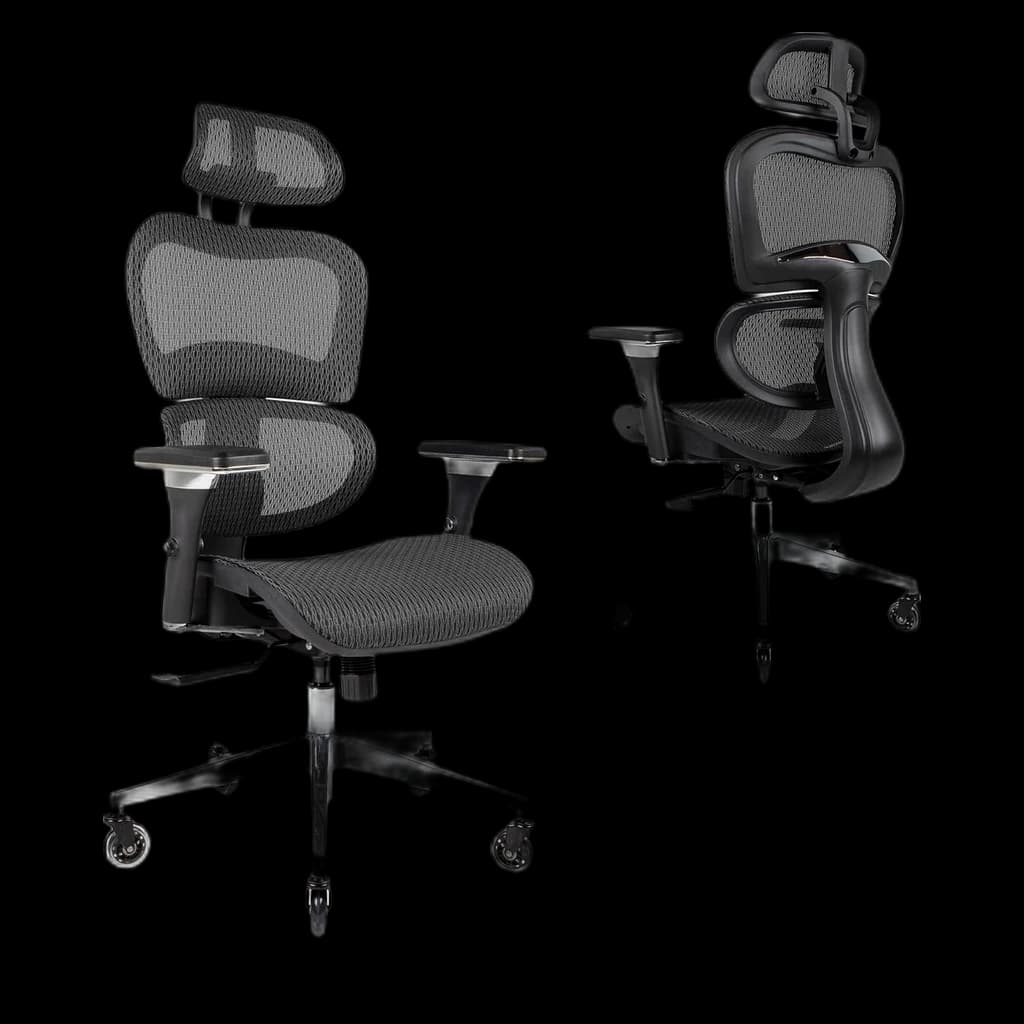 #3 4.3 | |
|---|---|---|---|
| Price | $199.99Buy on Amazon | $259.99Buy on Amazon | $299.99Buy on Amazon |
| Verdict | Best overall value under $300 | Best for taller users | Most adjustable under $300 |
| Buyer sentiment | Comfort Quality Assembly Lumbar Support Buyers praise comfort, quality, assembly and lumbar support. Mixed feedback on adjustability. Based on 2,633 user mentions | Assembly Durability Stability Seat Stiffness Buyers praise assembly. Mixed feedback on quality and value for money. Some flag durability and stability. Based on 569 user mentions | Appearance Assembly Durability Buyers praise appearance and assembly. Mixed feedback on lumbar support and value for money. Some flag durability. Based on 4,233 user mentions |
| weight_capacity | 330 lb | 300 lb | 330 lb |
| warranty | 3 years | Manufacturer limited | 5 years |
| armrests | 3D | 3D metal | 4D |
| headrest | Adjustable, included | Rotatable | — |
| recline | — | — | Up to 135 degrees |
| back | — | — | Breathable mesh |
| Pros |
|
|
|
| Cons |
|
|
|
* Prices checked Sep 19, 2026 and may vary. Check the latest price on Amazon.
We research — never hands-on. How we research →
12-month reality check
What owners say after living with this 12 months — paraphrased community consensus from the subreddits below.
Sub-$300 chairs split into two groups by month 12: the foam cushions that compressed flat and the mesh seats that held up. Mesh wins almost every long-term comparison thread, even at this price tier.
r/HomeOfficeAdjustable armrests are the feature that gets cited most often a year later. Fixed-arm chairs at this price point cause the most complaints about shoulder and elbow pain by month 8.
r/WorkspacesThe honest truth from veteran WFH workers: a $250 chair you replace every 3 years often beats a $700 chair you talked yourself into. Total cost of ownership is similar; the cheaper path lets you re-evaluate as your needs change.
r/wfh
Worth the upgrade
If you can stretch past $300, the Branch Ergonomic Chair Pro (~$499) is our overall favorite under $500 — 14 points of adjustment, a 7-year warranty, and Branch's clean, furniture-like look.
Key Takeaways
The best ergonomic office chairs under $300 for 2026 — the Sihoo M57, Ticova, and Nouhaus Ergo3D, all verified live and ranked for full-time WFH.
As an Amazon Associate I earn from qualifying purchases. Product prices and availability are subject to change.
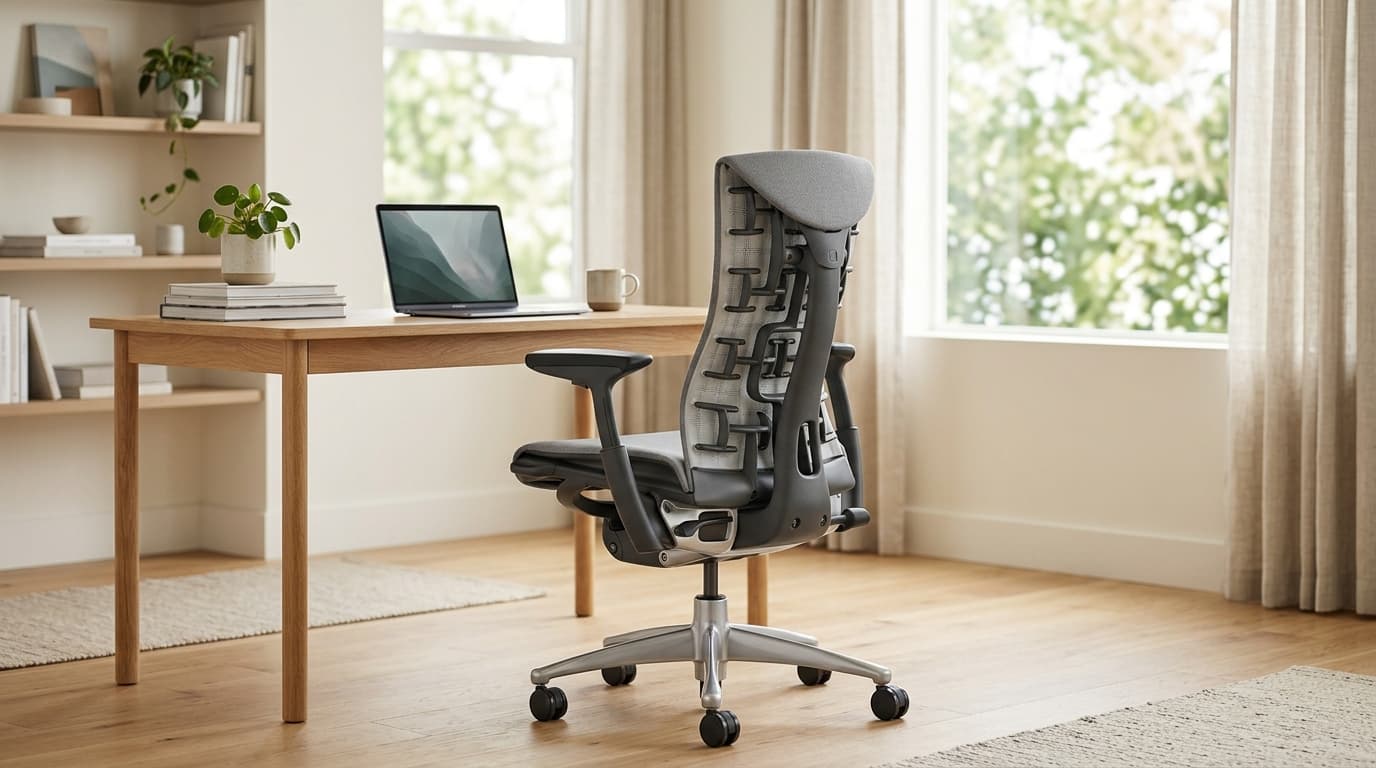
You don't need to spend $1,500 on a Herman Miller Aeron to sit comfortably through an 8-hour workday. The sub-$300 market has improved sharply: several chairs here now offer adjustable lumbar, multi-directional armrests and breathable mesh.
The key is knowing which features actually matter for all-day comfort and which are marketing fluff. We researched the best-reviewed options — weighing real owner feedback, adjustability, and warranty — and landed on three genuinely sub-$300 chairs worth buying.
If your budget can stretch past $300: the step up worth making is the Branch Ergonomic Chair Pro at $499 — 14 points of adjustment, 5D armrests, a two-way lumbar and a 7-year warranty. It is the chair readers buy most often out of our sub-$500 guide. Nothing under $300 matches that adjustment range; if $300 is a hard ceiling, the Sihoo M57 above is still the right call.
The Three Tiers Under $300
One current model per price step, at the price each listing states today.
| Tier | Model | Price | Why |
|---|---|---|---|
| Budget — and our best overall | Sihoo M57 | ~$199.99 | Lumbar that moves in two directions, 3D arms, 330 lb capacity, 7,900+ owner ratings at 4.4 stars |
| Mid-tier | Ticova Ergonomic Office Chair | ~$259.99 | Rotatable headrest, metal 3D armrests and a 3-inch high-density foam seat for taller frames |
| Step-up | Nouhaus Ergo3D | ~$329.99 | The only 4D armrests here, plus a 135° recline that locks at three angles and a 5-year warranty |
The Adjustment Spec Table
Star ratings are easy to find; adjustment specifics are not. Below is only what each maker publishes on its own site, re-checked 9 September 2026. "Not stated" means the brand does not publish it — we are not filling those cells with a guess.
| Model | Lumbar | Seat-depth slider | Armrests | Recline lock / tilt tension | Weight capacity | Warranty |
|---|---|---|---|---|---|---|
| Sihoo M57 | Height + depth (Sihoo: adjusts vertically and horizontally) | No — pan fixed at 18.11 in | 3D (up/down, left/right, forward/back) | Reclines to 126°; lock positions and tension not stated | 330 lb | 3 years |
| Ticova Ergonomic Office Chair | Height + depth | Not stated | 3D metal (height, angle, forward/back) | Tilts to 130° with adjustable rocking resilience | Not stated | 1 year (Ticova warranty page) |
| Nouhaus Ergo3D | Dynamic — pivots with your own pressure, no manual setting | Not stated | 4D (height, forward/back, side-to-side, pivot) | Locks at three angles up to 135°, plus a tilt-tension knob | 330 lb | 5 years |
Read the "not stated" cells: none of the three publishes a seat-height range, and only one publishes a seat-depth figure at all — the M57's, which is fixed. Buy where you can send the chair back.
What the Research Says About Ergonomic Chairs Under $300
The ANSI/BIFMA X5.1 general-purpose office-chair standard tells you almost everything about what's worth buying at this price. X5.1 is the durability and load-capacity test suite that cheap chairs simply don't pass; X5.11 is the separate large-occupant version, built around a 400 lb user. Chairs certified to neither (most sub-$150) are designed for residential use — 4 hours/day, not 9.
What the data does support:
- Adjustability beats padding. Cornell's guide to choosing an ergonomic chair treats fit as the baseline: the seat pan should be at least an inch wider than your hips on either side and short enough not to catch you behind the knees, seat height should put your knees level or slightly below level with your feet flat, and the backrest should keep supporting you as you recline rather than lock in one position. Foam cannot compensate for any of that — and Cornell notes low-density seat foam deforms permanently with continuous use. A $250 chair with 6-way adjustment outperforms a $300 chair with a great cushion and no adjustment.
- Adjustable lumbar is about fit, not about treating pain. Be careful with the health claims in this category. The Cochrane review of lumbar supports found moderate evidence they are not effective for preventing low-back pain, and only limited evidence they beat no treatment for it. The defensible case for an adjustable lumbar pad is a different one: when researchers logged the settings 123 office workers chose over five weeks (Ergonomics 41(4), 1998), preferred lumbar height and depth ran to both ends of the adjustment range, and preferred height tracked body-mass index. A moulded curve is one point on that range. A pad you can move can be your point on it.
- Mesh vs foam is a comfort tradeoff, not an ergonomic one. Mesh breathes; quality foam supports better over 8+ hours. Pick based on climate, not theoretical ergonomics.
What it doesn't support:
- That "memory foam" seats prevent back pain. If your seat height and depth are wrong, foam cannot compensate.
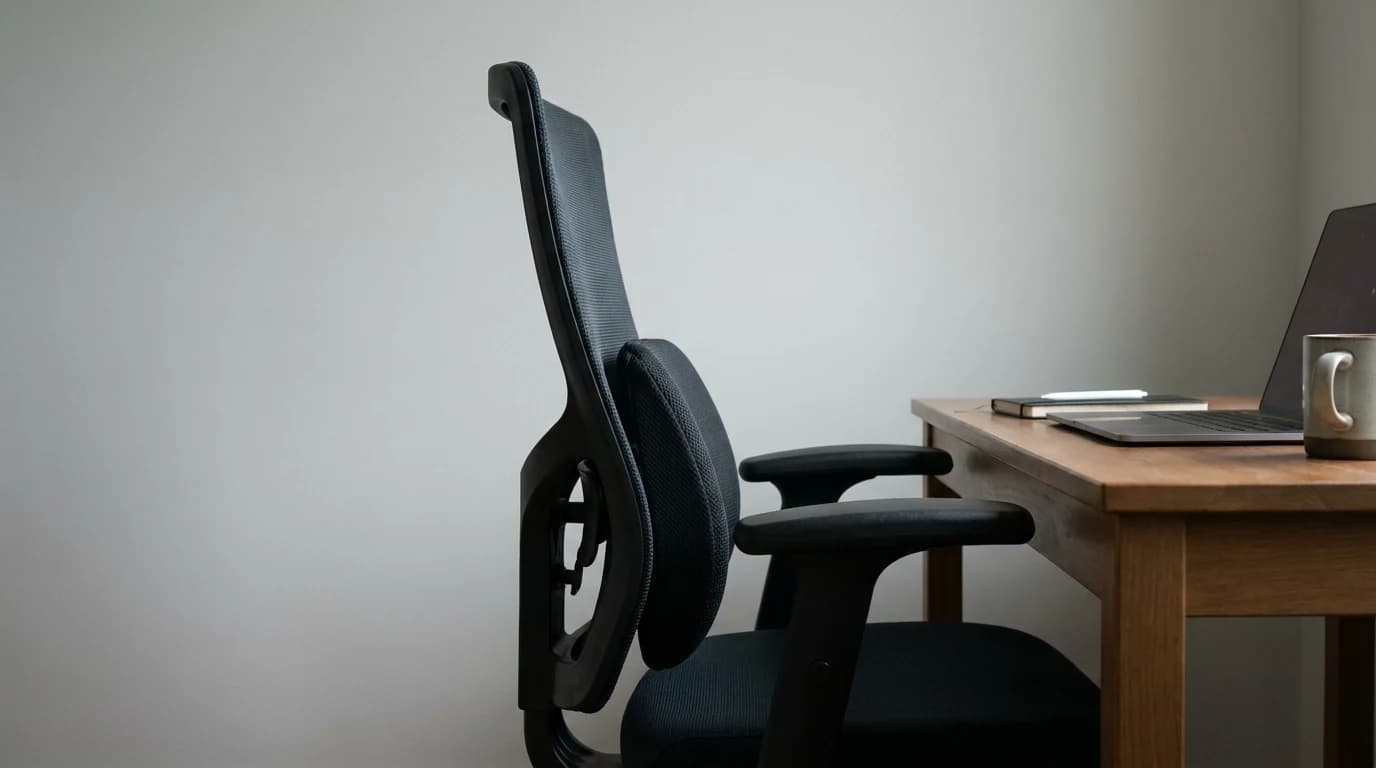
Rule of thumb: adjustability beats padding. A $250 chair with 6-way adjustment outperforms a $300 chair with a great cushion and no adjustment.
What Makes a Chair "Ergonomic"
The word "ergonomic" gets slapped on everything from $50 gaming chairs to $2,000 executive seats. Here's what actually matters for healthy, comfortable sitting during long work sessions:
- Adjustable lumbar support. Your lower back has a natural inward curve. A pad you can move up, down and in/out matches your spine; a fixed one suits some body types and not others.
- Seat height adjustment. Feet flat on the floor, thighs roughly parallel to it. Check the published range if you are notably short or tall.
- Armrest adjustability. Height at minimum. 3D (height, width, pivot) or 4D (adding forward/back) arms take weight off your shoulders.
- Seat depth. The pan should support your thighs without pressing behind your knees. A slider handles different leg lengths.
- Breathable material. Mesh backs beat foam and leather for all-day use, especially in summer.
The trap: memory foam does not prevent back pain. It shapes to your weight distribution, but if your seat height and depth are wrong, the foam can't compensate.
Top Ergonomic Chairs Under $300
1. Sihoo M57 — Best Overall Value Under $300
Price: ~$199.99
The Sihoo M57 is the chair we point most budget buyers to first — and with more than 8,000 owner ratings averaging 4.4 stars, it has by far the deepest track record on this list. For under $200 you get genuine ergonomic hardware: adjustable lumbar supportlumbar supportA chair feature (built-in curve, adjustable knob, or strap-on pillow) that supports the inward curve of the lower spine. Cornell ergonomics: lumbar support height should land roughly at your belt line, not higher., 3D armrests, an adjustable headrest, a breathable mesh back, and a 330 lb weight capacity that clears most "big and tall" thresholds.
The core geometry is correct: your spine gets real support, your arms rest at the right height, the mesh keeps you cool. For a first ergonomic chair, nothing else under $200 pairs this feature set with this much owner satisfaction.
Choose the M57 if:
- You want lumbar that moves in two directions; Sihoo lists height and depth
- You sit at the heavier end of the band, or run hot enough to want mesh: 330 lb, full mesh
Skip it if:
- Seat depth is your problem. Sihoo lists a fixed 18.11-inch pan and no slider
- You want a foam seat, a metal base or a proper multi-position recline lock
2. Ticova Ergonomic Office Chair — Best for Taller Users
Buy on Amazon · $259.99Price: ~$259.99
The Ticova Ergonomic Office Chair is one of the few here built with taller frames in mind: a high back and rotatable headrest, lumbar that moves up/down and forward/back, 3D metal armrests, and a thick W-shaped foam seat with a waterfall front edge. The metal frame gives it a sturdier feel than most sub-$250 mesh chairs.
Choose the Ticova if:
- You want foam under you: Ticova lists 3 inches of high-density foam, W-shaped, waterfall edge
- You want metal 3D arms instead of plastic, and lumbar that moves in height and depth
Skip it if:
- You want published fit numbers first. Ticova lists no dimensions or weight capacity, and its warranty page states one year
- You need mesh for a hot room, or a short assembly; owner reviews report it runs long
3. Nouhaus Ergo3D — The Most Adjustable of the Three
Buy on Amazon · $299.99Price: ~$329.99 (it has crept just over the $300 line)
The Nouhaus Ergo3D is built around adjustability. Its 4D armrests move up/down, forward/back, in/out and pivot — genuinely rare under $300 — and the 3D lumbar plus a 135-degree recline let you dial in a precise fit. It is breathable mesh throughout, with over 6,000 owner ratings at 4.3 stars.
Choose the Ergo3D if:
- You want the widest arm adjustment here: 4D, against 3D on the other two
- You want the longest cover — Nouhaus lists 5 years, with the aluminium base rated to 330 lb
Skip it if:
- You want to set lumbar height yourself. Nouhaus describes it as dynamic, moving as you move
- Your ceiling really is $300, because this chair sits on it
The Best Chair for Lower Back Pain Under $300, Honestly
No office chair treats back pain, and we will not pretend one does — the Cochrane review above is why we are careful here. The defensible claim is narrower: an adjustable lumbar pad lets you put support at your height and depth instead of accepting the one curve a designer moulded in.
- Start with the Sihoo M57. Sihoo lists lumbar that adjusts vertically and horizontally — the two-direction control the preferred-settings research implies you want.
- Look at the Ticova if what aches is pressure under your thighs rather than the curve behind your back; same two directions, foam seat.
- The Nouhaus takes the opposite trade: its lumbar moves on its own, so there is less to control and less to get wrong.
Persistent or radiating pain is a clinician's question, not a chair's. Our desk chairs for back pain guide goes wider, and how to sit correctly at a home desk covers what a chair alone cannot fix.
What to Skip in Sub-$300 Chairs
- "Gaming" chairs with bucket seats. The bucket geometry forces hip flexion that fatigues the lower back over 6+ hours. Ergonomically, these are the wrong shape for desk work.
- Chairs with no seat-depth adjustment on the high end. Seat-pan length should roughly match your femur length — otherwise circulation cuts at the knee or you can't sit fully back.
- Mesh chairs under $150. Tight weave, plastic frame, and a sewn lumbar bulge that doesn't adjust. You'll feel the frame edges within months.
- Fixed armrests. Armrests at the wrong height pin your shoulders and cause neck tension. Height adjustment is the minimum.
- Chairs with no ANSI/BIFMA X5.1-style durability rating. Residential-use ratings mean the chair is designed for ~4 hours/day, not 9.
What r/OfficeChairs actually recommends
The sub is the largest unpaid body of opinion on these exact chairs, and it does not always agree with us. Threads read September 2026; paraphrased, not quoted.
- Its default answer to "best chair under $300" is not a new chair at all. In the sub's own best-under-$300 thread, the highest-signal replies push people toward the used and remanufactured market — Steelcase Series 1, V1 Think, Amia and V1 Leap all get named once you can stretch to $400–500. A dedicated refurb-versus-new-mid-tier thread gives the reasoning: chairs like the Leap were engineered for round-the-clock use across a 12-year warranty, so a well-kept one has life left, and professionally remanufactured units ship with their own warranty.
- Where the sub disagrees with our Sihoo M57 pick, it disagrees about the lumbar. One owner couple wrote up a week with the chair specifically to flag the lumbar design as its main weakness; another returned it after a week because it made their back pain worse; and in a month-in comparison thread the poster's fix was to take the lumbar pad off entirely and let the mesh back do the supporting. That is a real counterweight to the spec sheet: two directions of travel do not help if the pad's range does not include your curve.
- Other recurring M57 complaints are fit, not quality. Owners report a firm seat and armrests that will not drop low enough to tuck under a height-adjustable desksit-stand deskA desk whose surface raises and lowers (electric or crank) so you can alternate sitting and standing through the day. Cornell ergonomics research recommends ~30-min sitting / ~10-min standing / ~2-min walking cycles, not all-day standing. (thread); a 6 ft 1 in owner found the whole chair too small, with the lumbar and headrest both topping out too low (thread); and a one-year owner moving on reported the mesh seat losing tension (thread).
- Ticova reads as decent value with a soft spot in the seat. A three-way comparison thread picks it over the M57 but reports the cushion bottoming out inside 15 minutes, while praising the headrest in recline. An honest-opinion thread describes back pain returning about a month in, and a value thread lands on an alright chair with sacrifices, the seat cushion named first.
- On the Nouhaus, the thing to know is a warranty gap, not a comfort one. Owners like the mesh, the rollerblade casters and the deep recline, and one notes it will lock in any position (thread). But an owner whose tilt mechanism broke reports that Nouhaus would not honour the warranty on a third-party purchase. Our link is an Amazon one, so read the 5-year term in the table above with that in mind, and keep your order record.
- The sub also steers budget buyers sideways, to the Sihoo Doro and Hbada lines. The Doro C300 is the step-up it recommends most often once you pass $300. Hbada is genuinely split: a P5 owner on a $150 ceiling is delighted, while a brand-wide thread and an ownership thread report lumbar supports that drift out of position over time.
Where we hold our ground. A standing PSA in the sub argues only Steelcase and Herman Miller are worth buying at all. If you can sit in a used chair before paying, that advice is better than ours. If you cannot — no local reseller, no marketplace listing you can inspect, no way to test the cylinder — then a new chair with a live warranty and a returns window is the better risk, and the M57 is the one with the deepest owner record on that path.
FAQ
What is the best ergonomic office chair under $300 for long hours?
The Sihoo M57, at about $199.99. Sihoo lists lumbar that adjusts both vertically and horizontally, 3D armrests, an adjustable headrest and a 330 lb capacity, and it carries the deepest owner record on this list at 7,900+ ratings averaging 4.4 stars. If you want more adjustment and can spend the full $300, the Nouhaus Ergo3D adds 4D armrests and a 135-degree recline that locks at three angles. Neither publishes a seat-height range, so buy somewhere you can send the chair back.
Is a $300 office chair good enough for 8 hours a day?
Yes, if it fits you — and the fit risk at this price is seat depth. Sihoo lists the M57's pan as fixed at 18.11 in with no slider, and a fixed pan is correct for one leg length; owners on r/OfficeChairs who found it wrong report exactly the symptoms Cornell's guidance predicts, pressure behind the knees or an inability to sit back against the lumbar. Warranty length is the other honest limit: 3 years on the M57, 1 year on the Ticova, 5 on the Nouhaus, against the 12-year multi-shift terms contract chairs carry.
Sihoo M57 vs Ticova — which is better?
The M57 for most people, on adjustment and cover: two-direction lumbar, 3D arms, a published 330 lb capacity and a 3-year warranty, against a Ticova that publishes no dimensions or capacity and states one year on its own warranty page. Choose the Ticova if you specifically want foam rather than mesh under you — it lists a 3-inch high-density W-shaped seat with a waterfall edge — and a taller back with a rotatable headrest. Owner threads flag the Ticova cushion compressing quickly and the M57 seat as firm, which is the same tradeoff seen from both sides.
Should I buy a used Steelcase or Herman Miller instead of a new $300 chair?
If you can inspect it in person, often yes, and that is r/OfficeChairs' default advice — used Leap V2s and Series 1s change hands in the $250–400 range, and those frames were built for years of multi-shift use. Check the mesh for sag, the foam for flattening, every adjustment lever, and whether the gas cylinder holds its height. Sight-unseen and with no local reseller, a new chair with a returns window and a live warranty is the safer trade.
Do cheap ergonomic chairs have real lumbar support?
At $200–300, yes in the mechanical sense: the M57 and the Ticova both publish lumbar that moves in height and depth, which is the control the preferred-settings research says you want, since chosen height and depth ran to both ends of the range across 123 office workers. What that does not buy is a health claim — the Cochrane review found moderate evidence lumbar supports do not prevent low-back pain. And the range itself is the limit at this price: several M57 owners report the pad simply does not reach their curve, and remove it.
The floor wears too, and nobody budgets for it — our office chair mats guide covers carpet versus hardwood, and when new casters are the cheaper fix.
The Bottom Line
You don't need to spend $500 to sit well. The Sihoo M57 at ~$200 is our top pick under $300 — the best blend of real ergonomic adjustability, a 330 lb capacity, and 8,000+ happy owners. Taller sitters should look at the Ticova for its headrest, metal armrests, and memory-foam seat, and anyone who loves to fine-tune should stretch to the Nouhaus Ergo3D for its 4D arms and 135° recline.
If your budget can flex a little higher, our best ergonomic chairs under $500 roundup adds the Branch Ergonomic Chair Pro and the Steelcase Series 1 — the one chair whose maker publishes a seat-height range. Or browse the full office chairs category. Your chair is the most important purchase in your home office setup — an extra $50–100 here pays for itself in comfort and avoided back pain.
Sources & Research
- Micom Laboratories, an accredited furniture test lab, on what the two seating standards actually test: ANSI/BIFMA X5.1, general purpose and ANSI/BIFMA X5.11, large occupant. BIFMA sells the standards and does not publish them free.
- Cochrane — Lumbar supports for the prevention and treatment of low-back pain (plain-language summary)
- Coleman, Hull & Ellitt, "An empirical study of preferred settings for lumbar support on adjustable office chairs," Ergonomics 41(4), 1998
- Cornell University Ergonomics Group — Choosing an ergonomic chair
- OSHA Computer Workstations eTool — Chairs
- American Chiropractic Association — Maintaining good posture
Related Reading
Your next step
$200 more buys a lot of chair — see the under-$500 tier.
Hilly Shore Labs
Editorial TeamWFH Lounge is published by Hilly Shore Labs. Every recommendation is built by synthesizing ergonomic research, manufacturer specs, expert reviews from outlets like Wirecutter, RTINGS, and The Verge, and aggregated long-term owner sentiment from thousands of verified buyers.
All product reviews are independently researched. Our recommendations are based on ergonomic guidelines, manufacturer specifications, and verified buyer sentiment. See our methodology.