Best Travel Power Strips for Hotel Rooms in 2026
Buy the smallest strip with a flat plug that gives you three usable charging points, and skip surge protection entirely. The Anker Nano 67W 6-in-1 is the one worth carrying because it doubles as the laptop charger; the NTONPOWER two-outlet is the pocket option when space matters more than output.
Quick Answer
A hotel desk typically offers one reachable socket, so a travel power strip is the cheapest fix for the most predictable problem in work travel. Prioritise a flat or folding plug and a short cord over outlet count, and choose a non-surge model: surge protection behaves unpredictably on foreign voltage and is banned outright by cruise lines. The Anker Nano 67W 6-in-1 is the best pick because it charges a laptop directly, replacing a brick as well as expanding the socket.
 #1 4.5 | 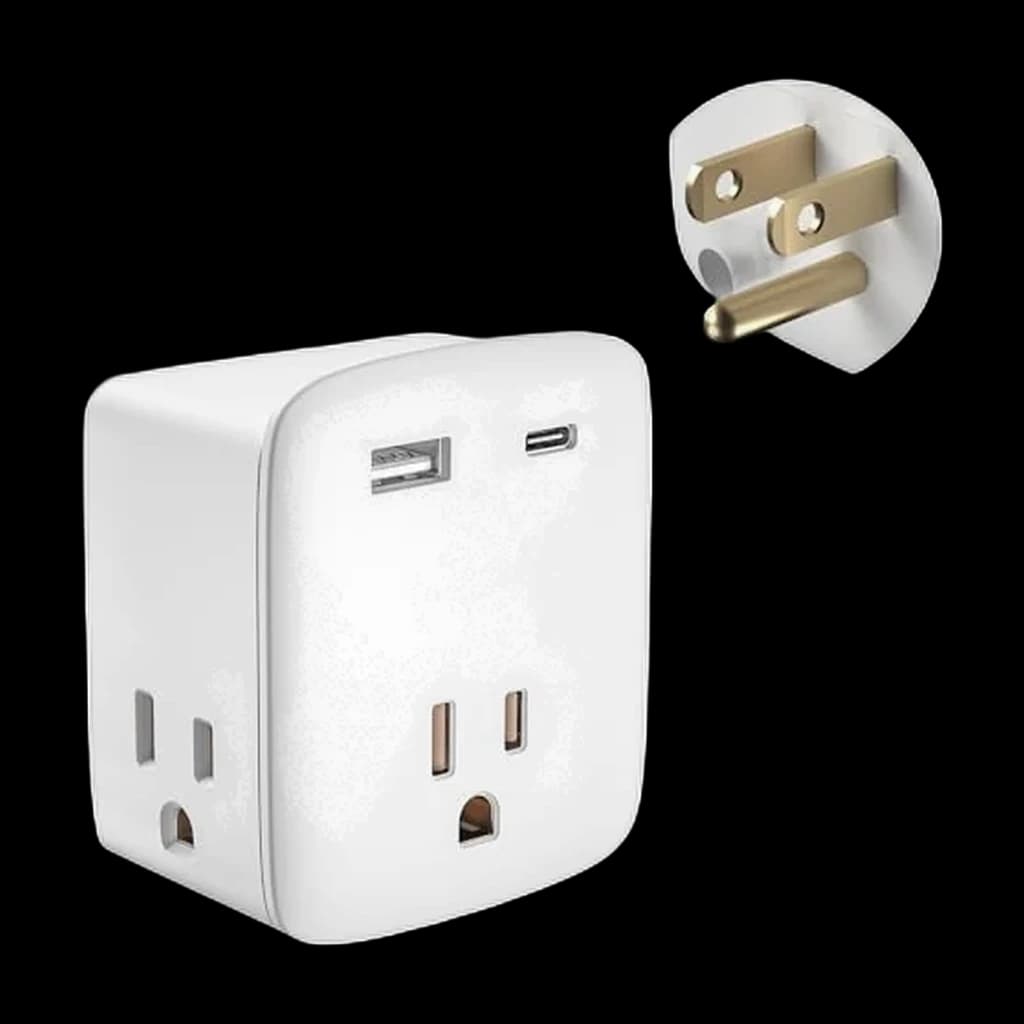 #2 4.7 | 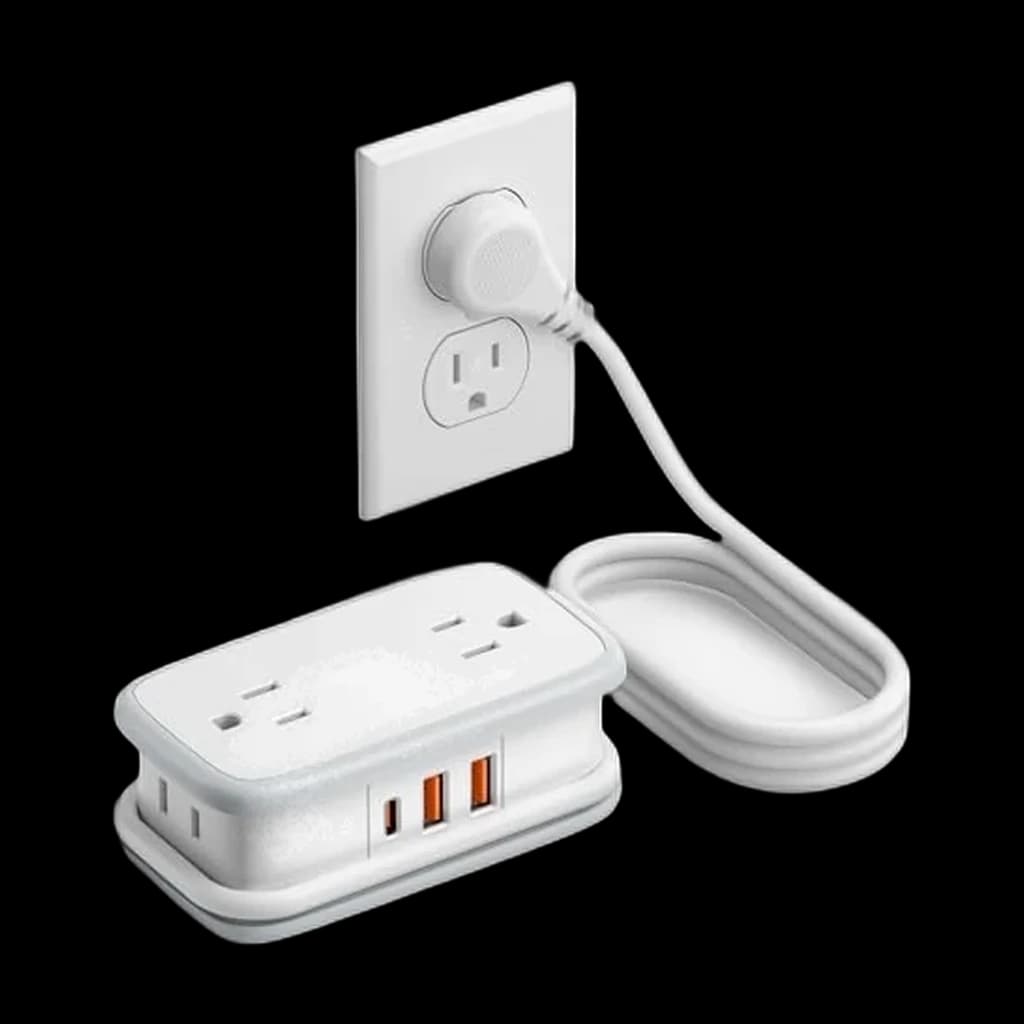 #3 4.5 | 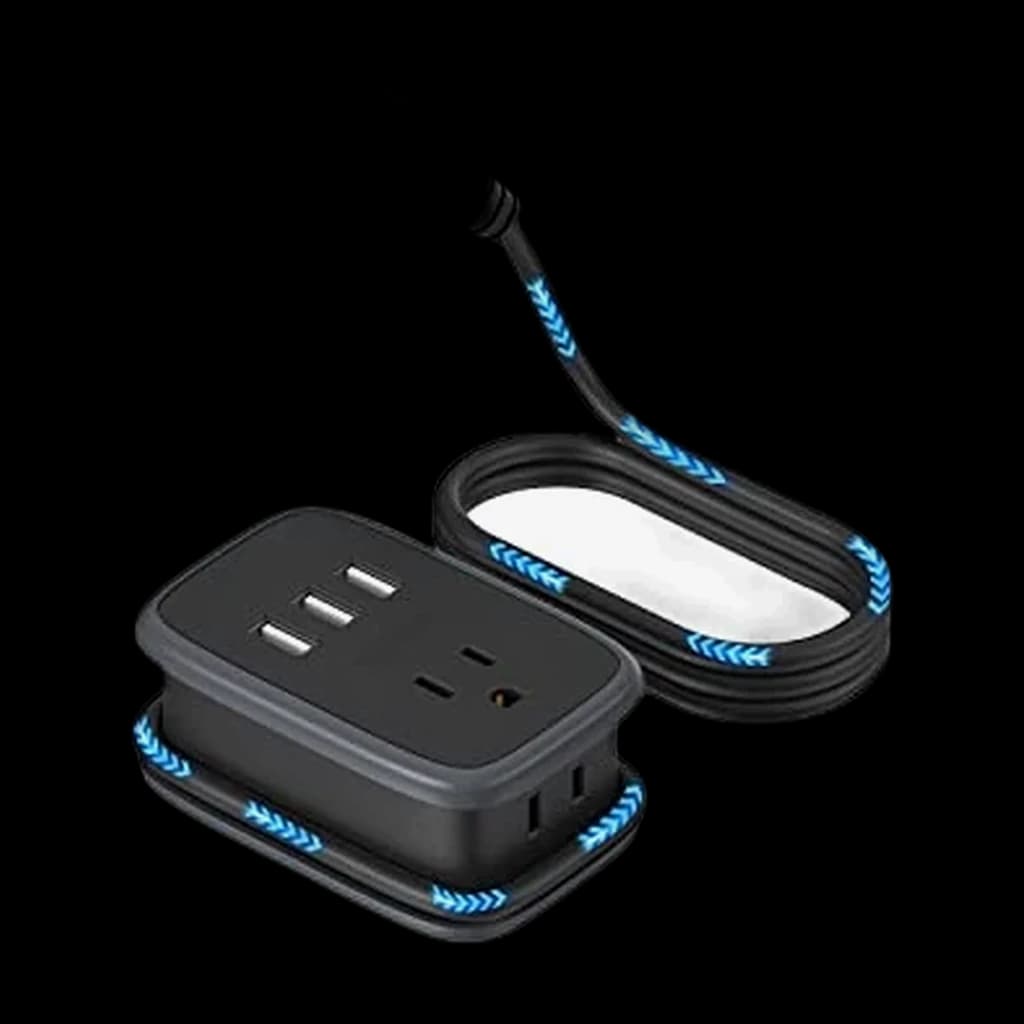 #4 4.4 | |
|---|---|---|---|---|
| Price | $39.99Buy on Amazon | $8.98Buy on Amazon | $17.99Buy on Amazon | $13.99Buy on Amazon |
| Verdict | The one that replaces two objects — enough USB-C output to charge a mainstream laptop directly, plus AC outlets on a flat undetachable cord. | Not a strip at all — a cordless block that turns one socket into three, with no extension cord and no surge protection, which is exactly the combination cruise lines and some hotels require. | The wider option for a longer stay or a second person — four outlets and three USB ports, still non-surge and still on a flat plug. | The pocket pick — two outlets and three USB ports on a short wrapped cord that disappears into a laptop sleeve. |
| Buyer sentiment | Quality Portability Ports Charging Speed Buyers praise quality, portability, ports and charging speed. Mixed feedback on value for money. Based on 1,807 user mentions | Rated 4.7★ across 58 reviews | Portability Quality Compact Functionality Buyers praise portability, quality, compact and functionality. Based on 451 user mentions | Rated 4.4★ across 112 reviews |
| AC outlets | 2 | 3 | 4 | 2 |
| USB | 2 USB-C + 2 USB-A | 2 ports (1x USB-C), 17W max | 3 (1 USB-C) | 3 |
| Surge | None | — | None | None |
| Cord | 5 ft flat | None — plugs straight into the wall | 4 ft wrapped | 3 ft wrapped |
| Surge protection | — | None (cruise-compliant) | — | — |
| Pros |
|
|
|
|
| Cons |
|
|
|
|
* Prices checked Sep 12, 2026 and may vary. Check the latest price on Amazon.
We research — never hands-on. How we research →
Key Takeaways
Hotel desks give you one socket. A flat-plug, non-surge travel strip fixes it — and surge protection is the feature you actively do not want abroad.
As an Amazon Associate I earn from qualifying purchases. Product prices and availability are subject to change.
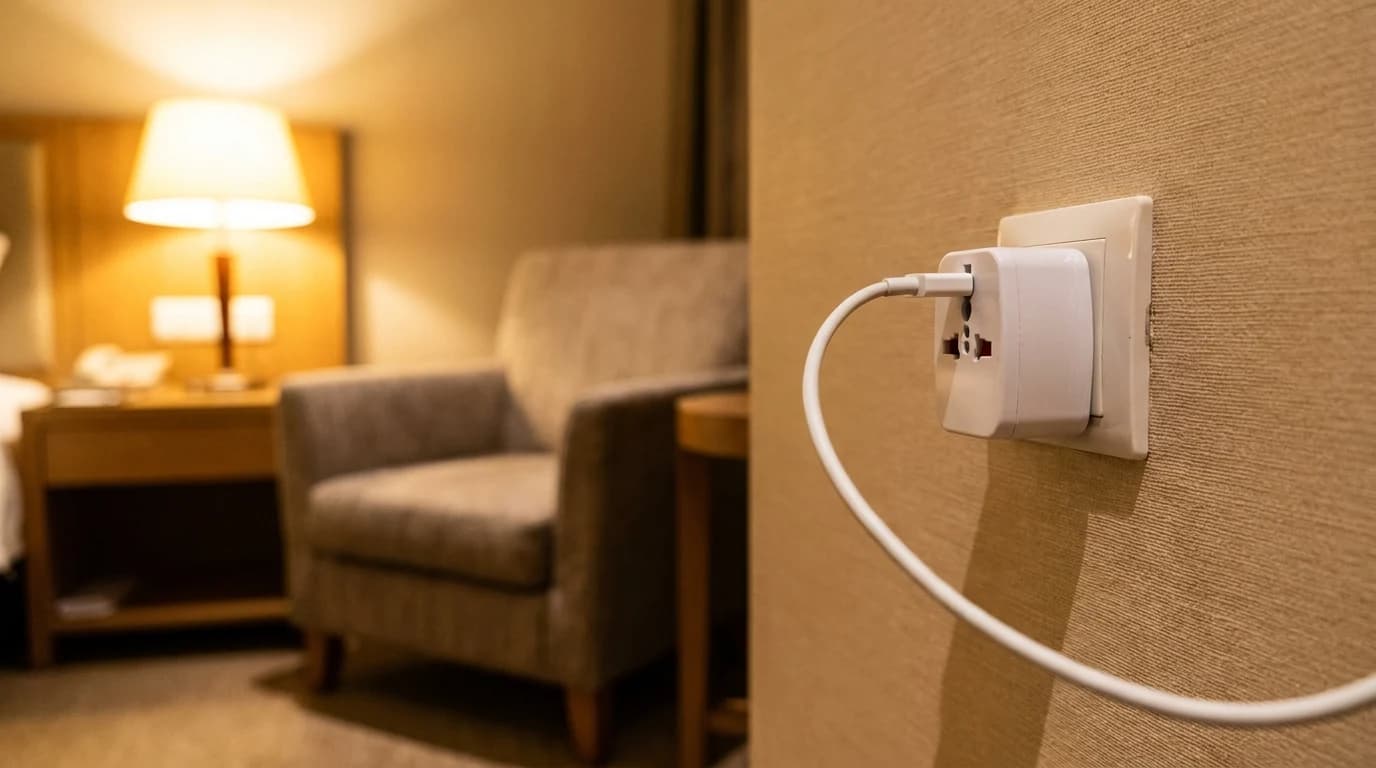
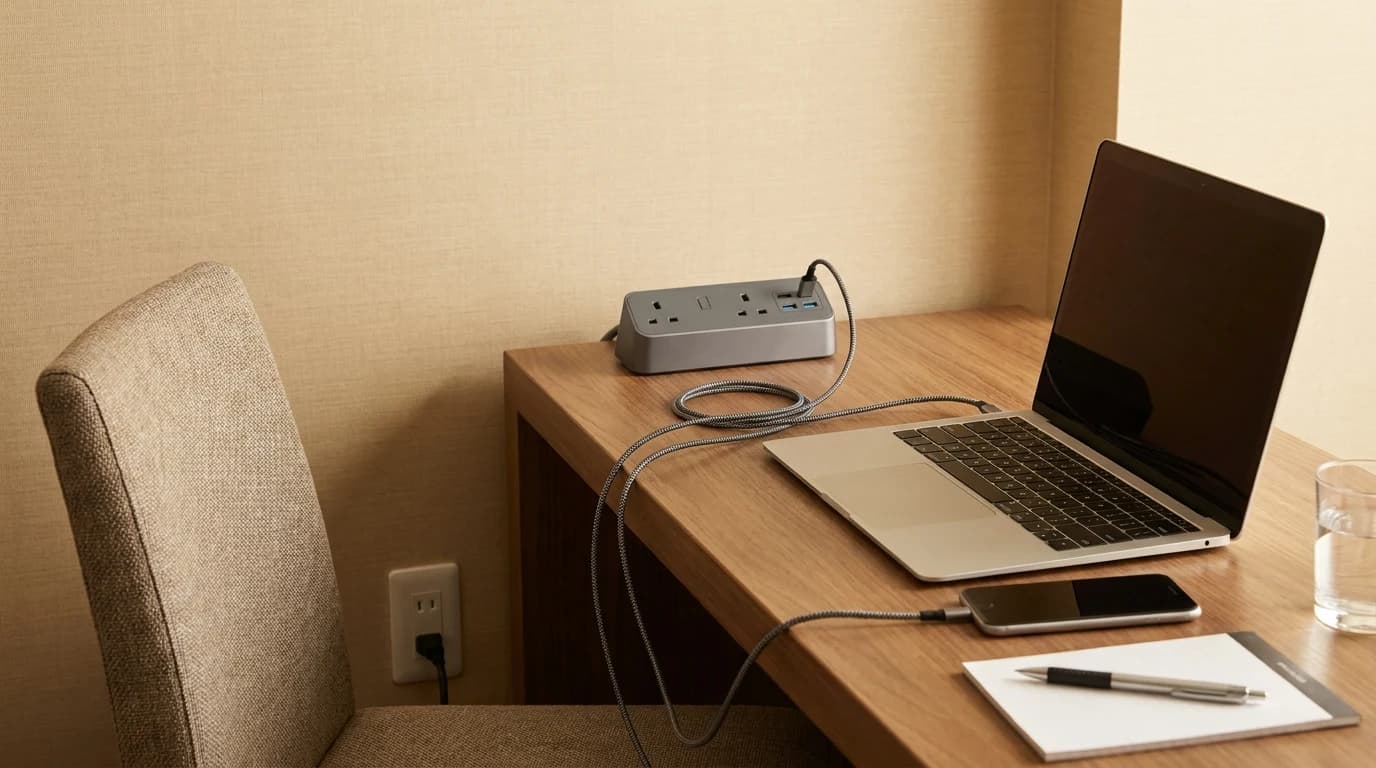
Hotel rooms are designed around a bedside lamp and a television, not around someone working. The desk, if there is one, tends to have a single reachable socket — frequently occupied, occasionally behind the furniture. Meanwhile you arrived with a laptop, a phone, headphones and a power bank, all of which need to charge overnight.
A travel power strip is the cheapest fix for the most predictable problem in work travel.
Key Takeaways
- One outlet is the norm, not the exception. Plan for it rather than discovering it.
- A flat or folding plug matters more than outlet count — a bulky plug will not fit behind a headboard or a desk pushed against the wall.
- Built-in USB ports remove bricks from the bag, which is usually a bigger space win than the strip costs.
- Surge protection is optional at home and a liability abroad — and cruise lines ban it outright.
What to look for
| Feature | Why it matters on a trip | Worth paying for? |
|---|---|---|
| Flat or folding plug | Fits behind furniture and in a packed bag | Yes — the main thing |
| Short cord (3-5 ft) | Long cords tangle and add weight for no gain | Yes |
| Built-in USB-C PD | Replaces a separate laptop charger | Yes, if it runs your laptop |
| Many AC outlets | Rarely used; adds bulk | Not really |
| Surge protection | Behaves unpredictably on foreign voltage; banned on cruises | No |
Rule of thumb: on a work trip the strip's job is to turn one awkward socket into three usable charging points, in the smallest object that will do it. Outlet count past three is bulk you carry and do not use.
The picks
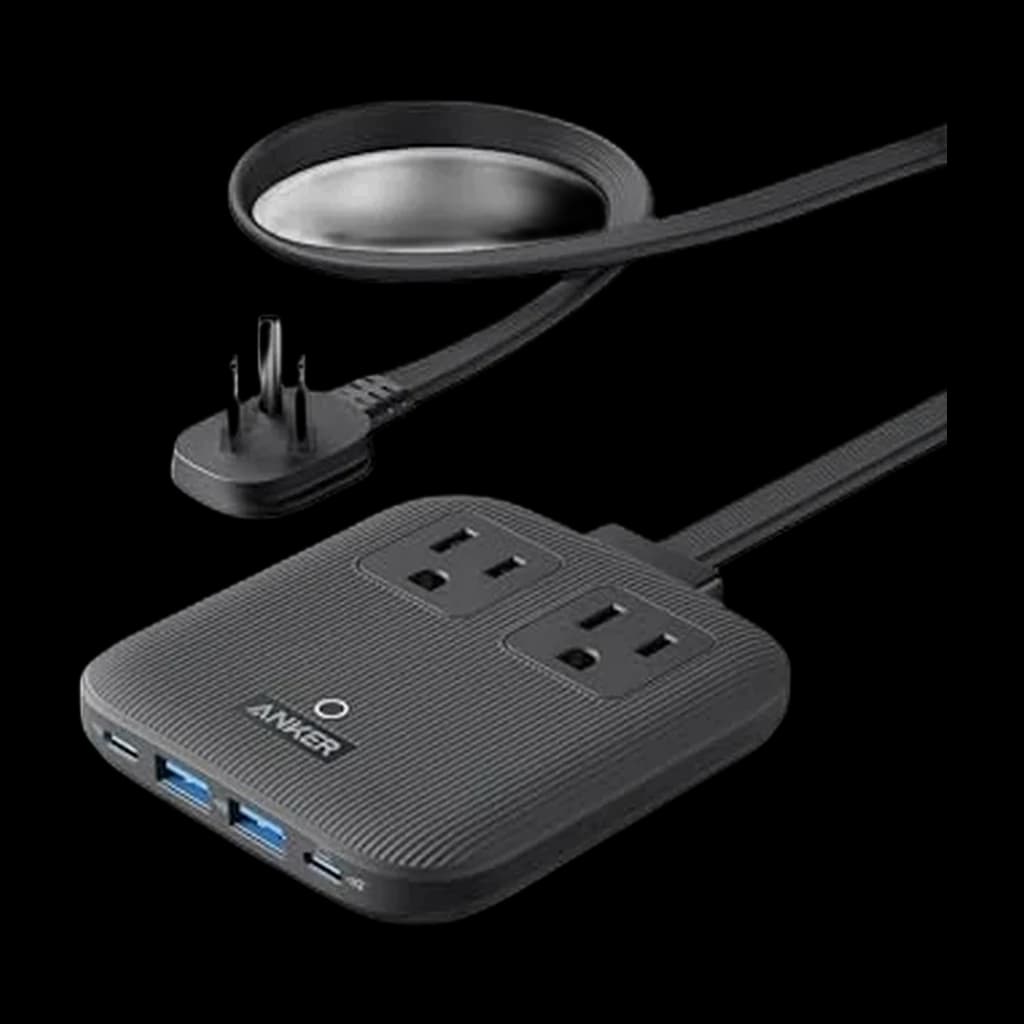
Best overall: Anker Nano 67W 6-in-1
The one that replaces two objects. Enough USB-C output to charge a mainstream laptop directly, plus AC outlets and a flat undetachable cord — so the strip becomes your laptop charger and your outlet expander at the same time. That is the difference between packing a strip and a brick, and packing a strip.
Best small: NTONPOWER 2-outlet with 3 USB
The pocket pick. Two AC outlets and three USB ports on a short wrapped cord and a flat plug, and it disappears into a laptop sleeve. Enough for the standard kit of laptop, phone and headphones without carrying anything the size of a book.
Best for a longer stay: NTONPOWER 20W 4-outlet
More sockets for a stay where a partner, a second laptop or a camera kit joins the trip. Still cruise-compliant with no surge protection, still on a flat plug, just wider.
Simplest outlet expander: Key Power Cruise Ship Approved Outlet Extender
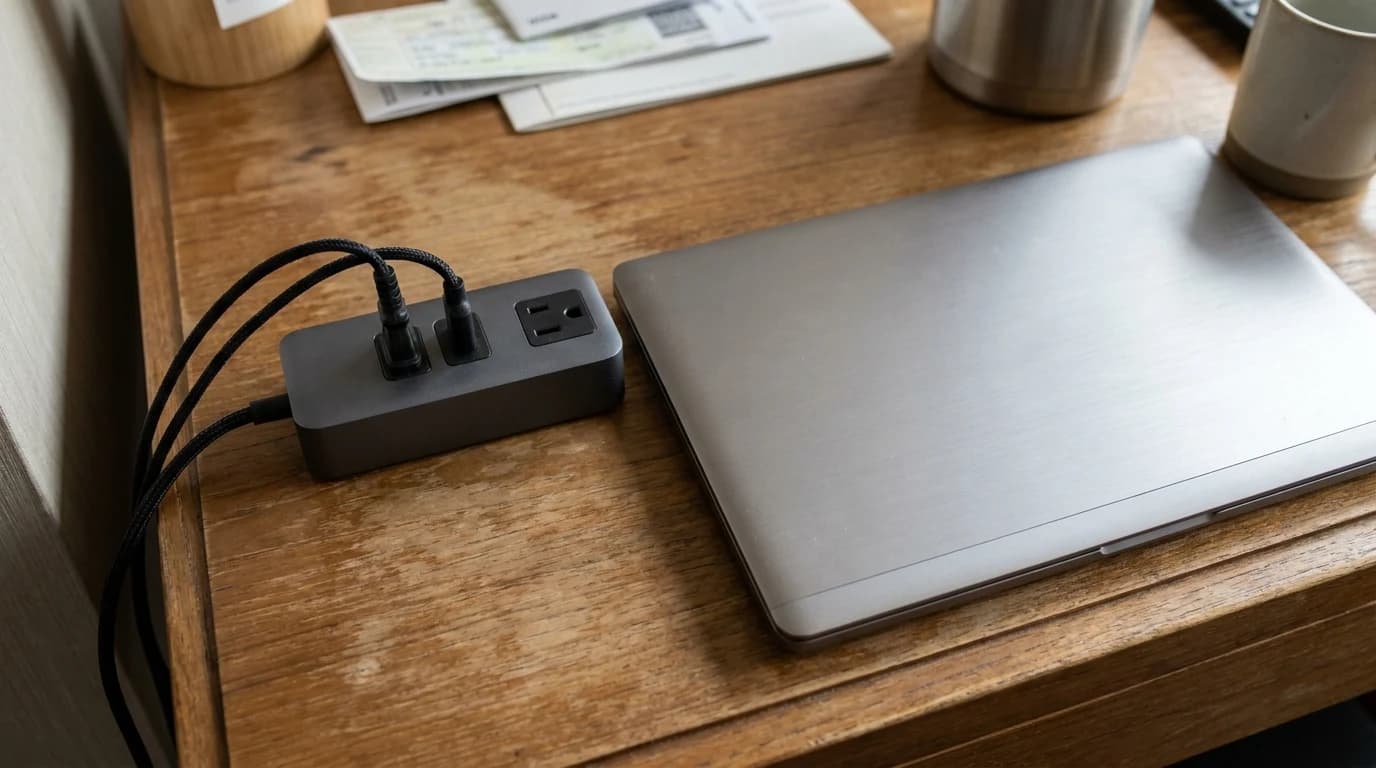
Buy on Amazon · $8.98Not a strip at all — a block that plugs straight into the wall and turns one socket into three, with no cord at all. If your complaint is purely that the desk has one outlet and you do not want cable draped across it, this is the smallest possible answer. It carries no surge protection and no extension cord, which is the exact combination cruise lines check for; Key Power states it is ETL listed, and notes some Disney and Royal Caribbean ships may still not permit it.
The surge-protection trap
This is the part that catches people out, and it works in two directions.
Why you probably do not want it abroad:
- A surge protector rated for 120V behaves unpredictably on a 230V supply
- Some fail closed and simply stop passing power
- The protection is largely irrelevant for the devices a traveller carries, which have their own regulated power supplies
Where it is an outright problem:
- Cruise lines prohibit surge-protected strips and will confiscate them at embarkation
- Some hotels and university accommodation have similar policies
- A confiscated strip is worse than no strip
That is why nearly everything marketed as a travel power strip is explicitly non-surge. It is not a cost saving; it is the requirement.
Do not use a US strip on foreign voltage
A travel power strip fitted with US sockets is still a US device. Plugging it into a 230V supply through a plug adapter passes 230V to everything in it — fine for dual-voltage laptop chargers, potentially destructive for anything single-voltage. If you are travelling internationally, the right combination is a universal adapter with enough charging built in, not a domestic strip on the end of a plug converter. That distinction is covered in full in adapter vs converter.
The extension-cord question
Many hotels and most cruise lines discourage or ban extension cords outright, while permitting a short non-surge strip. In practice this means picking the shortest cord that reaches, and avoiding anything that looks like a domestic extension lead. Three to five feet is the sweet spot.
Where the outlet usually is
Behind the bed, behind the desk, or on the lamp itself. The single most useful habit is checking within the first minute of entering the room, while there is still time to ask for a different one.
Are travel power strips allowed on planes?
Yes — a power strip is not a restricted item and can travel in either carry-on or checked baggage. The rules people are thinking of apply to power banks, which are spare lithium batteries and must be in the cabin. A strip contains no battery.
Why do cruise lines ban surge protectors?
Cruise ships use an electrical system that is grounded differently from a building's, and a surge protector's ground path can create a fire risk on that system. Non-surge strips are permitted by most lines for exactly this reason, which is why travel-specific strips advertise the absence of surge protection.
Do I need a power strip if I have a multi-port charger?
If your charger covers every device you carry, often not. The strip earns its place when something in the bag needs an AC socket of its own — a laptop with a proprietary brick, a camera battery charger — or when the room's one outlet is somewhere you cannot reach from the desk.
Sources
- U.S. Fire Administration — Appliance and electrical fire safety (its "extension cord, power strips and surge protection safety" guidance: do not overload power strips, use ones with internal overload protection)
- IEC — IEC 60038: IEC standard voltages (the standard nominal supply voltages behind the 100-127V / 220-240V split that makes a domestic strip unsafe abroad)
- Anker — Nano 67W 6-in-1 charging station (A9129) — manufacturer specification for the overall pick
Hilly Shore Labs
Editorial TeamWFH Lounge is published by Hilly Shore Labs. Every recommendation is built by synthesizing ergonomic research, manufacturer specs, expert reviews from outlets like Wirecutter, RTINGS, and The Verge, and aggregated long-term owner sentiment from thousands of verified buyers.
All product reviews are independently researched. Our recommendations are based on ergonomic guidelines, manufacturer specifications, and verified buyer sentiment. See our methodology.