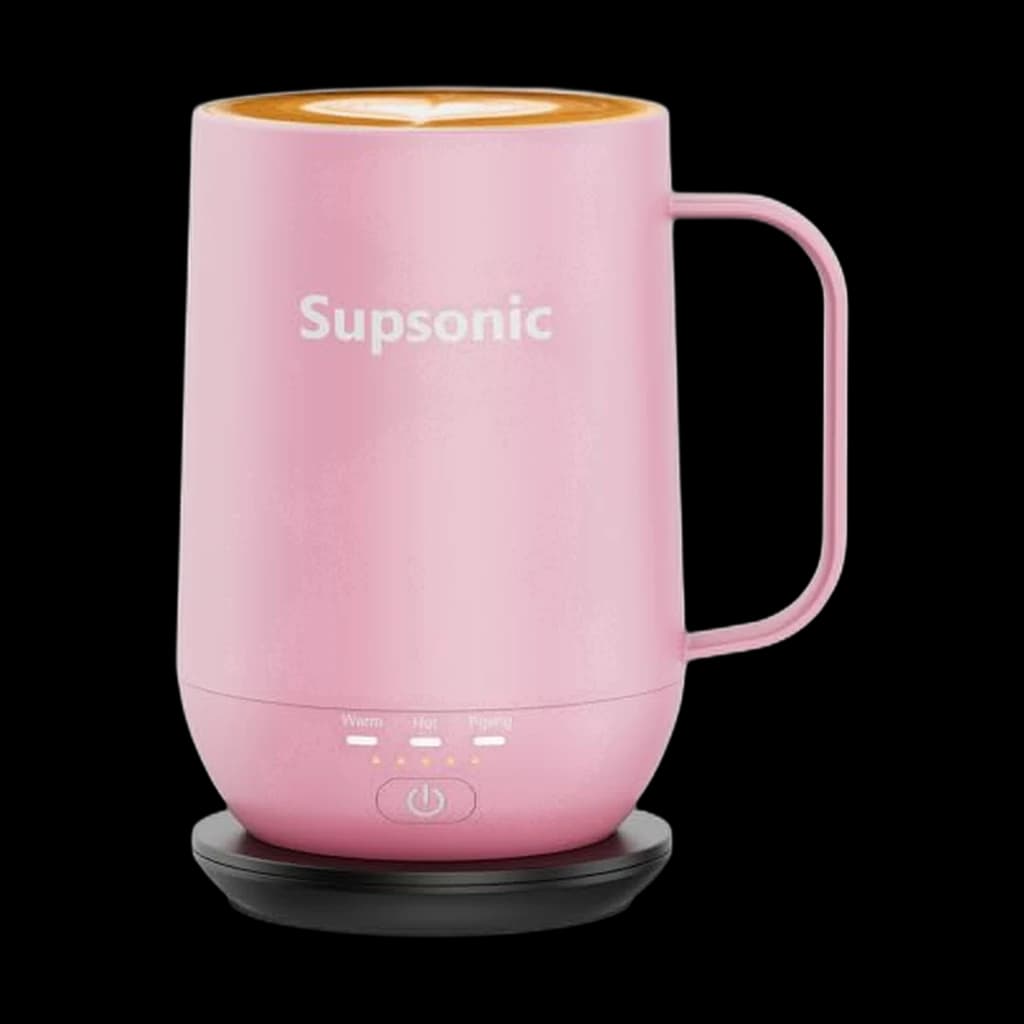
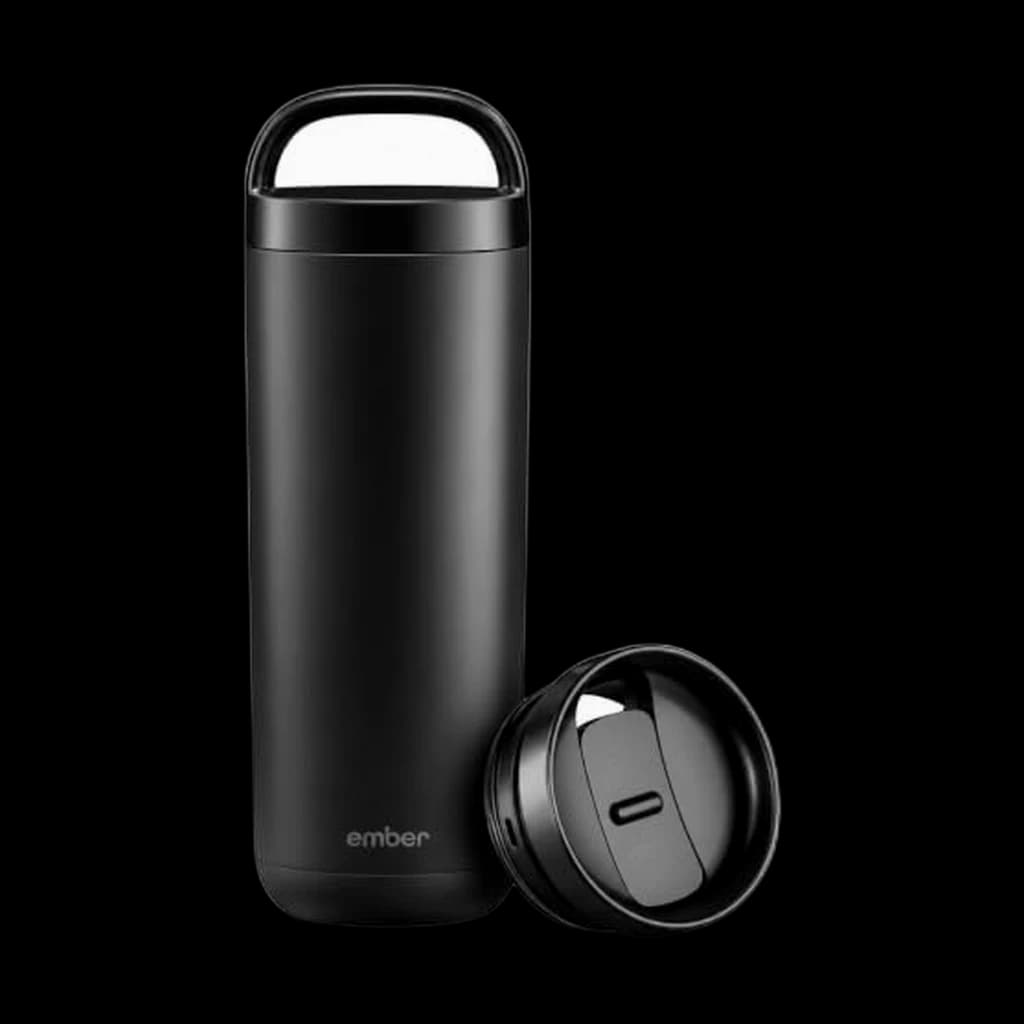
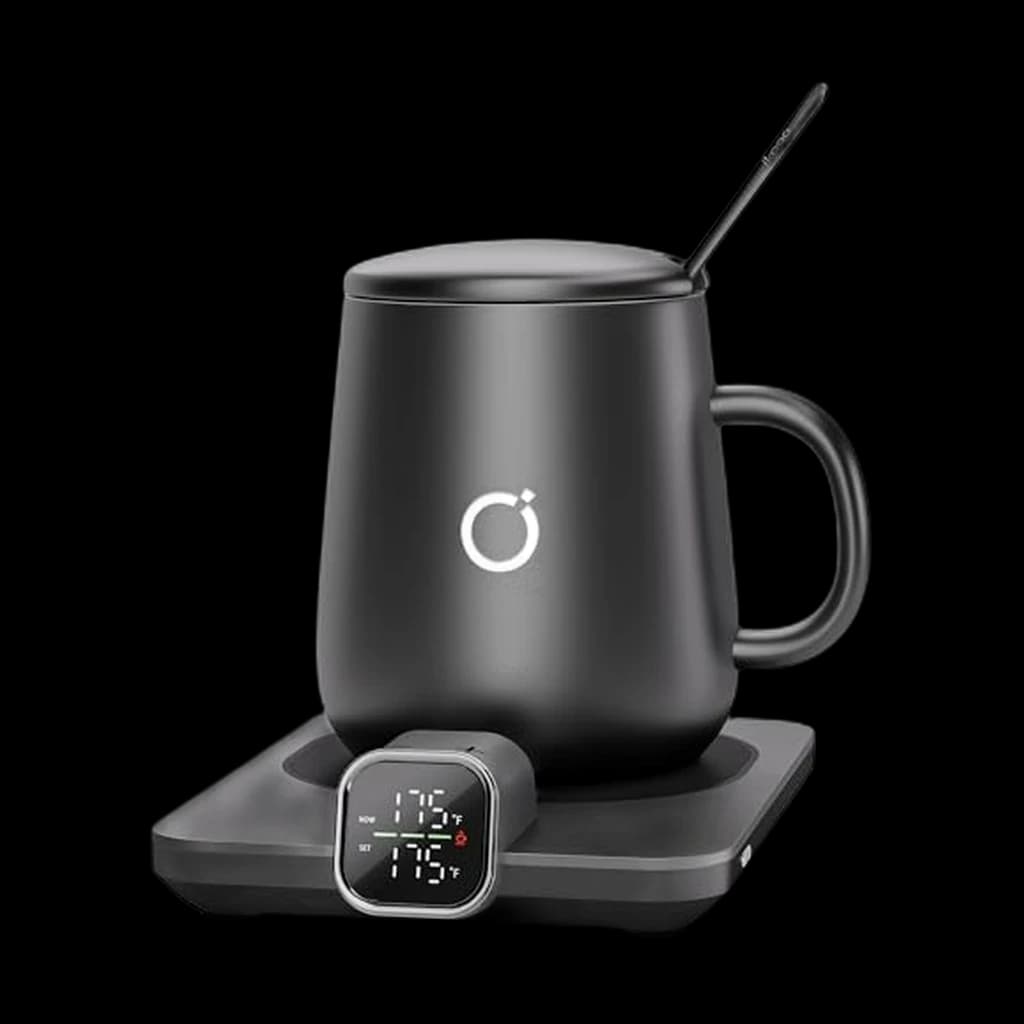
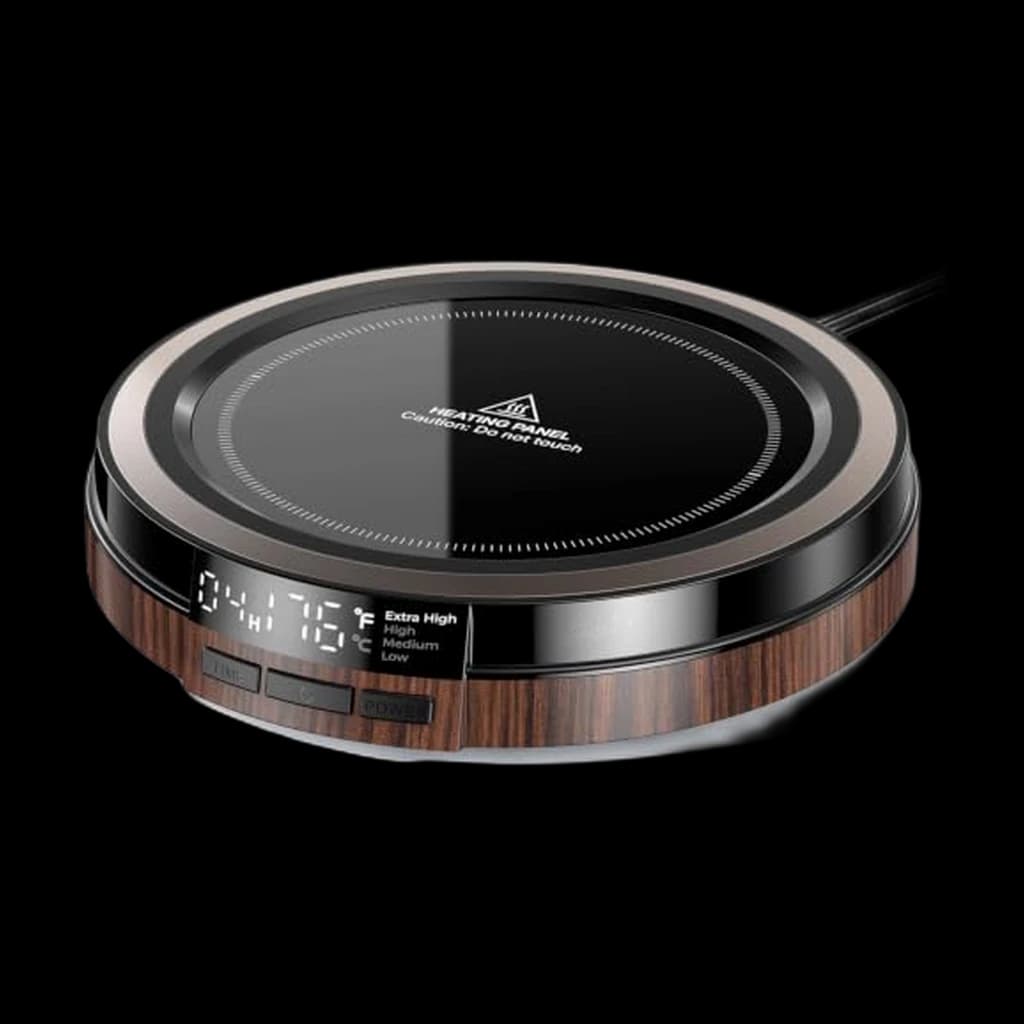
Two different products get sold under the same search. A self-heating mug has a battery and a heating element inside the vessel, so it holds your drink at a set temperature whether or not it is sitting on anything. A mug warmer is a plate that lives on the desk and heats through the bottom of whatever cup you put on it. Self-heating mugs run roughly $70 to $130 here; warmer plates run $22 to $50. They solve the same annoyance and they fail in completely different ways.
Start with the temperature, because it is the one number in this category with a real source behind it. A 2008 paper in Burns (Brown and Diller) cites the preferred drinking temperature of coffee as 140 plus or minus 15 degrees F across a 300-subject sample, and calculates an optimum serving temperature of about 136 degrees F once scald risk is balanced against taste. Every device on this page operates inside that band: Ember's own specification gives the Mug 2 a 120-145 degrees F range and a 135 degrees F default, and Nextmug's FAQ describes three fixed steps at 130, 140 and 150 degrees F. None of them reheat cold coffee. They hold a hot drink roughly where it already is.
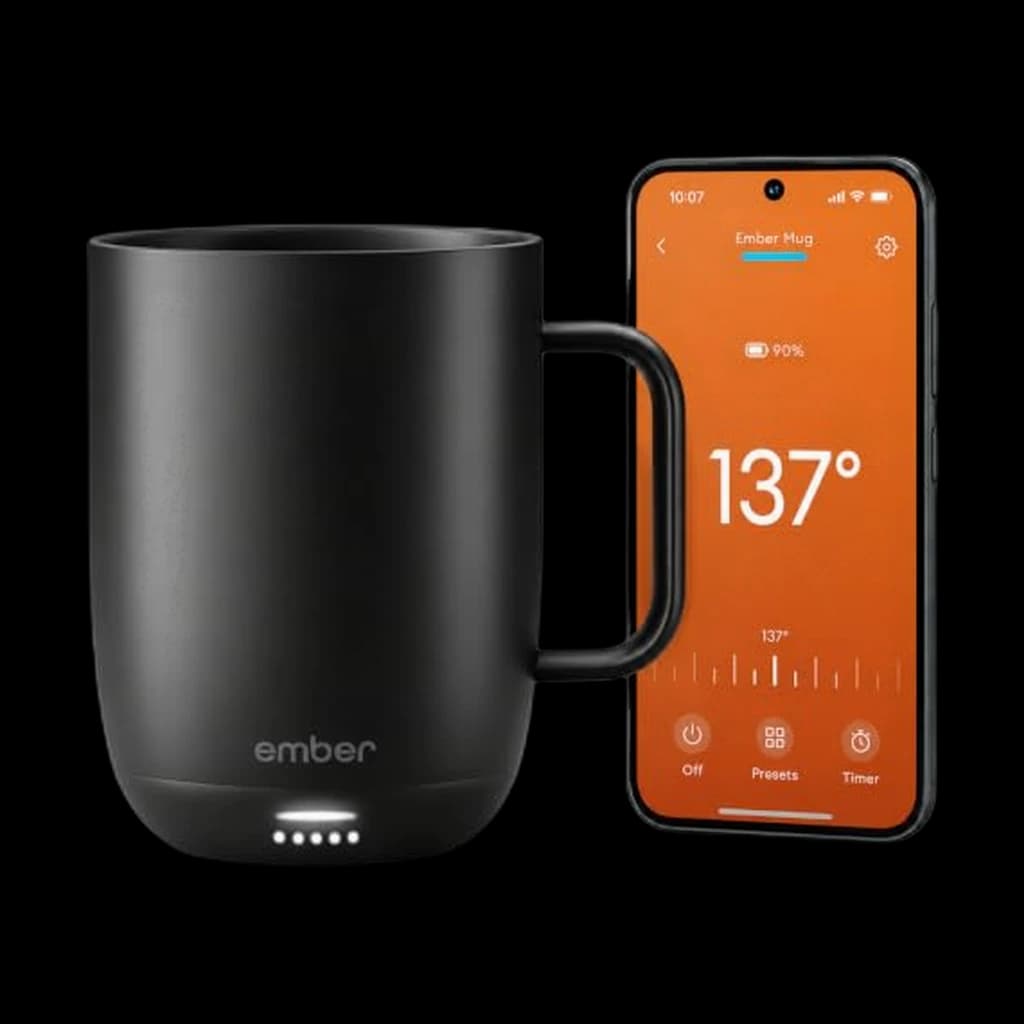
Ember states the 14 oz Mug 2 runs 80 minutes off its charging coaster at 135 degrees F, 160 minutes with the lid on, and holds temperature all day while docked. That is the honest shape of the product: a desk device on a short leash, not a travel mug. Ember's help centre is explicit that it must not go in a dishwasher, and the battery is a consumable sealed inside the body, which is the complaint that dominates long-term owner feedback. The alternatives trade the app for simplicity - Nextmug uses three fixed on-mug settings and no phone at all, and Nuwave and Supsonic undercut Ember on price with larger 16 oz vessels.
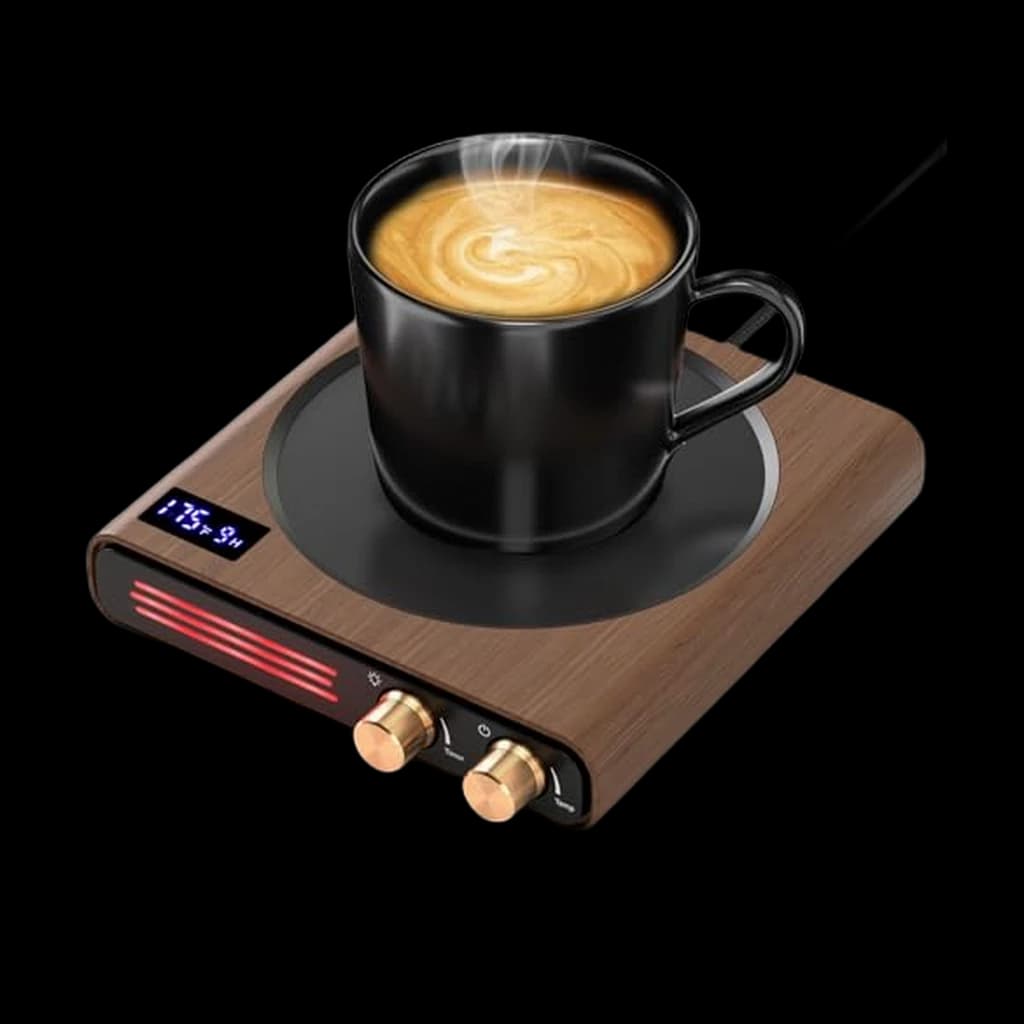
A warmer plate is a third of the price and comes with conditions the box does not lead with. Cosori's manual for the CO294-CW is unusually direct about them: the warmer cannot effectively heat a cold or lukewarm drink, and for best results you should use a heat-safe cup that is thin and has a flat bottom. Recessed bases, double-walled mugs and thick stoneware all transfer heat poorly, which is why a warmer can feel broken when the real problem is the cup. Cosori also gates the plate behind a gravity switch needing at least 10.4 oz (295 g) of cup on the surface, sets a plate range of 77-194 degrees F, and cuts power after 8 hours. Flat-bottom compatibility, a weight sensor and an auto-off are the three spec lines worth comparing across every warmer here.
One more thing a warmer cannot do: it heats from the bottom only, so the top of a tall mug sits cooler than the plate's own reading suggests. A lid closes most of that gap for free. If you would rather not gamble on your existing mug at all, a warmer sold with a matched mug removes the guesswork, which is why one of the picks below is a set rather than a bare plate.
This is desk coffee - the cup that goes cold at 10:40 because a call ran long. If what you actually want is a sealed lid and a vacuum wall for the commute, that is a travel mug, and our sister site BrewSift covers that category properly.
We research these from manufacturer specifications, published documentation and owner review data. We do not run temperature testing, so every figure on this page is attributed to the company or the study it came from.
 1
1