Travel Adapter vs Converter: What You Actually Need
Almost every remote worker needs an adapter and no converter at all, because laptop and phone chargers are dual-voltage. Buy a universal adapter with enough built-in charging to run the laptop directly — the EPICKA TA-105 Pro is the one-object answer — and leave heating appliances to the hotel.
Quick Answer
An adapter changes the shape of your plug so it fits a foreign socket; a converter changes the voltage behind it. Check the fine print on your charger — if it reads INPUT: 100-240V, you need an adapter only, and that covers virtually every laptop, phone, camera and headphone charger. Converters are for single-voltage appliances with heating elements or motors, like hair dryers, which are usually easier to leave at home than to power abroad.
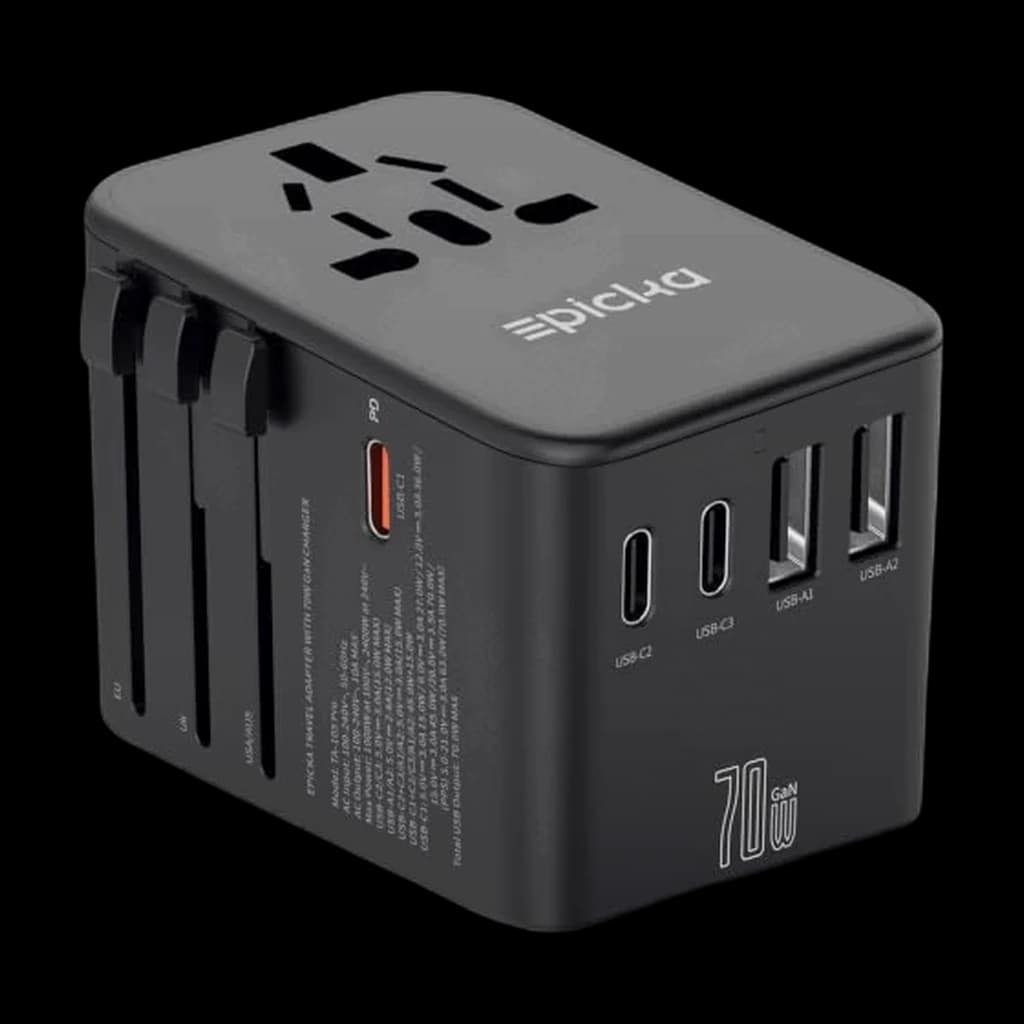 #1 4.7 | 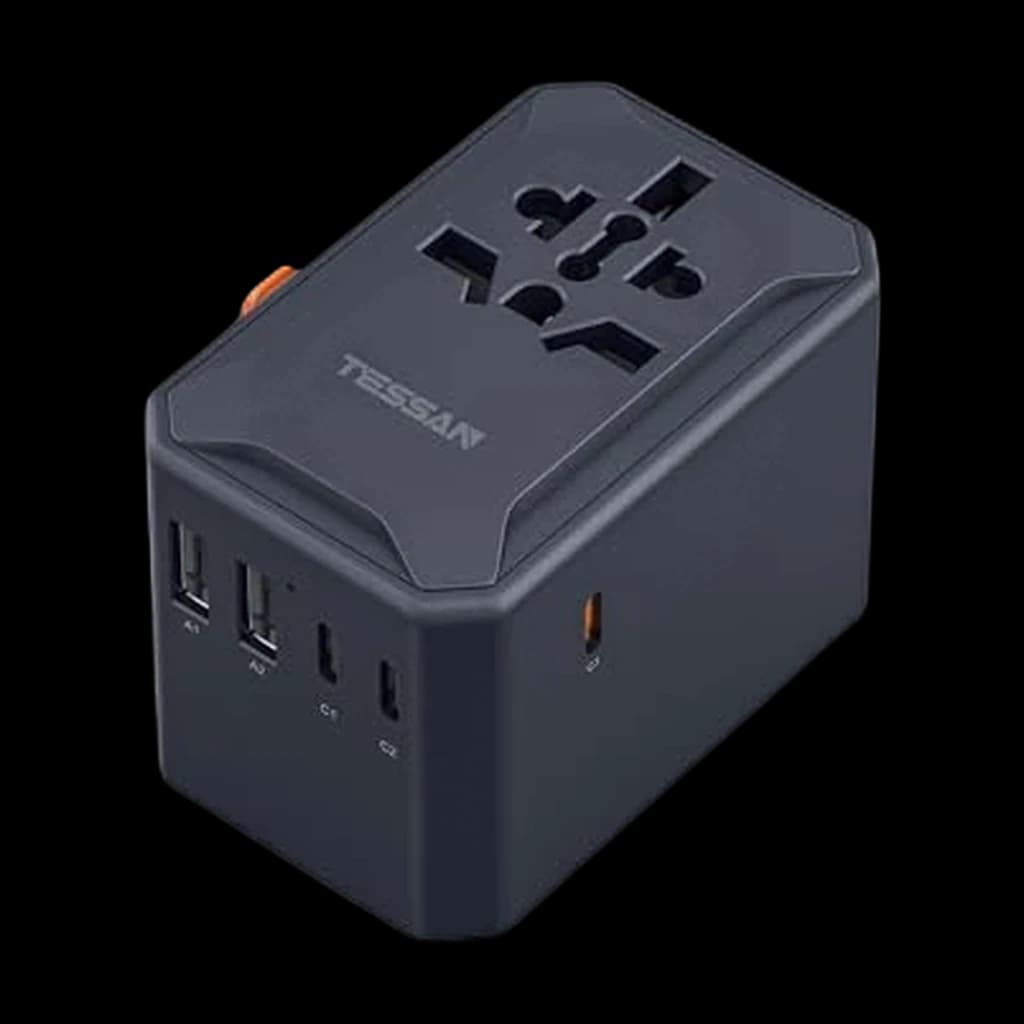 #2 4.5 | 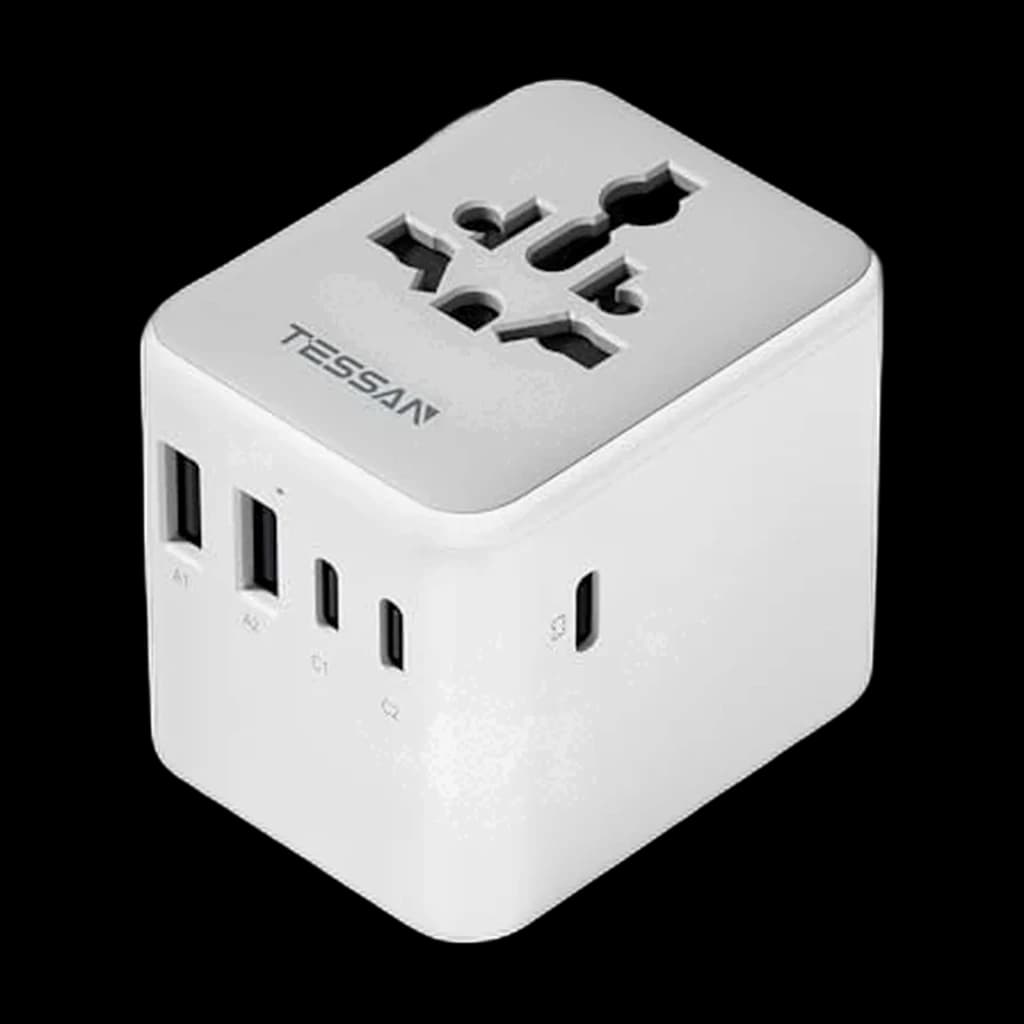 #3 4.6 | 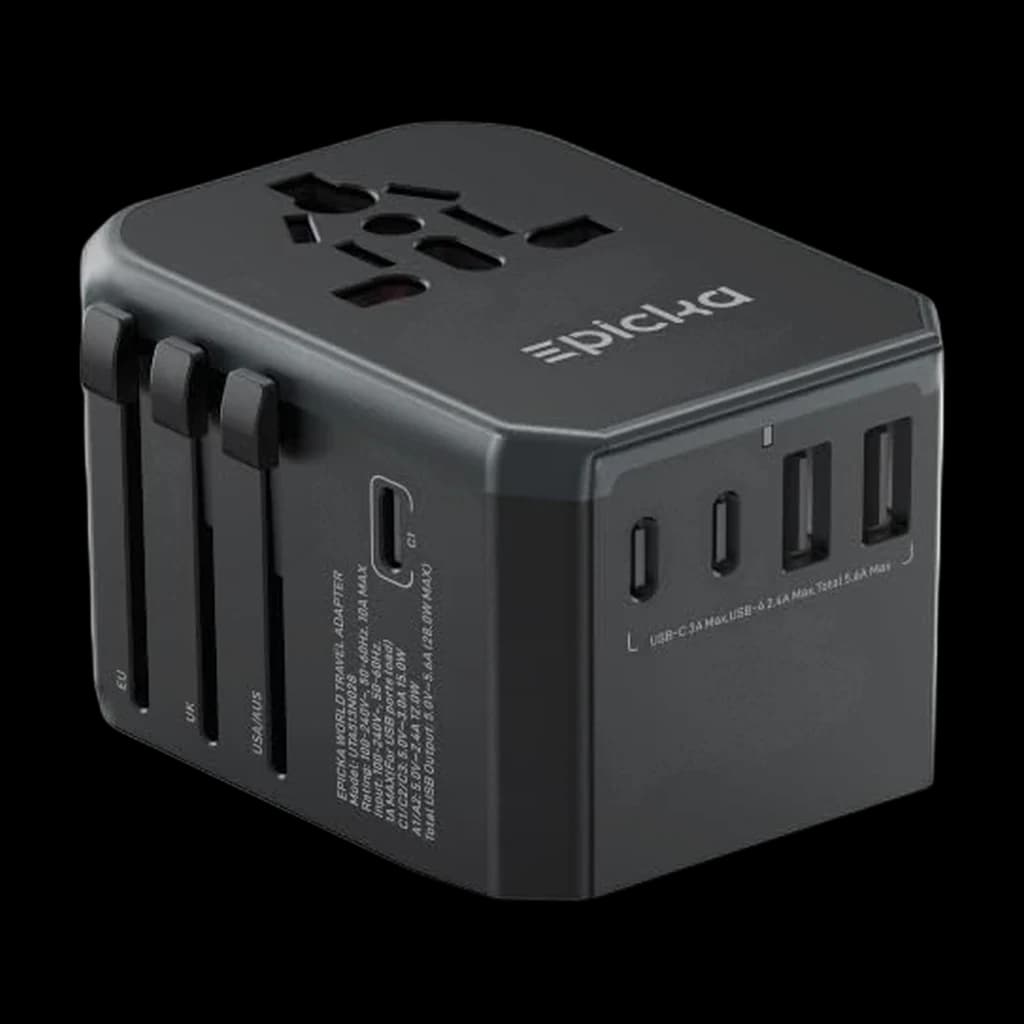 #4 4.7 | |
|---|---|---|---|---|
| Price | $46.99Buy on Amazon | $44.99Buy on Amazon | $22.99Buy on Amazon | $19.99Buy on Amazon |
| Verdict | The one-object answer — GaN charging at laptop wattage means this replaces your laptop brick rather than sitting underneath it. | Enough output to run a mainstream laptop and a phone at once, in a smaller body than the flagship. | The compact pick for when the laptop carries its own charger and the adapter only handles phones, tablets and headphones. | The long-standing default. Makes the socket fit and adds USB ports, with no attempt to replace your laptop brick. |
| Buyer sentiment | Functionality Ports Travel-Friendly Charging Performance Buyers praise functionality, ports, travel-friendly and charging performance. Mixed feedback on value for money. Based on 376 user mentions | Quality Travel-Friendly Buyers praise quality and travel-friendly. Mixed feedback on compatibility. Based on 27 user mentions | Functionality Quality Travel-Friendly Charging Capability Buyers praise functionality, quality, travel-friendly and charging capability. Mixed feedback on value for money. Based on 1,594 user mentions | Reliability Quality Travel-Friendly USB Ports Buyers praise reliability, quality, travel-friendly and usb ports. Based on 7,912 user mentions |
| Type | Adapter + GaN charger | Adapter + GaN charger | Adapter + USB charger | Adapter + USB charger |
| Plugs | US / EU / UK / AU | Type C / G / A / I | Type C / G / A / I | US / EU / UK / AU |
| Converts voltage | No | No | No | No |
| Pros |
|
|
|
|
| Cons |
|
|
|
|
* Prices checked Sep 12, 2026 and may vary. Check the latest price on Amazon.
We research — never hands-on. How we research →
Key Takeaways
An adapter changes the plug shape; a converter changes the voltage. One check on your charger settles which you need — and which destroys appliances.

As an Amazon Associate I earn from qualifying purchases. Product prices and availability are subject to change.
Two products, similar names, sold on the same shelf, and only one of them is about electricity. Confusing them is how travellers destroy hair dryers, and occasionally how they destroy something more expensive.
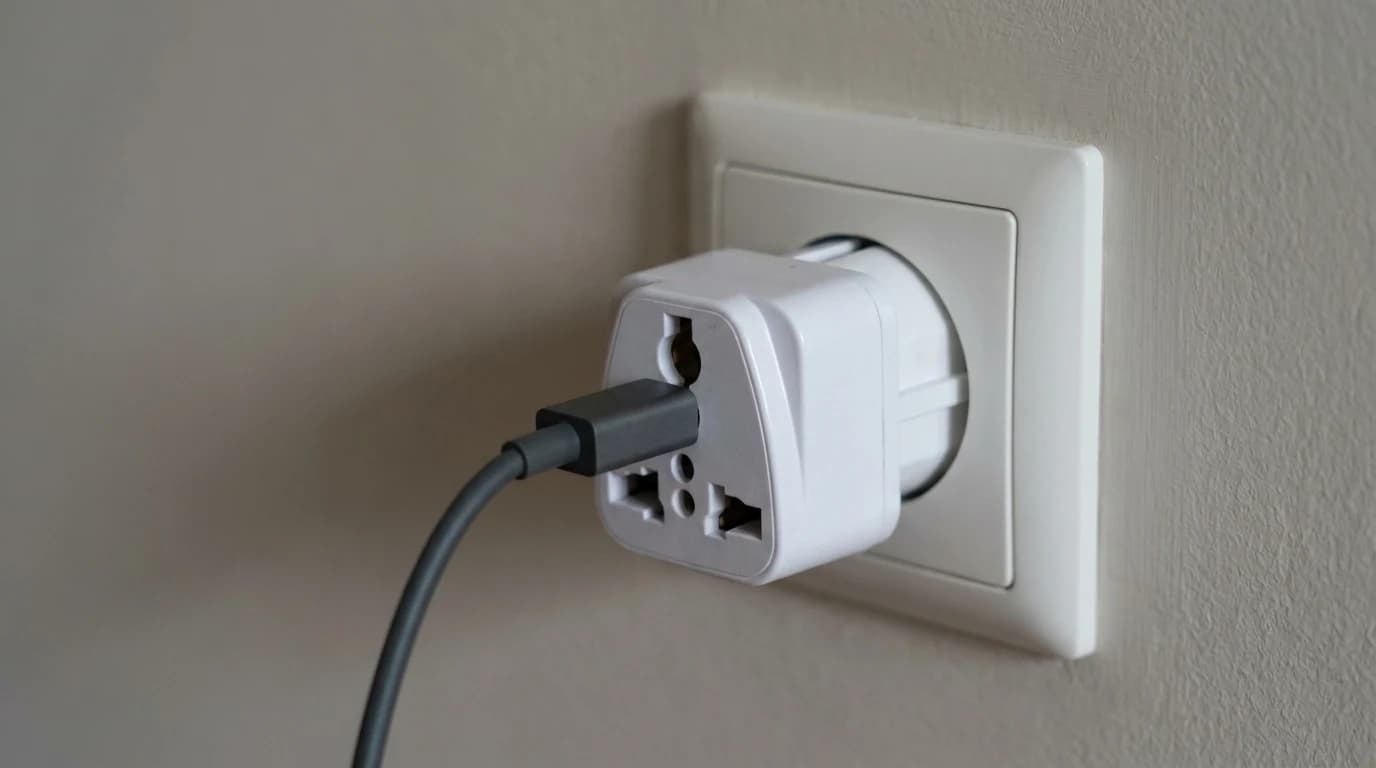
The distinction is simple enough to settle in one sentence: an adapter changes the shape of the plug, a converter changes the voltage behind it. Almost everything a remote worker carries needs the first and would be actively harmed by the second.
Key Takeaways
- An adapter is mechanical — it makes your plug fit a foreign socket and changes nothing electrically.
- A converter is electrical — it steps voltage down, and you only need one for single-voltage appliances with heating elements or motors.
- Check the charger brick for "INPUT: 100-240V". If it says that, you need an adapter and nothing more.
- Laptops, phones and cameras are almost universally dual-voltage. Hair dryers and travel irons frequently are not.
The one check that answers it
Turn over the power brick and read the fine print near the plug. You are looking for the input range:
| What the label says | What you need | Typical devices |
|---|---|---|
| INPUT: 100-240V, 50/60Hz | Adapter only | Laptops, phone chargers, cameras, headphones |
| INPUT: 120V only | Adapter and converter | Hair dryers, travel irons, some kettles |
| INPUT: 220-240V only | Adapter, plus a converter in the US | Appliances bought abroad |
Rule of thumb: if the device charges a battery, it is almost certainly dual-voltage and needs an adapter only. If the device makes heat or spins a motor, check before you plug it in.
The world runs on roughly two standards — about 100-127V across North America and parts of Japan, and about 220-240V across most of Europe, Africa, Asia and Australia — with more than a dozen incompatible plug shapes layered on top. The plug shapes are why adapters exist. The voltage split is why converters do.
What to carry
For work travel the answer is almost always a universal adapter with USB-C power deliveryUSB-C PDUSB Power Delivery: the spec that lets USB-C deliver up to 100W (240W on PD 3.1) of charging power. A 90W+ PD monitor can charge most laptops while also handling video and peripherals over a single cable. built in, because it collapses two objects into one. The picks below differ mainly in how much charging they can do on their own.
Simplest and cheapest: EPICKA TA-105
The long-standing default. Covers the four main plug standards, adds USB ports, and does the one job reliably. If your laptop charges over its own brick and you just need the socket to fit, this is enough.
Best all-in-one: EPICKA TA-105 Pro
The version worth the upgrade for most remote workers. GaN charging at a wattage that will run a laptop directly, which means the adapter replaces your laptop brick rather than sitting underneath it — one object in the bag instead of two.
Best mid-range: TESSAN GaN 65W
The same idea at a slightly lower ceiling. Enough to charge a mainstream laptop and a phone simultaneously, in a body that is smaller than the flagship.
Best compact: TESSAN 28W
The pick when the laptop has its own charger and the adapter only has to handle phones, headphones and a tablet. Noticeably smaller and lighter than the laptop-capable models.
What people get wrong
What actually matters:
- Reading the input range on the brick, once, before the trip
- Whether the adapter can charge the laptop directly, which decides whether you carry one object or two
- Which plug standards the destination actually uses
- A fuse, on anything you plug a real load into
What matters much less:
- The count of USB ports past three
- "Works in 200+ countries" claims, which describe the same four plug shapes every adapter has
- Surge protection, which behaves unpredictably on foreign voltage
Why the wrong one destroys things
A converter feeding a dual-voltage laptop charger is not merely unnecessary; cheap travel converters output a rough approximation of a sine wave, and sensitive electronics dislike it. Meanwhile, plugging a 120V-only hair dryer into 240V through a plain adapter delivers roughly double the intended voltage to a heating element, which is the classic burnt-out-appliance story.
The hotel-appliance shortcut
The genuinely easy answer for heating appliances is not to carry them. Hair dryers exist in nearly every hotel room, and a converter capable of running one is heavy, bulky and single-purpose. Converters make sense for a long stay with a specific appliance you cannot replace, and rarely otherwise.
One adapter, or a set of plugs?
A universal adapter is one object that covers most destinations and is the right default for a work trip. Country-specific plug sets are cheaper, lighter and more robust per unit, and make sense if you repeatedly visit one place — but the universal version is what stays in the bag permanently.
Do I need a voltage converter for a laptop?
Almost certainly not. Laptop chargers have been dual-voltage for many years — check for "INPUT: 100-240V" on the brick and, if it is there, a plug adapter is all you need. Using a converter with a dual-voltage charger adds no benefit and some risk.
What is the difference between an adapter and a converter?
An adapter only changes the physical shape of the plug so it fits a foreign socket; the electricity passing through is unchanged. A converter changes the voltage itself, stepping 220-240V down to around 120V or vice versa, and is only needed for single-voltage appliances.
Will a universal adapter work everywhere?
It will fit the sockets in the large majority of countries, because the world uses a limited set of plug shapes. What it will not do is change voltage — so it makes your plug fit, but a single-voltage appliance still needs a converter behind it.
Sources
- IEC — IEC 60038: IEC standard voltages (the standard nominal supply voltages behind the 100-127V / 220-240V split)
- EPICKA — TA-105 Pro, GaN 70W — manufacturer specification for the all-in-one pick
- TESSAN — GaN 65W universal travel adapter (WTA07) — manufacturer specification for the mid-range pick
Hilly Shore Labs
Editorial TeamWFH Lounge is published by Hilly Shore Labs. Every recommendation is built by synthesizing ergonomic research, manufacturer specs, expert reviews from outlets like Wirecutter, RTINGS, and The Verge, and aggregated long-term owner sentiment from thousands of verified buyers.
All product reviews are independently researched. Our recommendations are based on ergonomic guidelines, manufacturer specifications, and verified buyer sentiment. See our methodology.