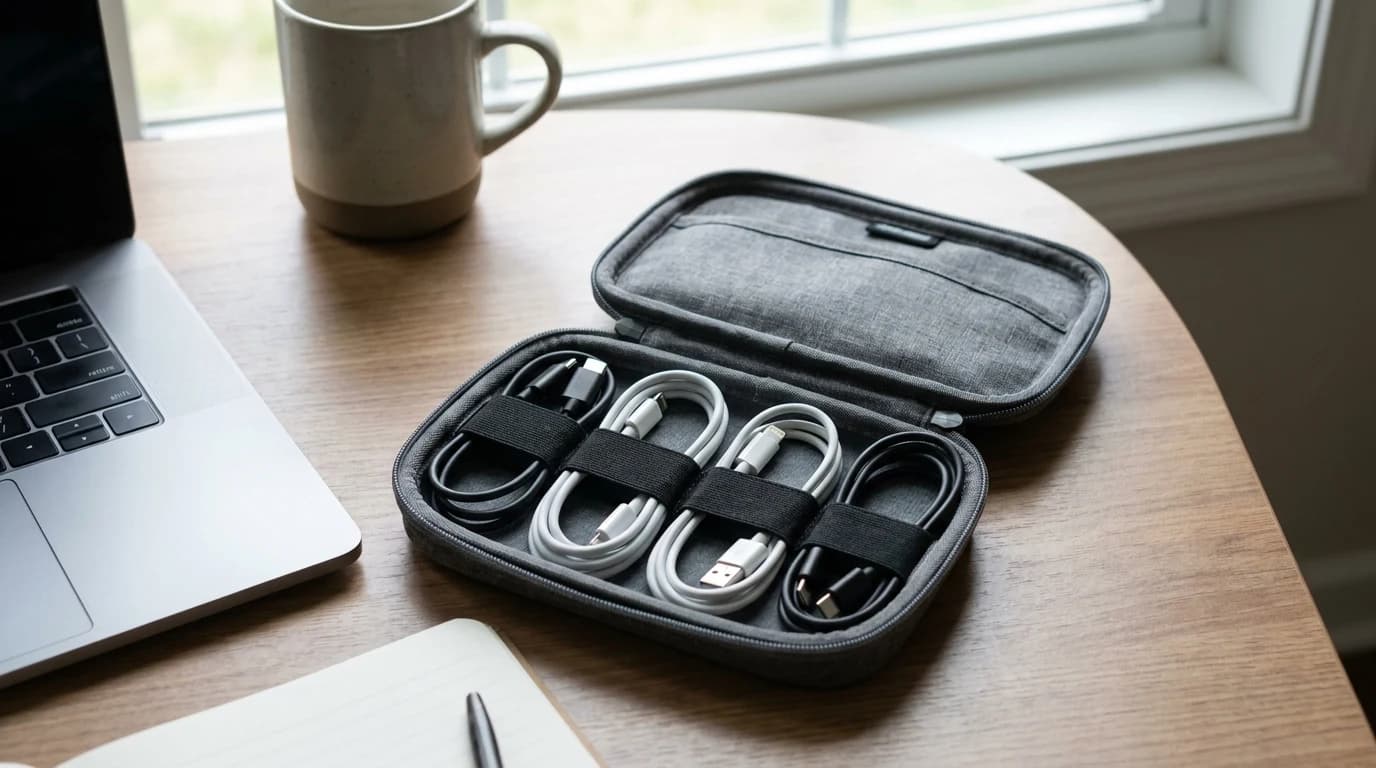
The Three-Day Offsite: A One-Bag Packing List
Three days fits in a carry-on without compromise if you pack outfits rather than scenarios and keep the work kit as a permanently loaded unit. Use a compression cube for bulky layers and a plain cube for shirts — compressing everything is how work clothes arrive unwearable.
Quick Answer
A three-day work trip is the ideal one-bag case — long enough that bad packing hurts, short enough to need no laundry plan, and small enough that checking a bag adds risk for nothing. Pack one outfit per day plus one spare, keep the work kit permanently loaded in a tech pouch so it is never partially unpacked at home, and use compression cubes for bulky layers but plain cubes for shirts. Wear the jacket and the heavier shoes rather than packing them.
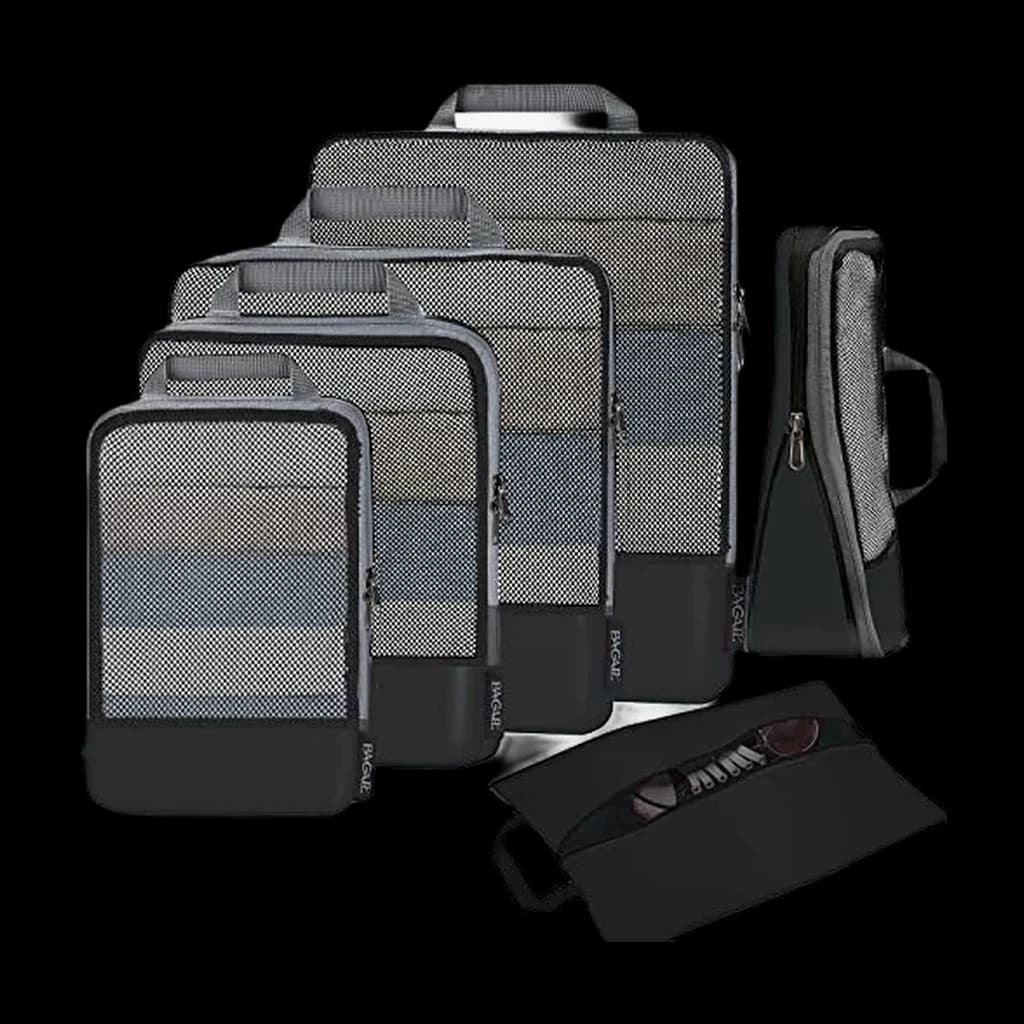 #1 4.5 | 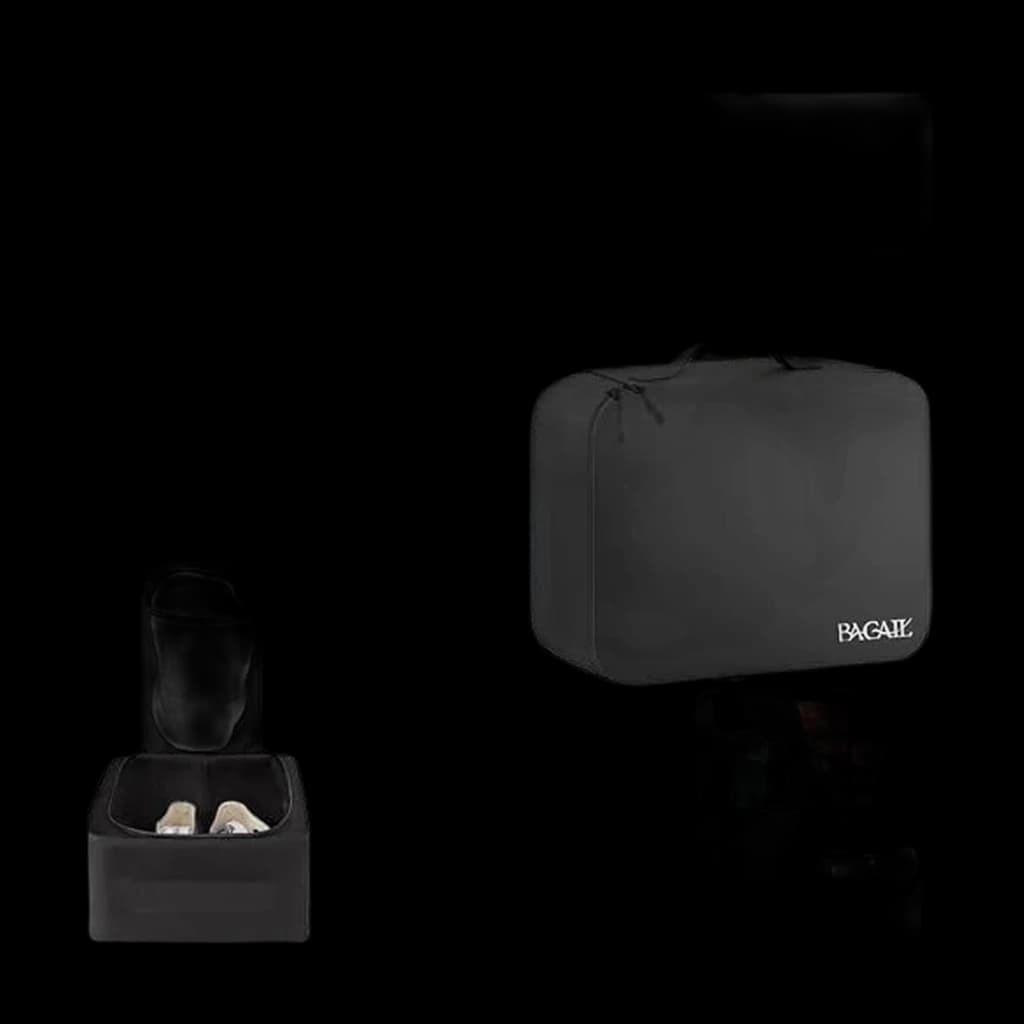 #2 4.6 | 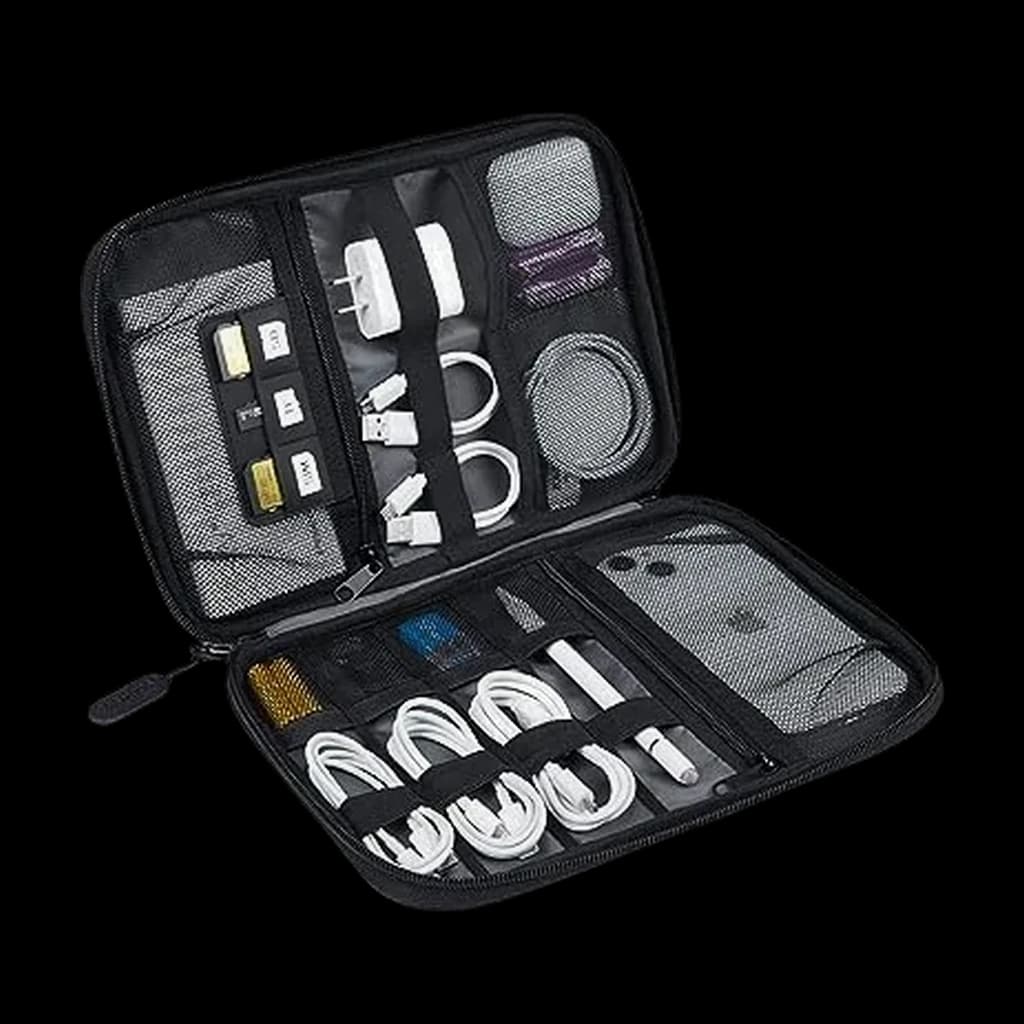 #3 4.7 | |
|---|---|---|---|
| Price | $18.98Buy on Amazon | $19.99Buy on Amazon | $12.74Buy on Amazon |
| Verdict | The compression set for bulky layers — expandable cubes with a second zip that squeezes the air out of knitwear and jackets. | The plain set — for finding a shirt without unpacking, and for keeping worn clothes away from clean ones. | The work kit's permanent home — elastic loops for every cable so the pouch never needs unpacking between trips. |
| Buyer sentiment | Quality Organization Travel-Friendly Size Variety Buyers praise quality, organization, travel-friendly and size variety. Mixed feedback on compression and zipper quality. Based on 1,683 user mentions | Organization Travel-Friendly Capacity Ease Of Packing Durability Zipper Quality Buyers praise organization, travel-friendly, capacity and ease of packing. Mixed feedback on size options and value for money. Some flag durability and zipper quality. Based on 5,666 user mentions | Quality Storage Capacity Organization Travel-Friendly Buyers praise quality, storage capacity, organization and travel-friendly. Mixed feedback on size and fit. Based on 3,406 user mentions |
| Set size | 4 / 6 / 8 piece options | — | — |
| Compression | Yes | No | — |
| Best for | Bulky layers | Shirts and findability | The permanent work kit |
| Pieces | — | 8 | — |
| Opening | — | — | Clamshell |
| Fits charger | — | — | Yes |
| Pros |
|
|
|
| Cons |
|
|
|
* Prices checked Sep 12, 2026 and may vary. Check the latest price on Amazon.
We research — never hands-on. How we research →
Key Takeaways
Three days is the ideal one-bag trip: no laundry, no checked luggage, no baggage claim. The full list, and why compression cubes are not always the answer.
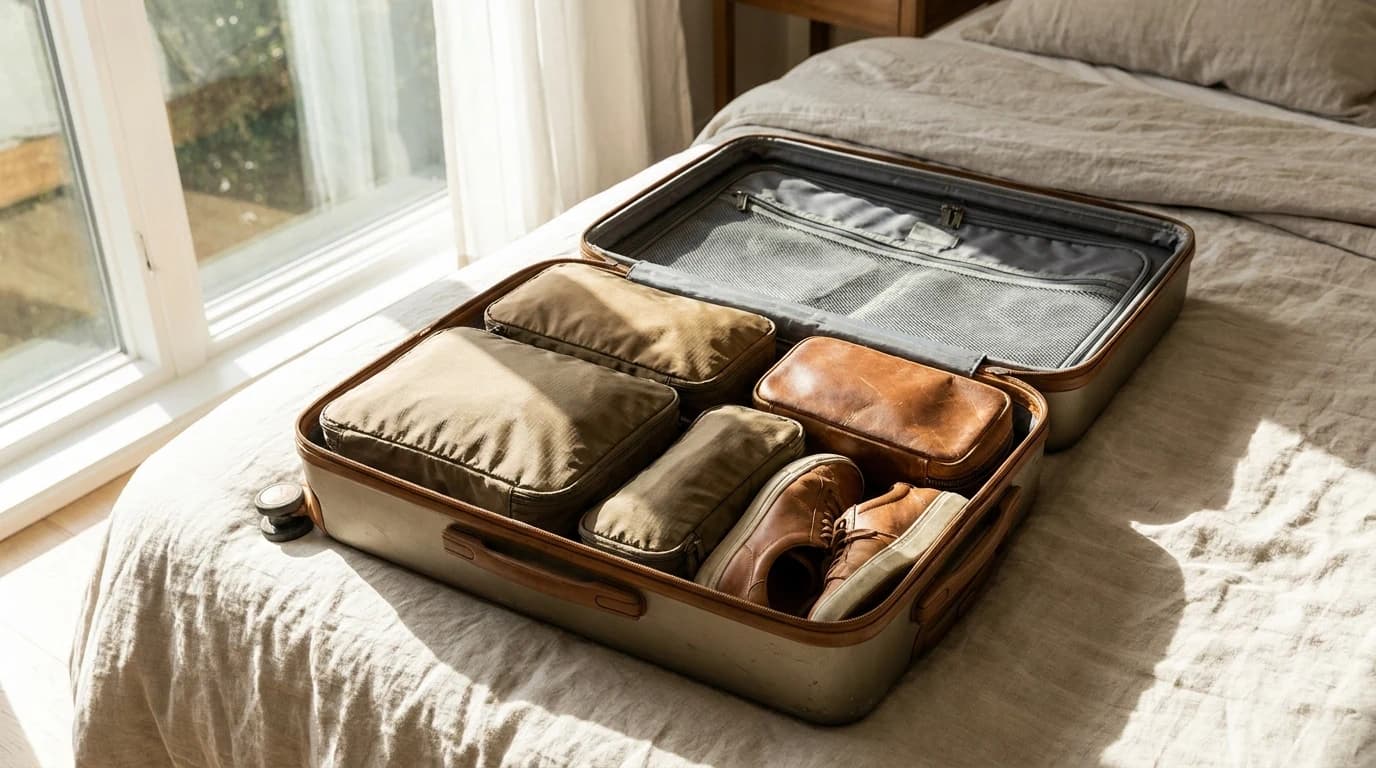
As an Amazon Associate I earn from qualifying purchases. Product prices and availability are subject to change.
A three-day work trip is the ideal one-bag case. It is long enough that packing badly hurts and short enough that you never need a laundry plan. The whole thing fits in a carry-on, and doing so removes the single largest source of trip risk: a checked bag that does not arrive.
This is the list, and the reasoning behind the parts people get wrong.
Key Takeaways
- Three days is the sweet spot for one bag — no laundry, no checked luggage, no baggage claim.
- Compression cubes buy space; plain cubes buy findability. They are different tools.
- Pack the work kit as a single unit so it never gets partially unpacked at home.
- The clothing rule is one outfit per day plus one, not one per possible occasion.
The list
| Category | What goes in | Notes |
|---|---|---|
| Work kit | Laptop, charger, cables, adapter, power bank | Lives permanently in a tech pouch |
| Connectivity | Travel router, short ethernet cable | The part that saves the trip |
| Clothing | Three days plus one spare | Compression cube |
| Shoes | The pair you wear, plus one | Two maximum, always |
| Toiletries | Decanted, in a hanging bag | Under the liquid limit by default |
| Documents | Passport, cards, one backup card | Kept separate from the wallet |
Rule of thumb: the work kit should never be unpacked at home. If a cable has to come out for home use, buy a second cable rather than borrowing from the travel set — that is how the ethernet cable goes missing on the trip that needed it.
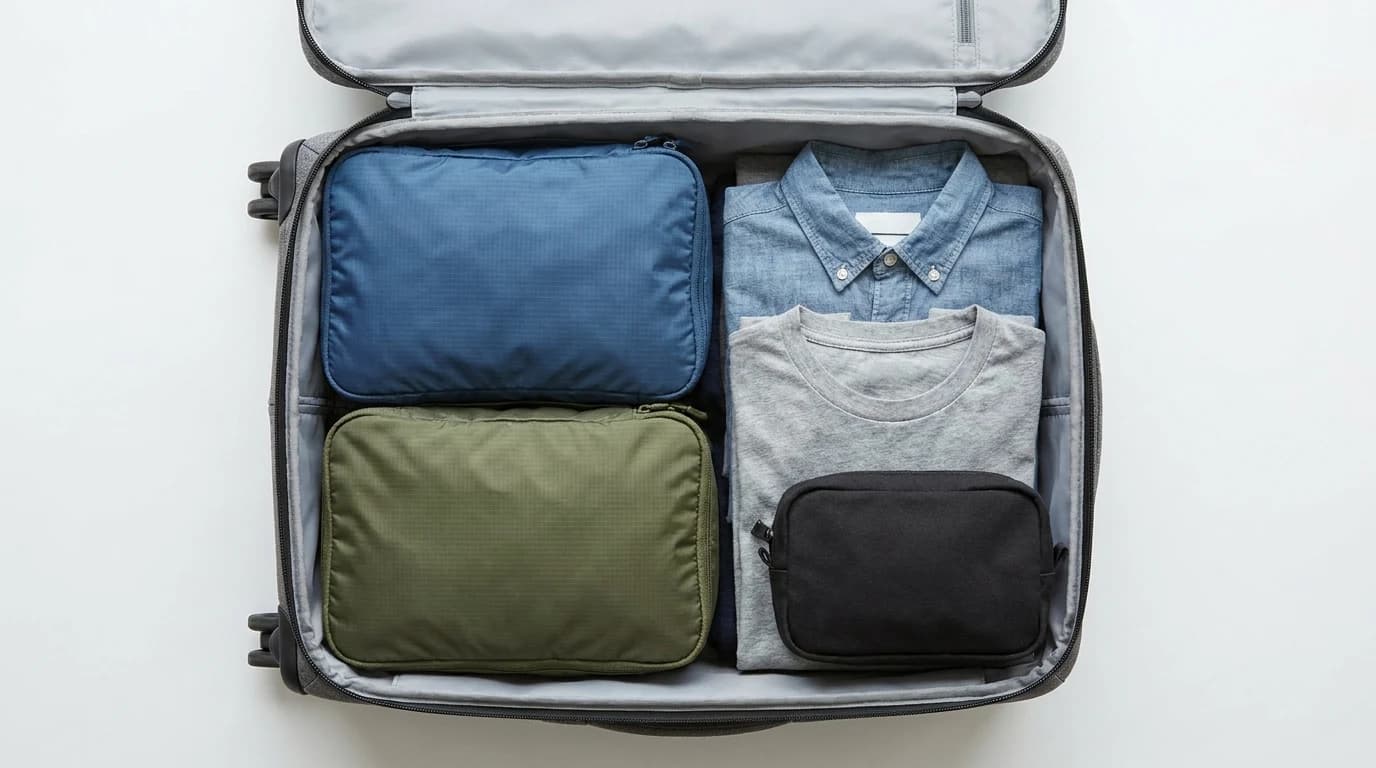
Compression cubes versus plain cubes
This is the decision people get backwards, so it is worth separating.
Compression cubes are for:
- Bulky items — knitwear, a jacket, anything with air in it
- Trips where the bag is genuinely at capacity
- Squeezing a fourth day into a three-day bag
Plain cubes are for:
- Finding things without unpacking
- Separating clean from worn
- Shirts you would rather not compress into creases
Most one-bag trips want both: a compression cube for the bulky layer and a plain cube for shirts. Buying only compression cubes and then compressing everything is how work clothes arrive unwearable.
The clothing maths
One outfit per day plus one spare. For three days that is four, and the fourth exists for a spill rather than a change of plan. The common failure is packing for scenarios — a gym session that will not happen, a dinner that may not be formal — each of which adds an outfit that returns unworn. If the trip genuinely has a formal evening, pack for that evening specifically rather than for the possibility of one.
Wear the bulky things
The jacket and the heavier pair of shoes travel on you, not in the bag. This is the oldest advice in one-bag packing and it remains the single biggest volume saving available, because a jacket in a bag is mostly air.
Toiletries: decant, do not buy travel sizes
Decanting into small bottles is cheaper, produces exactly the quantity a three-day trip needs, and keeps you under the cabin liquid limit without thinking about it. A hanging toiletry bag matters more than it sounds, because hotel bathroom counter space is frequently the smallest surface in the room.
The document habit
Keep one backup payment card somewhere other than your wallet — in the tech pouch is fine. It costs nothing, weighs nothing, and turns a lost wallet from a trip-ending event into an inconvenience. The same logic applies to a photograph of your passport stored offline on your phone.
What to leave out
The honest list of things that come back unused from most three-day work trips:
- A full-size keyboard and mouse
- A second pair of shoes beyond the two-pair rule
- A book, on a trip with calls in every gap
- Gym clothes, on a trip with an evening dinner every night
- A second laptop charger
None of these are wrong to want. They are simply the items that lose most often when weighed against the space.
How many packing cubes do I need for three days?
Two is usually right: one compression cube for bulky layers and one plain cube for shirts and clean items. A third small one for worn clothes is a genuine quality-of-life addition on the way home, and sets of six or eight mostly go unused on a trip this short.
Should I check a bag for a three-day work trip?
Almost never. Three days fits comfortably in a carry-on, and checking a bag adds the one risk you cannot mitigate — arriving for a meeting without your clothes or, worse, your laptop charger. Keep the work kit in the cabin regardless of what else you do.
What is the most forgotten item on a work trip?
A short ethernet cable and the correct-wattage laptop charging cable. Both weigh almost nothing, both are hard to buy quickly in an unfamiliar city, and both are the difference between a hotel room you can work in and one you cannot.
Sources
- TSA — Liquids, aerosols and gels rule (container and total volume limits for cabin toiletries)
- TSA — Power banks (carry-on yes, checked bags no — which is why the work kit stays in the cabin)
Hilly Shore Labs
Editorial TeamWFH Lounge is published by Hilly Shore Labs. Every recommendation is built by synthesizing ergonomic research, manufacturer specs, expert reviews from outlets like Wirecutter, RTINGS, and The Verge, and aggregated long-term owner sentiment from thousands of verified buyers.
All product reviews are independently researched. Our recommendations are based on ergonomic guidelines, manufacturer specifications, and verified buyer sentiment. See our methodology.