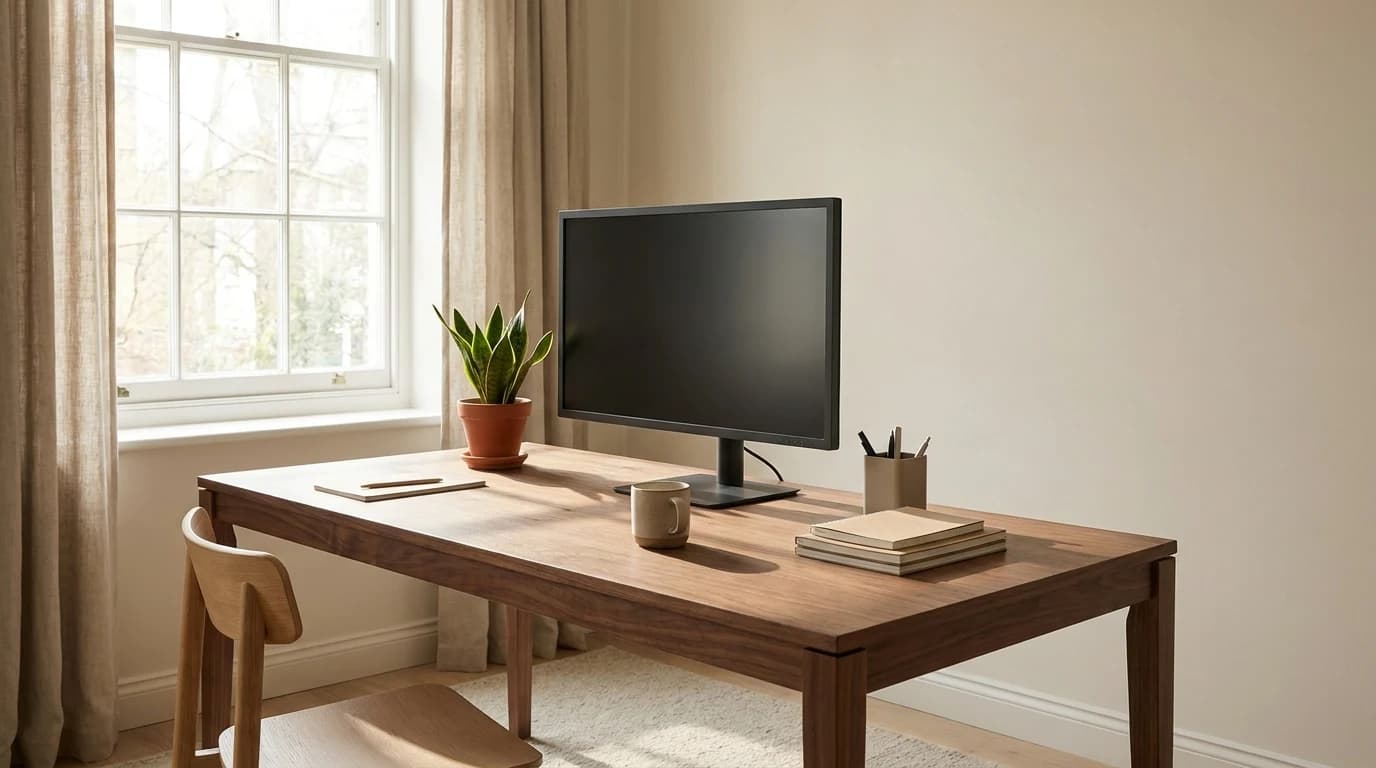
Window Bird Feeders for the Home Office: A Screen Break That Isn't Another Screen
Buy the window before you buy the feeder: Cornell's current advice is that old safe-distance rules no longer hold, so the pane gets treated first and the feeder second. After that, the only specification that matters at a desk is whether you can reach it and take it apart - a half-pound tray you clean every fortnight beats a four-cup box you open twice a year.
Quick Answer
A window bird feeder is the cheapest way to make a home-office break look at something that isn't a screen. It works when the glass has been made bird-friendly first, the feeder is somewhere you can safely reach to clean, and it sits beside your normal sightline rather than behind your monitor. Cornell's current guidance says older "safe distance" rules are no longer considered reliable - treat the window, then hang the feeder.
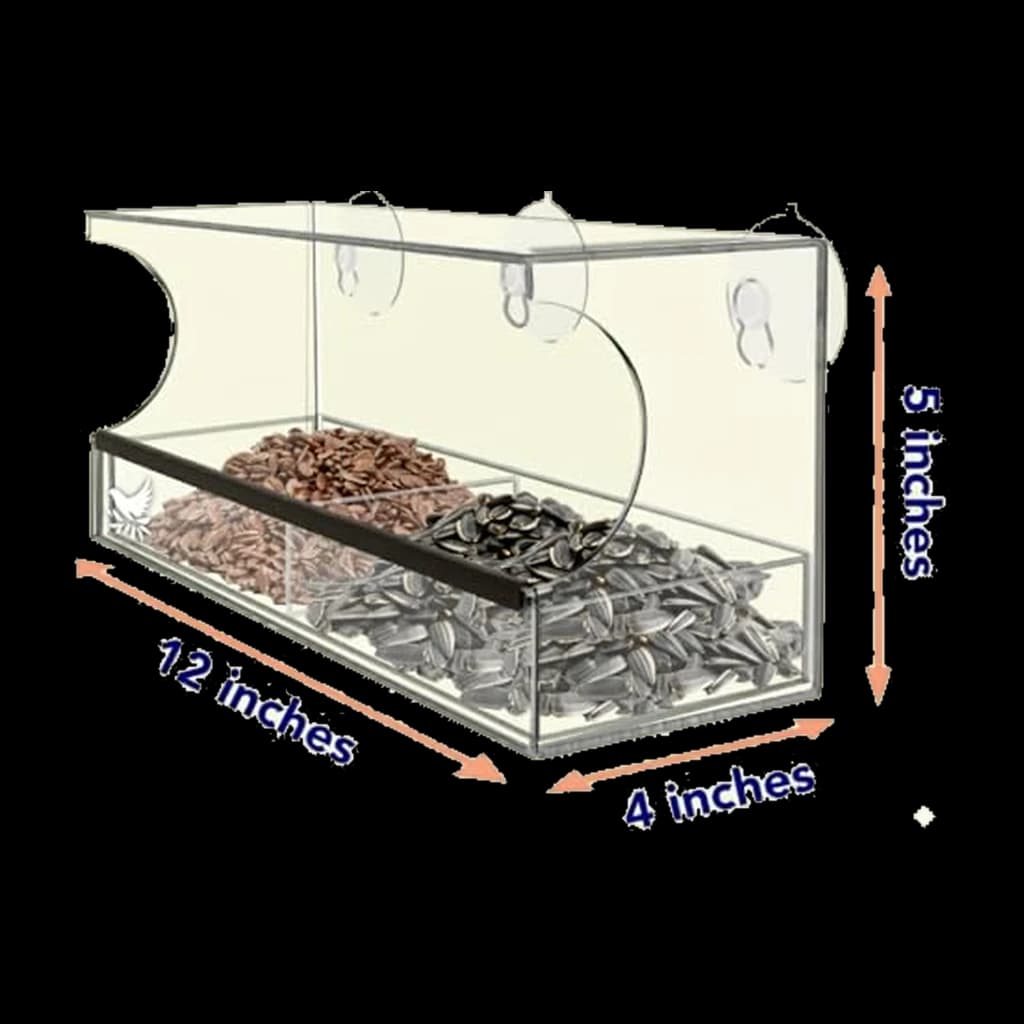 #1 4.5 | 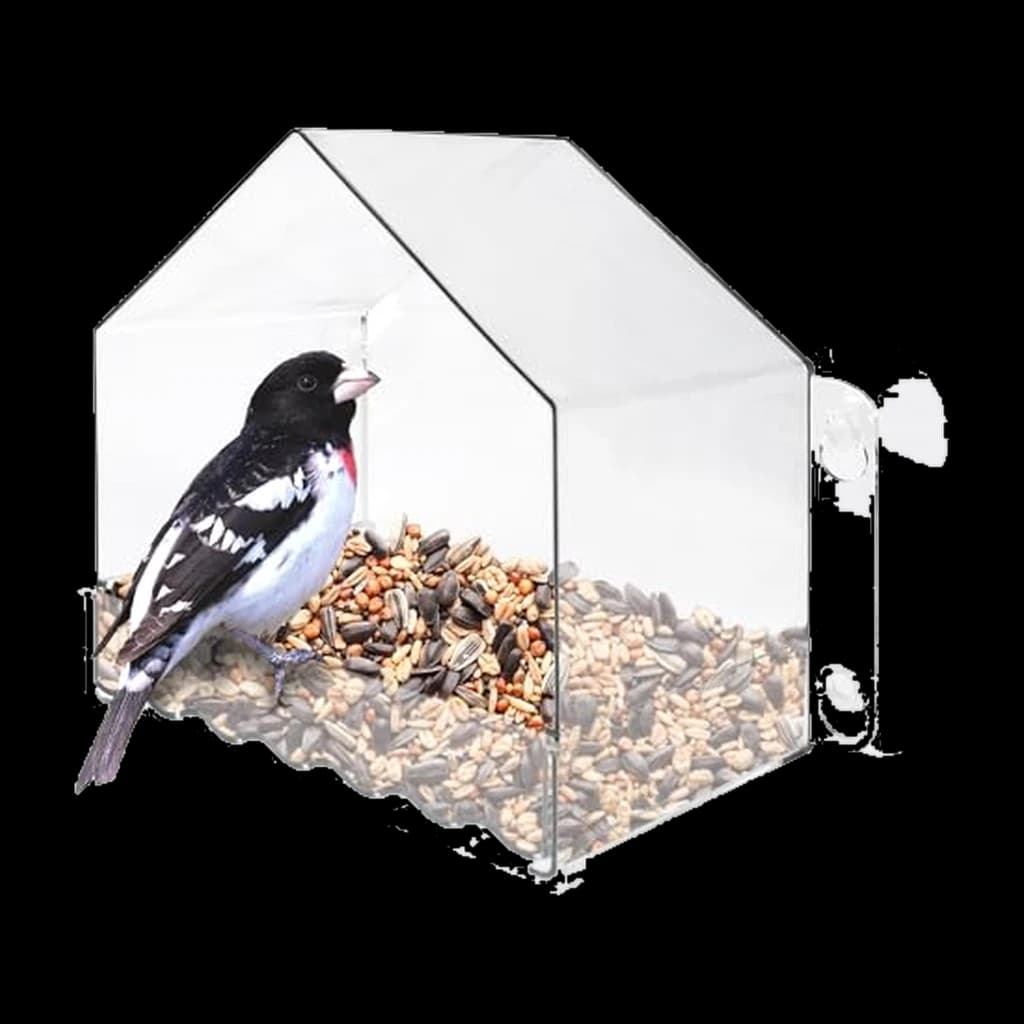 #2 4.3 | 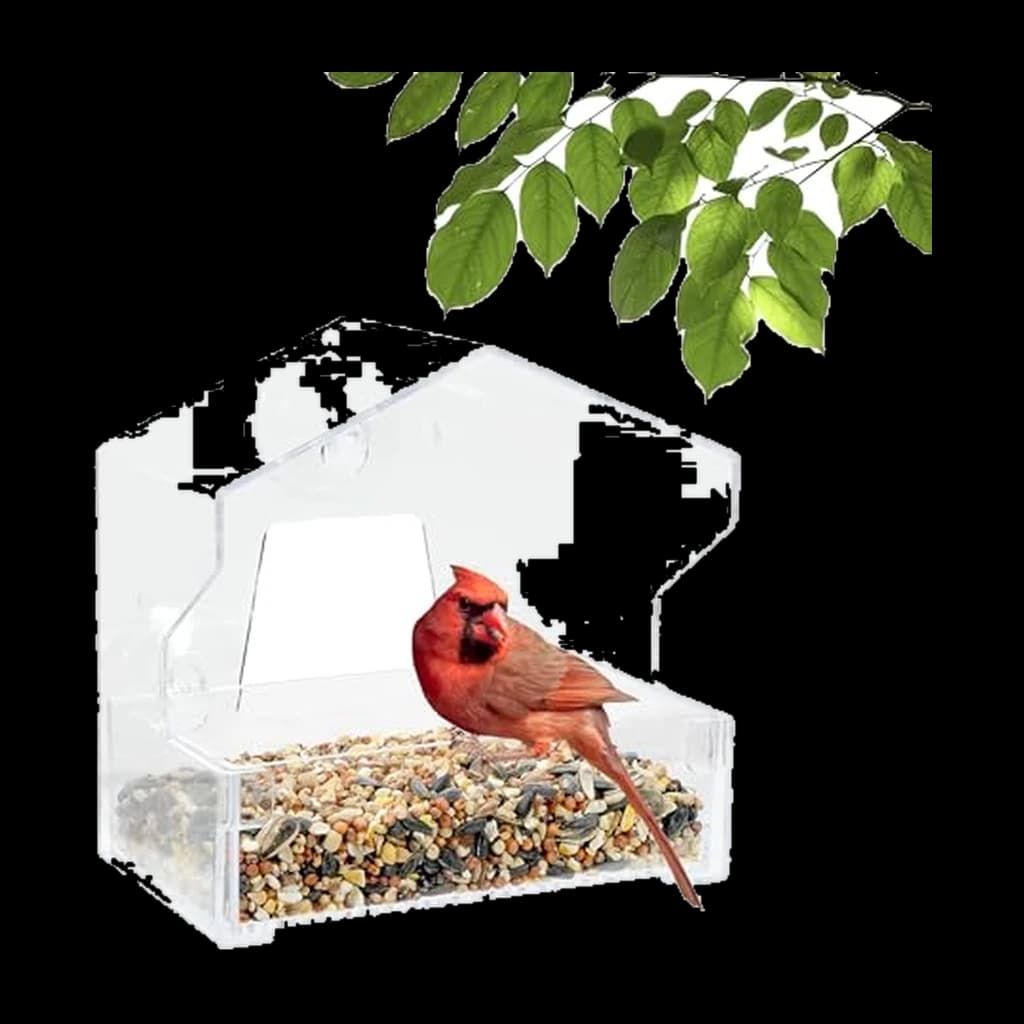 #3 4.6 | 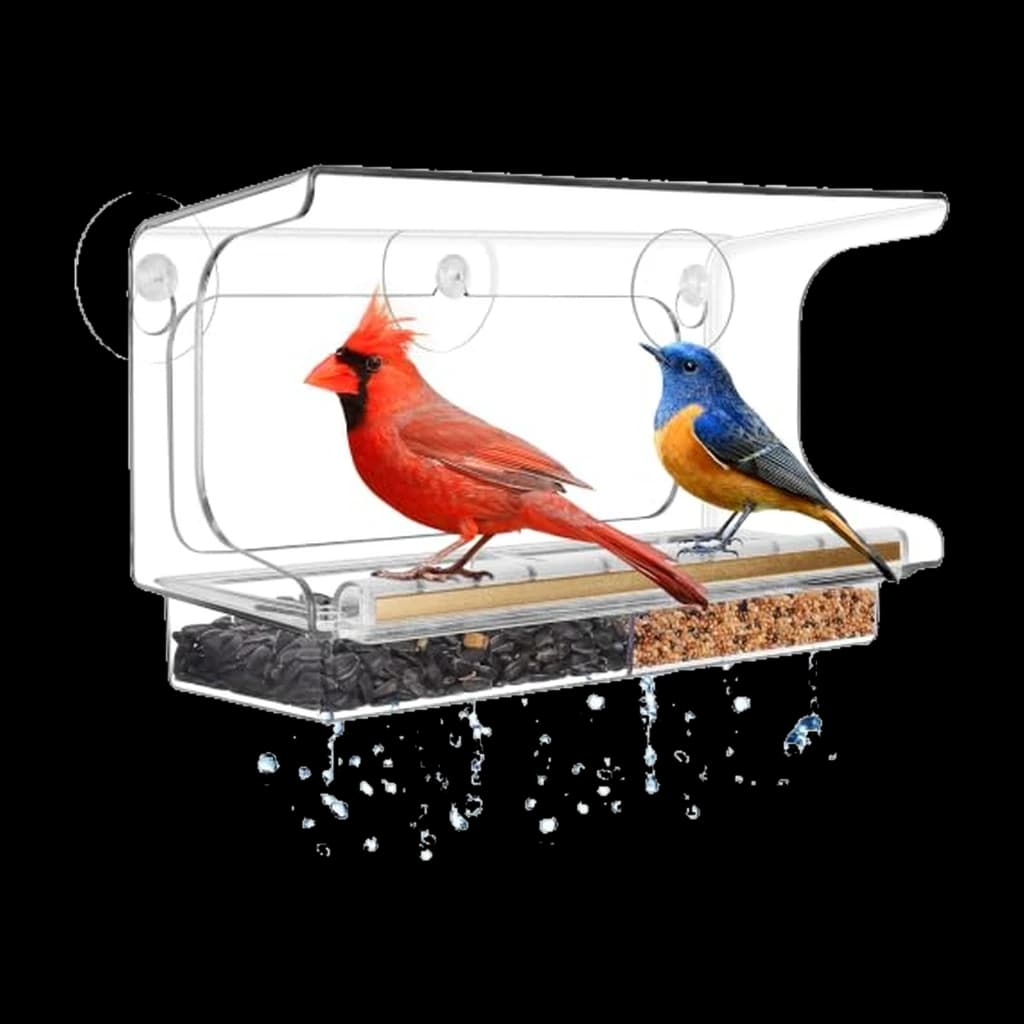 #4 4.5 | 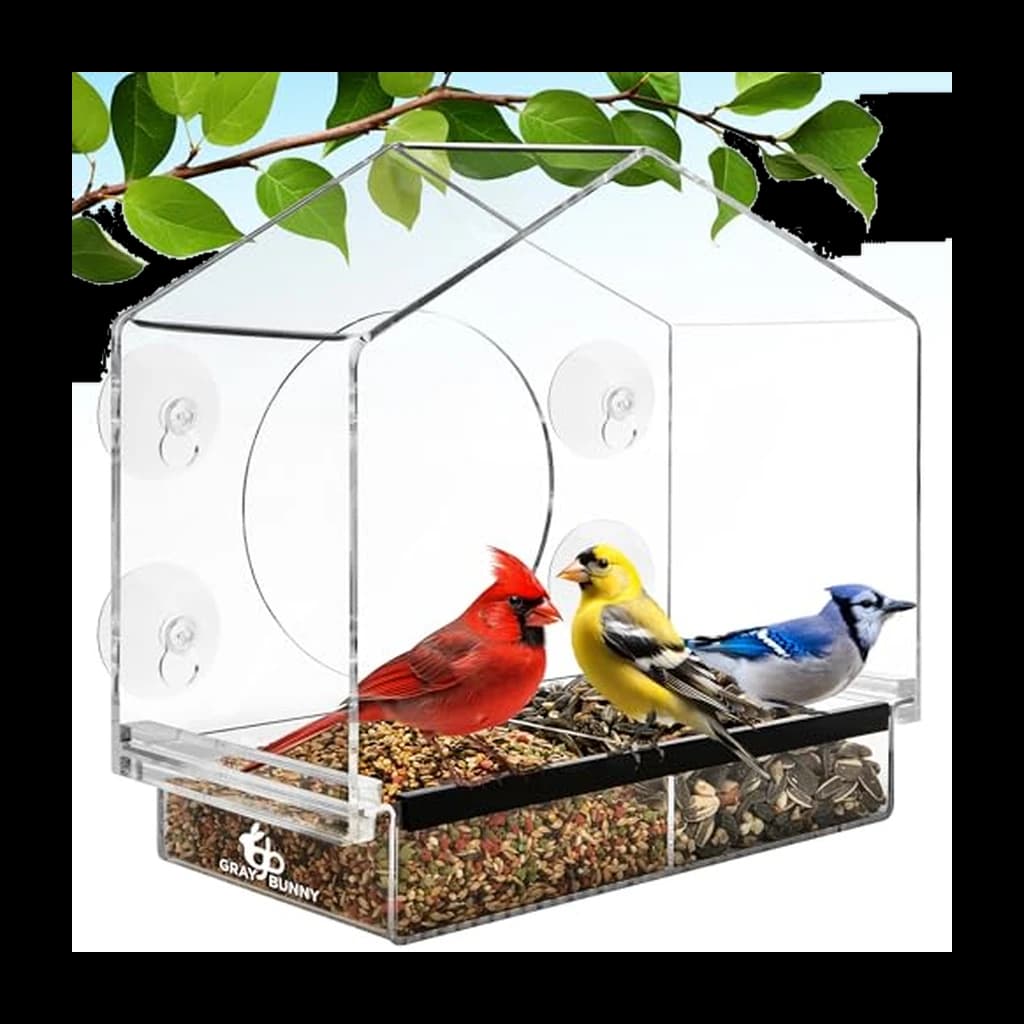 #5 4.6 | 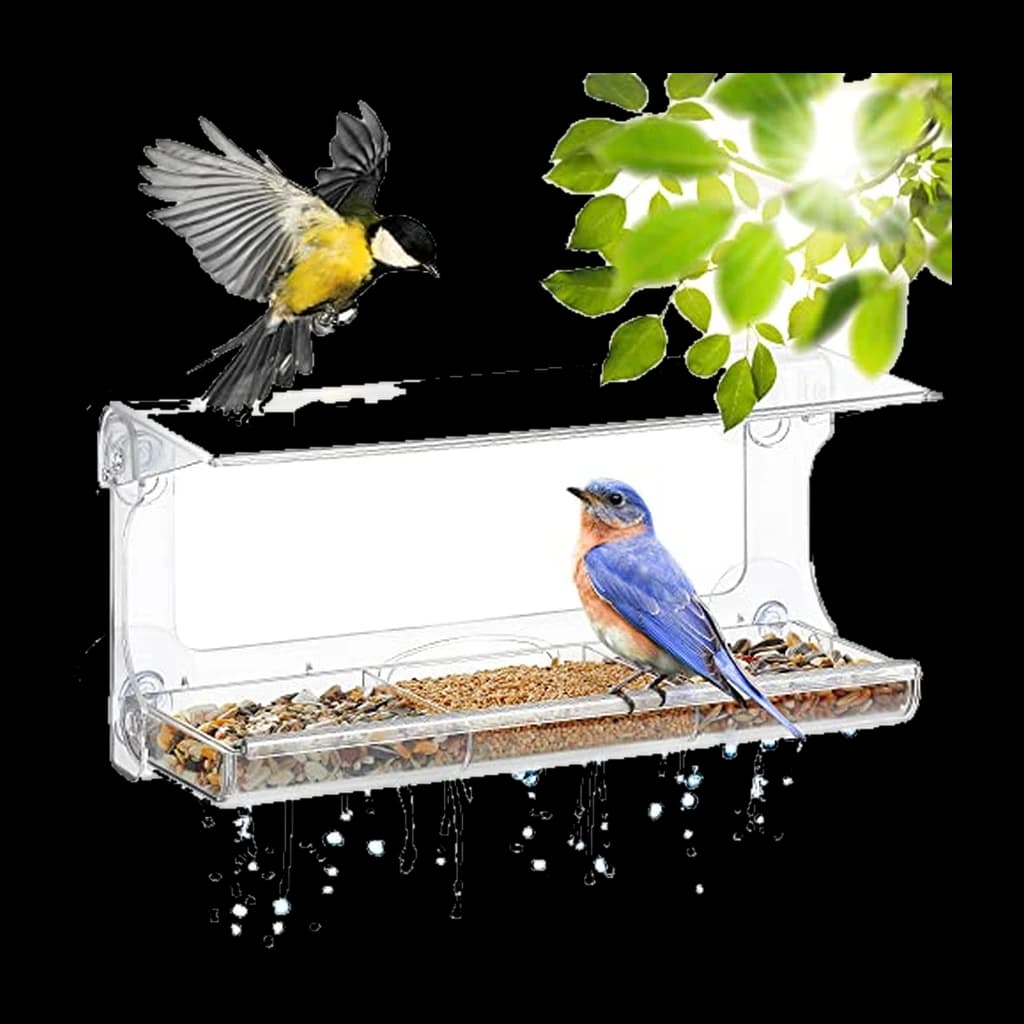 #6 4.5 | |
|---|---|---|---|---|---|---|
| Price | $30.95Buy on Amazon | $11.90Buy on Amazon | $10.97Buy on Amazon | $29.99Buy on Amazon | $32.99Buy on Amazon | $19.87Buy on Amazon |
| Verdict | By far the most-reviewed listing in the category, with a slide-out tray and no assembly. | The cheapest way in, from an established feeder brand, with a perch that circles the tray. | The smallest load here, which is the point: half a pound of seed turns over fastest between cleans. | Polycarbonate instead of acrylic, with a lift-out tray and room for larger birds. | A middle capacity between the half-pound trays and the four-cup boxes, in a house shape. | The one to look at if wind-driven rain is your problem: a roof cover over a three-section tray. |
| Capacity | 2 pounds | 2 cups | 8 ounces (1/2 lb) | 4 cups | 3 cups | 32 fluid ounces |
| Material | Acrylic | Plastic | Plastic | Polycarbonate (PC) | Acrylic, rubber | Acrylic |
| Mounting Type | Window mount | — | Suction cups | Window mount | Suction cup | Suction cup hanger |
| Dimensions | 12 x 4 x 5 inches | — | — | — | — | — |
| Tray | Slide-out | — | — | Lift-out | — | — |
| Model Number | — | WIN-3 | 345 | — | GB-6902 | DFO-WBF-001 |
| Special Feature | — | 360 degree perch | — | Shatterproof | — | Roof cover, 3-section tray |
| Size | — | 6.5 inches | — | — | — | — |
| Body | — | — | Clear | — | — | — |
| Shape | — | — | — | — | Feeder house | — |
| Pros |
|
|
|
|
|
|
| Cons |
|
|
|
|
|
|
* Prices checked Sep 19, 2026 and may vary. Check the latest price on Amazon.
We research — never hands-on. How we research →
Key Takeaways
A window feeder is the cheapest non-screen break at a desk. Treat the glass first, place it beside your sightline, and pick one you can take apart to clean.
As an Amazon Associate I earn from qualifying purchases. Product prices and availability are subject to change.
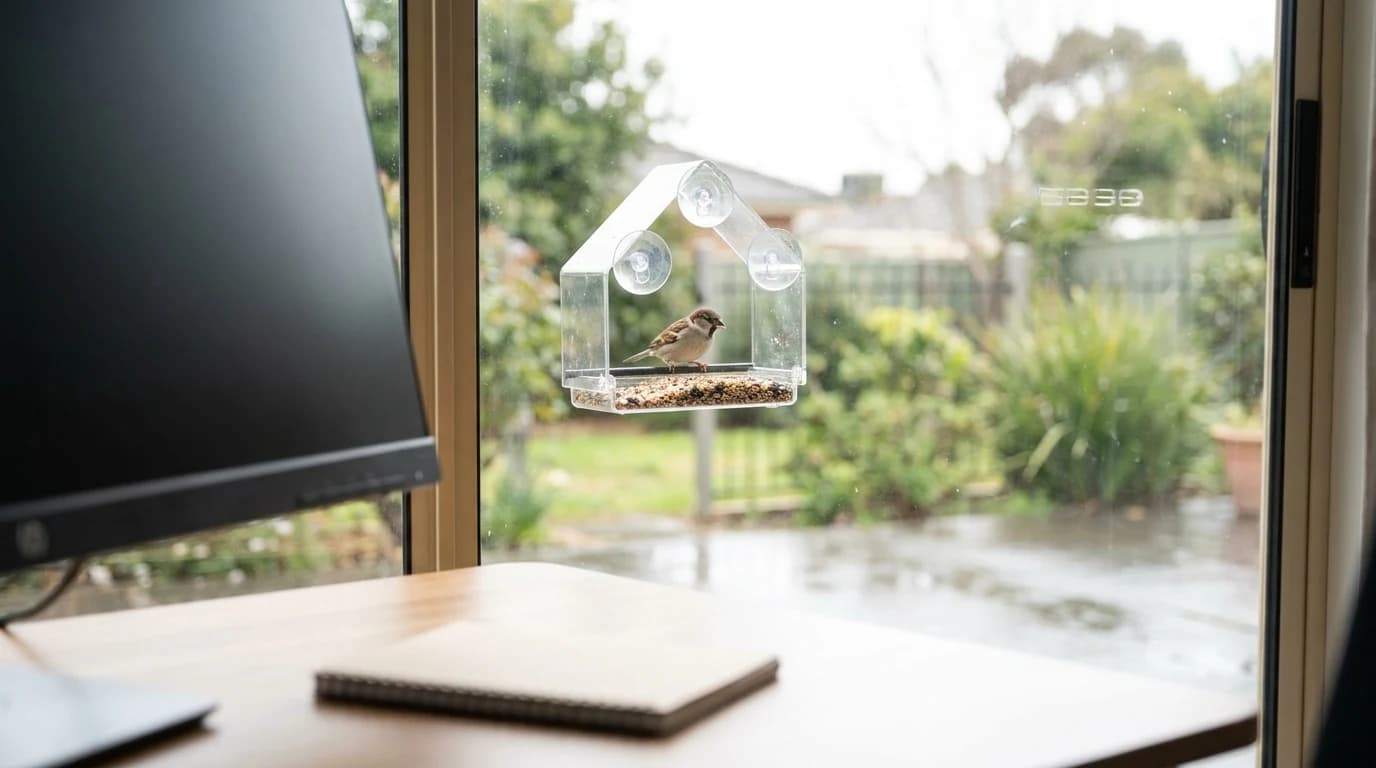
Most home-office break advice ends up being another screen. A window bird feeder is the rare alternative: something genuinely unpredictable happening two feet from your desk, with no subscription, no notification and nothing to scroll.
The catch is that a feeder is not a desk accessory. It is a feeding station for wild animals, a structure mounted outside your house, and a recurring cleaning job. Whether it works has less to do with how it photographs than with your window, your neighborhood and how easily you can reach it. Four questions decide it: can the glass be made safer for birds, can you reach the feeder safely, will the food stay dry, and does every part come off for cleaning?
The short version
- Start with the glass. Cornell says past safe-distance recommendations are no longer considered valid.
- Closely spaced exterior markings about two inches apart are an established treatment; one decorative silhouette is not.
- Place it beside your seated sightline, not behind the monitor, and watch for new glare on the screen.
- Cornell recommends cleaning seed feeders roughly every two weeks, and more often in wet weather.
- Capacity matters less than whether every food-contact surface comes apart for cleaning.
Your window is the decision, not the feeder
Reflective and transparent glass can read as open habitat. A reflection of trees looks like somewhere to fly, and windows aligned across a room look like a route through the building. Bringing birds up close means taking that hazard seriously first.
Go outside and look at the intended pane from several angles. A safe-looking feeding surface does not make a larger reflective wall disappear, so check the panes beside and across from it too.
Before you buy anything, audit the window
- Stand outside and look at the pane from several angles, not just head-on.
- Note where sky, shrubs, or trees appear as reflections in the glass.
- Check the panes next to and across from the feeder spot, not only the feeder spot itself.
- Confirm the window is not one you need to keep clear for emergency escape.
- Confirm you can reach the feeder without leaning out from an upper floor.
- Imagine doing all of the above in cold, wet weather on a busy workday.
The last three items are the human half of the audit, and they are the ones people skip: access that feels fine on installation day is a different proposition in February, mid-deadline.
Forget the old "safe distance" rule
Older advice frames collision prevention around keeping feeders a particular distance from glass. Cornell's current guidance says those past safe-distance recommendations are no longer considered reliable, and puts the emphasis on making the window itself bird-friendly. A feeder stuck to one pane is not permission to ignore the rest of the glass.
Closely spaced markings on the exterior surface are one established approach - Cornell describes spacing them about two inches apart across the pane. One or two decorative silhouettes on a large window are not an adequate substitute, and suitable exterior screens are another recognized option.
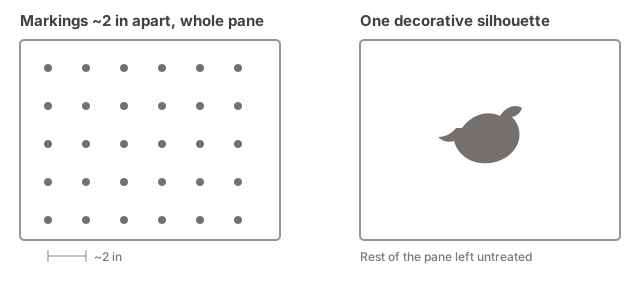
Plots the difference Cornell's spacing guidance describes. The only figure shown is the ~2 in spacing already cited above; no effectiveness percentages are implied or displayed.
Pick a treatment that suits the window's construction and any building rules, and do it before you start attracting more birds to the area. A slightly less unobstructed view is a fair trade for not depending on birds recognizing glass they cannot reliably see.
Place it for your seated sightline, not the view from outside
A feeder does not belong directly behind the monitor. That either hides the birds from your seated view or has you craning around the screen all day. Sit in your chair and pick a spot you can look at during a deliberate pause, rather than one you have to hunt for while reading small text.
Glare matters as much as sightline. Turning a desk to face bright glass trades a view problem for a screen-comfort problem, and it is usually easier to put the feeder beside the sightline you already have and leave the desk where it is.
The goal is an optional point of interest, not an interruption generator. A feeder that is still pleasant when you ignore it for an hour fits a working day. One that makes you feel responsible for watching a live broadcast does not.
Mounting is a read-the-instructions job
Suction mounts depend on the right contact surface and an intact cup. Before installing anything, read the instructions for that specific feeder and check the glass, coating, texture and temperature limits - advice for one mounting system does not transfer to another.
The mounting sequence, in order
- Read the instructions for that specific feeder, including glass, coating, texture, and temperature limits.
- Clean the contact area exactly as the instructions direct.
- Inspect cups, brackets, and attachment points, and replace anything distorted or cracked.
- Prepare the cups as directed and wait however long the instructions specify before loading.
- Load food only up to the stated maximum filled weight.
- Check what is directly below before you walk away.
A distorted cup or cracked bracket is not something to compensate for with more seed or an improvised repair. And a fall into a private planted bed is one thing; a fall onto a shared walkway, a parked car or a neighbor's balcony is another. Where the consequences would be serious, choose a different window rather than trusting a small exterior attachment never to fail.
Capacity matters less than whether you will actually clean it
A big tray looks convenient because it holds more seed. Capacity only helps if the food stays in good condition and the feeder comes apart without a project attached.
Large tray vs. small tray, for a desk-side window
A larger tray
- Holds more food, so topping up happens less often.
- Can suit a busier feeding spot where food goes quickly.
But a larger tray
- Holds more food you are not inspecting between refills.
- Often means a deeper reservoir with corners you cannot reach.
- Makes it tempting to add fresh seed on top of older seed.
- Is heavier to remove and rinse, so cleaning gets postponed.
Judge a feeder by access to the food-contact surfaces. Does the tray come out without dismantling the mount? Can you reach the corners and the drainage holes? Are there enclosed spaces where damp seed collects? Those are design questions, not hygiene claims - and a removable tray still does not clean the perches, roof, mount or sill.
A roof reduces some direct rain and drainage gives water that gets in a way out, but neither makes a feeder weatherproof. Wind-driven rain, condensation and clogged holes still leave seed wet. Check yours after real weather rather than trusting its shape: is water pooling in a corner, is seed blocking the drain holes, does the tray tilt once loaded?
Nothing may show up for a while
A new feeder can sit untouched. That is not evidence it is faulty or that your local birds object to the window. Food choice, surrounding habitat, competing food sources, disturbance and the birds already using the area all feed into it.
Observe before you start changing things. Are birds using nearby vegetation? Is a cat installed on the indoor sill? Is the window unusually exposed or busy?
For a deeper look at habitat and placement, getting birds to find a new feeder is the natural next question. Ignore anything promising visitors within a fixed number of days - wild birds are not a scheduled delivery service, and an empty feeder is not a personal failure.
Match the food to the birds that actually live near you rather than treating the feeder as a universal invitation. Different species take different foods and feeding styles, and a window seed tray will not serve the birds a nectar feeder does. A small, repeated cast of familiar visitors is a better outcome than chasing species that are absent from the surrounding habitat.
Build the clean into your work week
Cornell recommends cleaning seed feeders about every two weeks, and more often during wet weather, heavy use or disease concerns: remove debris, clean the feeder, rinse thoroughly and let it dry before refilling. Use a method compatible with the materials, and never mix cleaning chemicals.
The cleaning round, about every two weeks
- Remove debris from the tray and the surrounding surfaces.
- Clean the feeder using a method compatible with its materials.
- Rinse thoroughly.
- Let it dry completely before refilling.
- Clean the ground or surface beneath the feeder.
- Never mix cleaning chemicals.
- Clean more often in wet weather, heavy use, or when disease is reported locally.
Pair the quick visual check with an existing routine and schedule the thorough clean separately. Do not treat the feeder as a permanently topped-up bowl: look at what is already in there before adding more, and if the routine gets too demanding, offer less or pause. A small setup you keep clean beats a large one that stays dirty because taking it apart feels like a job.
What lands below the window is your problem too
Hulls and dropped seed do not vanish when they leave the tray. Cornell advises cleaning beneath feeders because accumulated material spoils and attracts unwanted rodents, and a window installation makes that mess on a sill, balcony, lower roof or shared space as well as on the ground.
A short conversation with a neighbor prevents a conflict that has nothing to do with birdwatching.
Hygiene also means being ready to stop. Check local wildlife-agency recommendations when sick birds or regional disease activity are reported; guidance varies with location, the species involved and whether domestic poultry are nearby. If you see a sick bird, or an agency advises suspending feeding, follow their instructions about removing feeders, cleaning and when to restart, and avoid handling sick or dead wildlife without appropriate guidance. That is another argument for a feeder that comes down easily - temporary removal should be routine, not an admission that the project failed.
If a bird hits the glass
If a bird strikes the window
- Keep pets and children away from the bird.
- Contact a wildlife rehabilitation facility promptly - do not assume that flying away proves recovery.
- Follow the rehabilitator's handling and transport instructions rather than improvising.
- Reassess the window treatment before continuing the same setup.
- Check adjacent panes and reflected flight paths, not only the pane that was struck.
- Pause feeding if necessary while you improve the site.
A bird that appears stunned may have injuries that are not visible, which is why Cornell recommends contacting a wildlife rehabilitation facility promptly rather than assuming that flying away proves recovery. Then reassess the window treatment before carrying on with the same setup. A collision is information about the glass, not bad luck.
Make it a break, not another dashboard
You do not need visitor counts, a camera or an identification for every bird. Those are enjoyable extensions of the hobby, but the useful office version is simpler: look away, notice something move, go back to work when you are ready. A small notebook holds the occasional observation without becoming another stream of alerts.
The setup works when it is safe enough to support, simple enough to maintain, and pleasant when ignored. Start with the glass, solve access and cleaning, and keep expectations local. The best window feeder is not the one that looks most impressive on installation day - it is the one you can responsibly keep using after the novelty wears off.
FAQ
Does mounting the feeder directly on the glass make collisions less likely?
Not on its own. Cornell's current guidance says older safe-distance recommendations are no longer considered reliable, and that the priority is making the window itself bird-friendly. A feeder stuck to one pane does nothing about the surrounding glass.
How often does a window feeder need cleaning?
Cornell recommends cleaning seed feeders about every two weeks, and more frequently during wet weather, heavy use, or disease concerns. The routine is remove debris, clean, rinse thoroughly, dry before refilling, and clean underneath as well.
How long before birds find a new window feeder?
There is no reliable timeframe, and any article promising one is overselling. Food choice, surrounding habitat, competing food sources, disturbance, and the birds already using the area all affect it. Change one thing at a time rather than everything at once.
Should I ever take the feeder down?
Yes. If you see a sick bird, or a local wildlife agency advises suspending feeding, follow their instructions about removing feeders, cleaning, and when to restart. This is a good reason to choose a feeder that comes down easily.
Is a bigger tray better?
Usually not for a desk-side window. Capacity only helps if the food stays in good condition and every surface still comes apart for cleaning. A small amount you actually inspect beats a deep reservoir you rarely open.
Sources
Product specifications, capacities and materials in the comparison table are the manufacturers' own listing fields, reproduced as written. Prices are the live buy-box price as of September 17, 2026. Mounting, desk-layout and maintenance-workflow suggestions are practical editorial guidance, not results from hands-on product testing. No claim is made that a feeder produces a measured health or productivity benefit.
- Cornell Lab of Ornithology - Why Birds Hit Windows and How You Can Help Prevent It
- Cornell Lab of Ornithology - How to Clean Your Bird Feeder
- Cornell Lab of Ornithology - Avian Influenza Outbreak: Should You Take Down Your Bird Feeders?
- Project FeederWatch (Cornell Lab of Ornithology) - Feeding Birds
Hilly Shore Labs
Editorial TeamWFH Lounge is published by Hilly Shore Labs. Every recommendation is built by synthesizing ergonomic research, manufacturer specs, expert reviews from outlets like Wirecutter, RTINGS, and The Verge, and aggregated long-term owner sentiment from thousands of verified buyers.
All product reviews are independently researched. Our recommendations are based on ergonomic guidelines, manufacturer specifications, and verified buyer sentiment. See our methodology.