Office Chair for Short People: The Two-Number Fit Test
Measure first and buy second. With a knee-crease height near 16.5 inches, the Steelcase Series 1 has the lowest published manufacturer minimum and a sliding seat. From 5 ft 2 in, the Branch chairs are inside their makers' stated range. If the desk forces any chair higher than your knees, add a footrest rather than perching.
Quick Answer
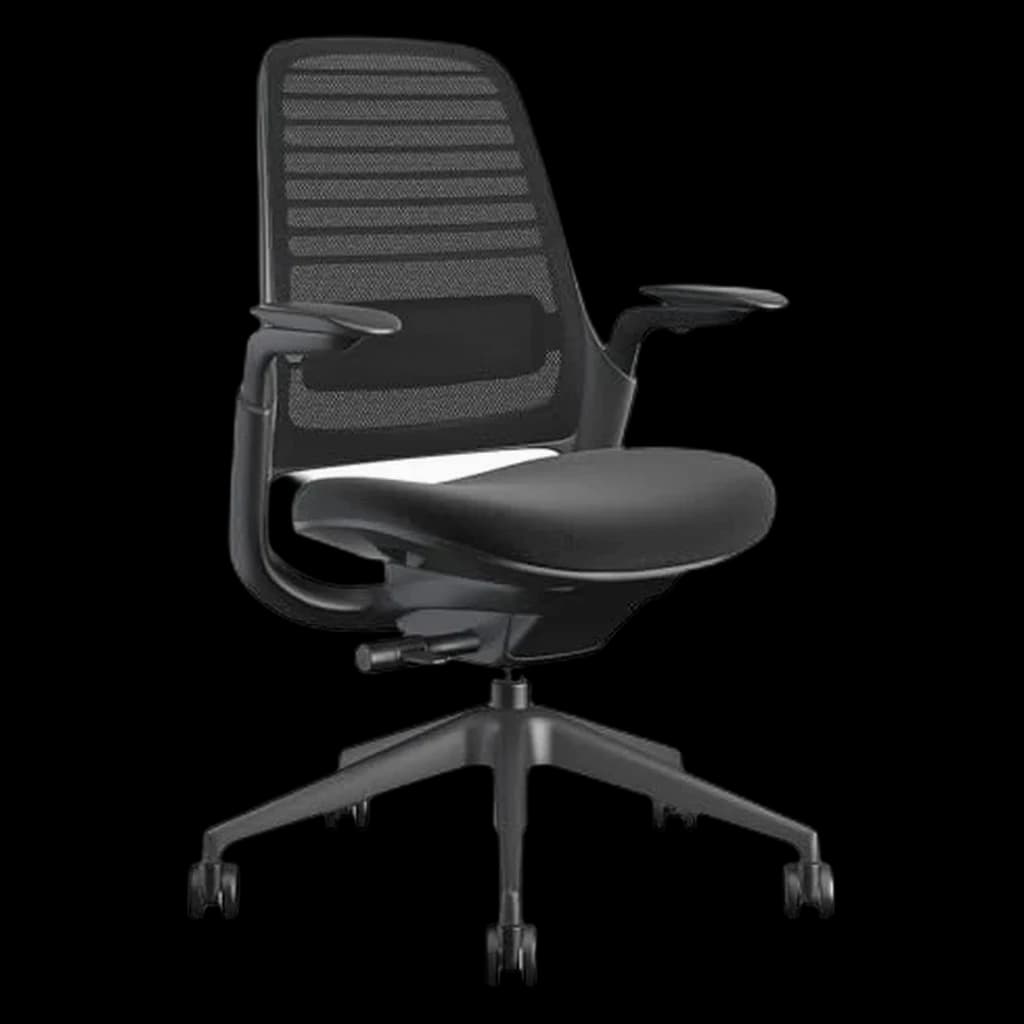
Measure from the floor to the crease behind your knee while seated in your work shoes, and pick a chair whose lowest seat height is at or below that number. Then measure from your lower back to the back of your knee: the seat pan must be shorter so it never touches your knees. Of the seven chairs compared, the Steelcase Series 1 has the lowest published manufacturer minimum at 16.5 inches, with an adjustable seat depth.
 #1 Owner rating | 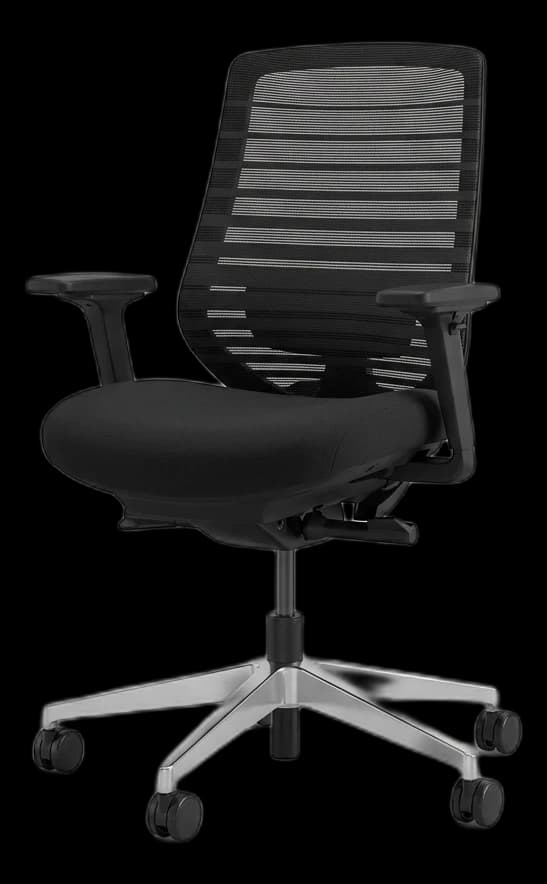 #2 Owner rating | |
|---|---|---|
| Price | $499Buy on Amazon | $389Buy on Amazon |
| Verdict | Lowest published manufacturer seat minimum here (16.5 in), with an adjustable seat depth | Inside Branch's stated 5 ft 2 in to 6 ft 2 in range, with a 17 in minimum and a seat-depth slider |
| Buyer sentiment | Comfort Quality Assembly Stability Buyers praise comfort, quality and assembly. Mixed feedback on adjustability and value for money. Some flag stability. Based on 1,204 user mentions | Quality Comfort Assembly Appearance Buyers praise quality, comfort, assembly and appearance. Mixed feedback on back support and value for money. Based on 268 user mentions |
| weight_capacity | 400 lb | 275 lb |
| seat_height | 16.5–21.5 in | 17–21 in |
| warranty | 12 years | 7 years |
| recline | Weight-activated synchro-tilt | Synchronous tilt, 20° range |
| seat_depth | — | 18–22 in |
| armrests | — | 3D |
| lumbar | — | Height-adjustable, removable |
| best_for_height | — | 5'2"–6'2" |
| Pros |
|
|
| Cons |
|
|
* Prices checked Oct 16, 2026 and may vary. Check the latest price on Amazon.
We research — never hands-on. How we research →
Key Takeaways
Will an office chair fit you at 4'10" to 5'4"? Measure two numbers, then check seat height and seat depth for seven chairs in one fit table.
As an Amazon Associate I earn from qualifying purchases. Product prices and availability are subject to change.
Grab a tape measure and the shoes you work in. Sit on a firm, flat surface with your thigh level and your foot flat, then measure from the floor up to the crease behind your knee. That number, your popliteal height, decides whether a chair can fit you.
The rule behind the test: OSHA's computer workstation guidance says chair height is right "when the entire sole of the foot can rest on the floor with the back of the knee slightly higher than the seat of the chair." So the chair's lowest setting has to sit at or below your knee crease.
Measure two numbers
- Knee-crease height (popliteal height). Floor to the back of your knee, seated, in your work shoes. Compare it with each chair's minimum seat height.
- Seat-to-knee length. Sit back against a wall, then measure from the wall to the back of your knee. Compare it with each chair's seat depth, ideally its shortest setting.
The second number matters as much as the first. OSHA warns that a seat pan "that is too long can place excess pressure on the knee area of shorter users and minimize back support." Cornell University's chair guide puts the trade-off plainly: a pan that is too long "will either catch you behind the knees or it will prevent you from leaning fully back against the lumbar support."
Why we don't give you a height chart: we could not find a primary anthropometric table for shorter adults that we could cite. Leg proportions also vary at the same height, so your own two numbers beat any height-to-chair chart.
The fit table
These are the seven chairs currently listed in our office chairs category, ordered by lowest published seat height. Each figure comes from the manufacturer's own spec page or spec sheet. Two Sihoo seat heights come from the retail listing's spec table because Sihoo's US pages don't print one. Anything a maker doesn't publish is marked "not published".
| Chair | Min seat height | Max seat height | Seat depth | Depth adjusts? | Maker's stated user height |
|---|---|---|---|---|---|
| Sihoo Doro C300 | 16.1 in (listing only) | 19.5 in (listing only) | 18.11 in per Sihoo; 16.54 in per listing | No | Not published |
| Steelcase Series 1 | 16.5 in (420 mm) | 21.5 in (547 mm) | 15.7–18.0 in functional (400–458 mm) | Yes | Not published |
| Branch Ergonomic Chair | 17 in | 21 in | 18–22 in | Yes | 5 ft 2 in – 6 ft 2 in |
| Branch Ergonomic Chair Pro | 17 in | 19.9 in (standard cylinder) | 16.7–19.7 in | Yes | 5 ft 2 in – 6 ft 2 in |
| Staples Hyken Mesh Task Chair | 17.2 in | 20.9 in | 16.7 in | Not listed | Not published |
| Sihoo M57 | 18.1 in (listing only) | 21.65 in (listing only) | 18.11 in | No | Not published |
| Sihoo Doro C300 Pro V2 | Not published | Not published | 16.9–18.5 in | Yes (1.6 in slide) | 4 ft 11 in – 6 ft 3 in |
Read the conflicts before you buy: for the Doro C300, Sihoo's own page lists an 18.11 in seat depth, while the retail listing's table gives 16.54 in and a 16.1 in minimum height. We could not reconcile them. Treat that row as unconfirmed and buy where returns are easy.
Brands also measure seat depth differently. Branch prints 18–22 in for its standard chair and 16.7–19.7 in on the Pro's spec sheet, so don't compare depth figures across brands to the half inch. Use the column to tell fixed pans from sliding ones.
Which chair for which height
Measure first, then use the row that matches your knee-crease height.
| Your knee-crease height (in shoes) | What the table supports | Watch for |
|---|---|---|
| Under 16.5 in | No chair here goes low enough on published figures; plan on a footrest | Keep the seat at keyboard height and raise your feet instead |
| 16.5–17 in | Steelcase Series 1: lowest published manufacturer minimum and an adjustable depth | Run it at or near the bottom of its range |
| 17–18 in | Series 1, either Branch, or the Staples Hyken | The Hyken's fixed 16.7 in pan is short, which helps short thighs |
| Over 18 in | Most of the table, including the Sihoo M57 | Fixed 18.11 in pan on the M57; check your seat-to-knee length |
The one that names you: the Sihoo Doro C300 Pro V2 is the only chair here whose maker states a range starting below 5 ft, at 4 ft 11 in. Sihoo does not publish its seat height, though, so the claim can't be checked against your knee number. If you are under about 5 ft 2 in and want it, buy it with an easy return window.
The two Branch chairs state 5 ft 2 in as their lower limit, so if you are 5 ft 2 in to 5 ft 4 in, either can work. The standard Branch Ergonomic Chair has more seat-height range; the Pro's shorter published pan suits short thighs. For a wider budget comparison, see our best ergonomic chairs under $500, or our under-$300 picks if the seat-depth slider is the feature you are budgeting for.
When the chair is still too tall
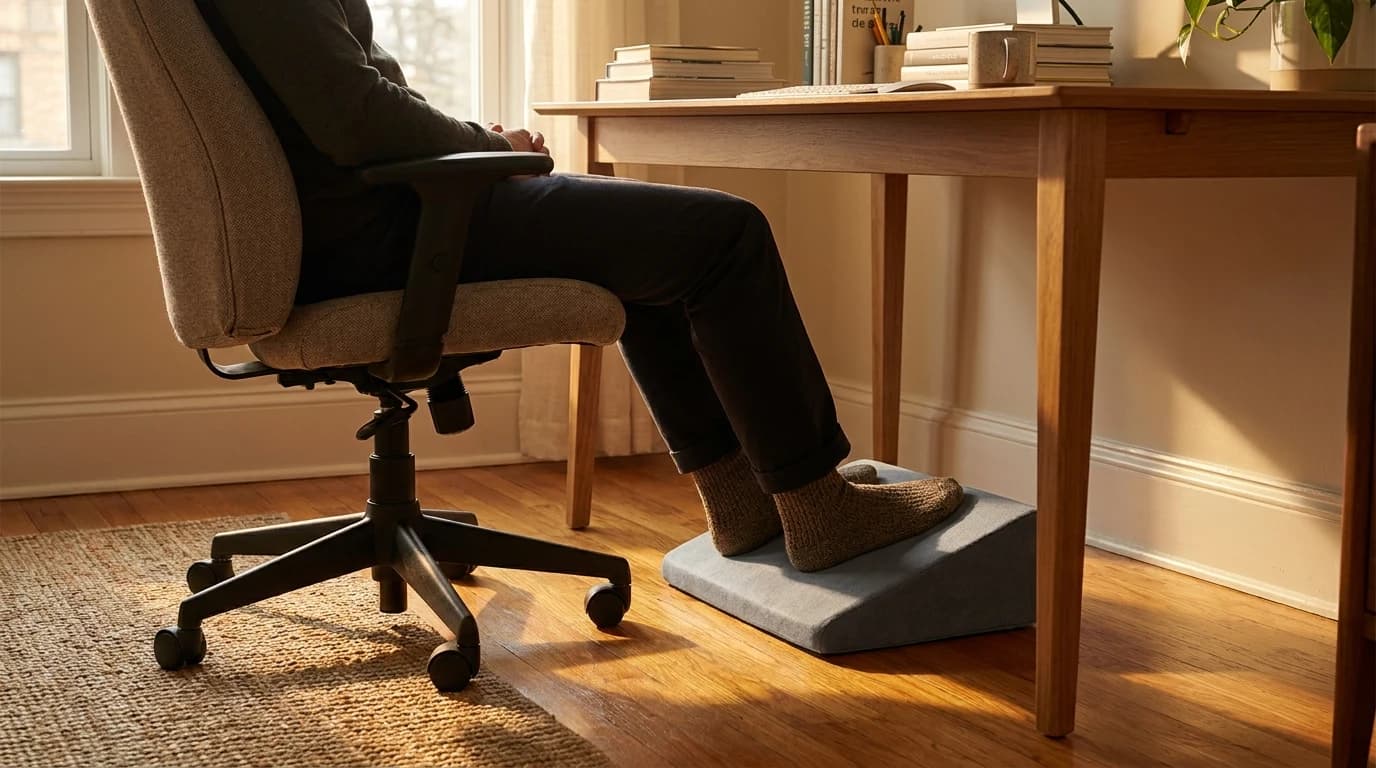
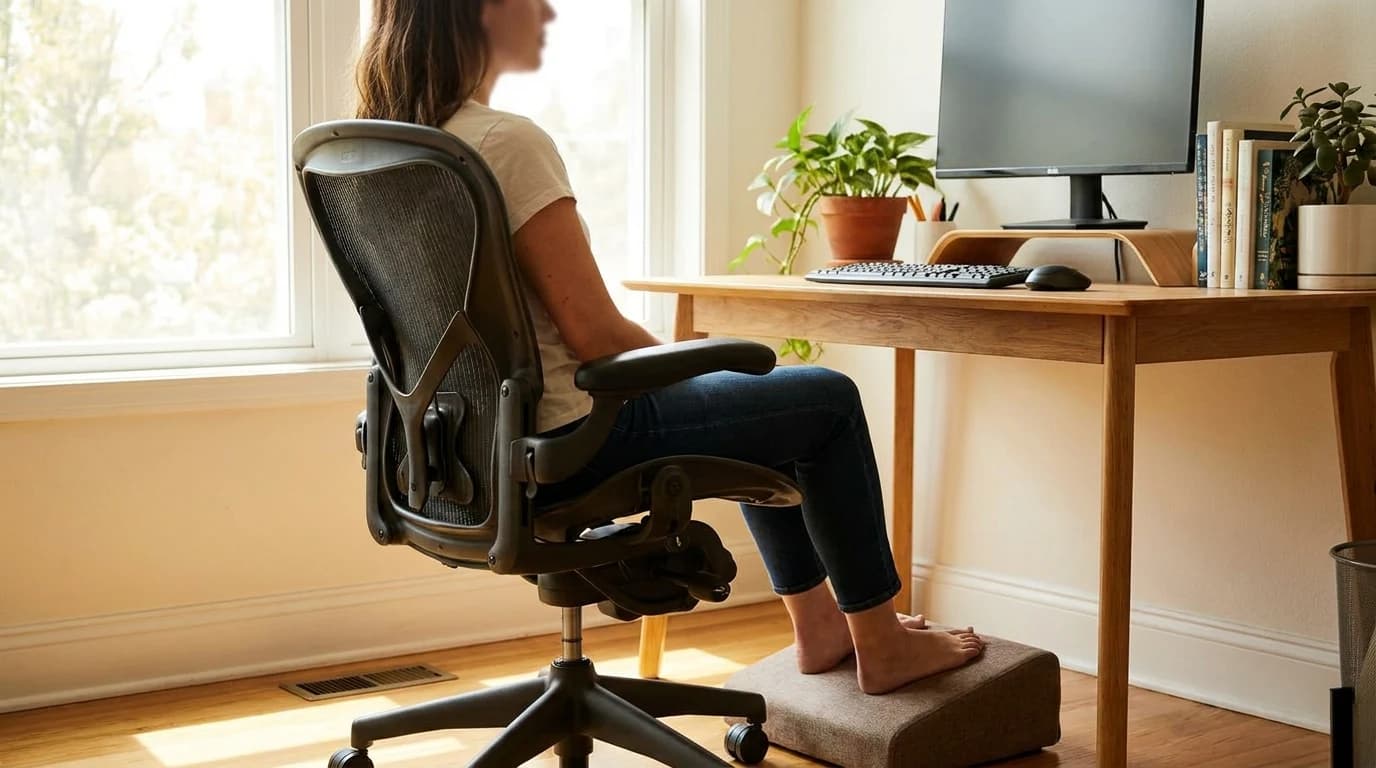
Often the desk is the problem: a fixed desk sets your keyboard height, and the chair has to rise to meet it, which lifts your feet off the floor. Cornell's guidance is that in most cases a correctly adjusted chair needs no footrest. OSHA's answer for when it isn't possible is direct: "If the seat cannot be lowered (for example, it would make the keyboard or monitor too high), use a footrest to provide stable support for the feet."
- Set the chair for the keyboard first. Elbows near keyboard height, then look at the gap under your heels.
- Measure the gap, then buy the support. An adjustable foam pad like the ComfiLife Adjustable Foot Rest has a removable base, giving two heights from one pad.
- Don't use a footrest to fix seat depth. A footrest cannot shorten a pan that catches your knees. That needs a depth slider or a different chair.
Our under-desk footrest guide walks through the gap measurement in detail. Shopping because of back pain? Read our back-pain chair guide first.
FAQ
What seat height do I need if I'm 5 feet tall?
There isn't a reliable single answer, because leg length varies at the same height. Measure your knee-crease height in shoes and pick a chair whose minimum seat height is at or below it.
Is seat depth or seat height more important for short people?
Both. Height fails visibly, because your feet dangle. Depth fails quietly, because you perch forward and lose the backrest. OSHA says the pan should support most of the thigh "without contact between the back of the user's knee and the front edge of the seat pan."
Do I need a petite chair?
Not necessarily. Start with your two numbers. A standard chair whose lowest setting and shortest pan fit them will work. Add a footrest when a fixed desk forces the seat higher.
Hilly Shore Labs
Editorial TeamWFH Lounge is published by Hilly Shore Labs. Every recommendation is built by synthesizing ergonomic research, manufacturer specs, expert reviews from outlets like Wirecutter, RTINGS, and The Verge, and aggregated long-term owner sentiment from thousands of verified buyers.
All product reviews are independently researched. Our recommendations are based on ergonomic guidelines, manufacturer specifications, and verified buyer sentiment. See our methodology.